Ways to improve site security out of hours with lighting and CCTV
A camera alone will not improve site security out of hours. Combine motion-activated lighting with cameras covering entrances and valuable areas, keep CCTV operational and recording, and use clear warning signs to deter intruders. Strong communication between site teams and security staff matters too: agreed handovers and clear incident reports help ensure alerts are understood and acted on.
It is natural to focus on equipment, but even effective systems work better when everyone knows who is responsible after the site closes. Lighting, camera placement, operational CCTV and visible signs can strengthen overnight protection, while clear coordination supports an effective response. These measures work together to make activity easier to detect and suspicious incidents easier to manage.
Key Takeaways
- Use motion-activated lighting to illuminate vulnerable areas when movement is detected, while avoiding unnecessary lighting across the whole site.
- Prioritise camera coverage at entrances, storage areas and machinery yards where a clear view can help reveal suspicious activity.
- Keep CCTV operational and recording, and use visible warning signs to make security measures clear after dark.
- Coordinate handovers and incident reporting so security staff know who to alert and how to respond when an issue arises.
1. Motion-activated lighting
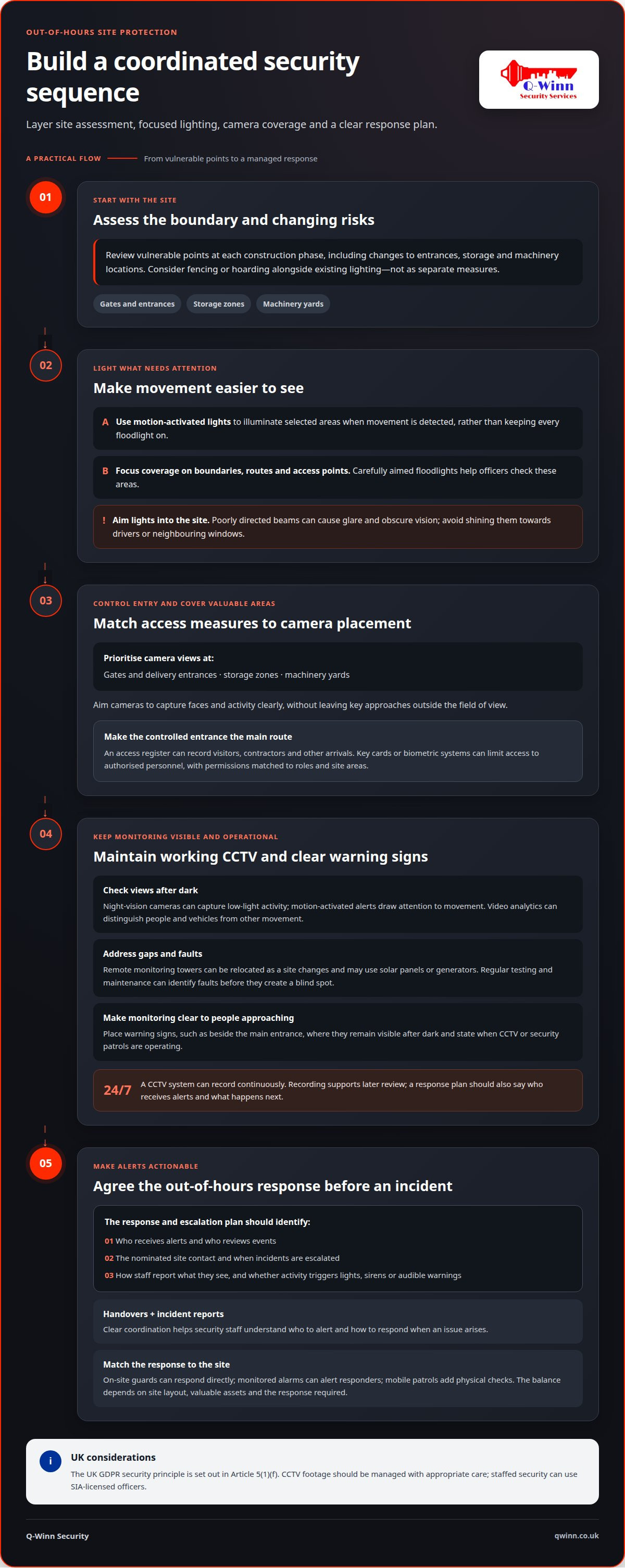
Start with the site boundary. Secure perimeter fencing or hoarding can limit access, while lighting helps security staff identify suspicious movement near gates, entrances and vulnerable sections. A professional assessment should consider how fencing, hoarding and existing light work together, rather than treating each as a separate deterrent. For example, a dark stretch beside a vehicle entrance may need different coverage from a well-lit loading area.
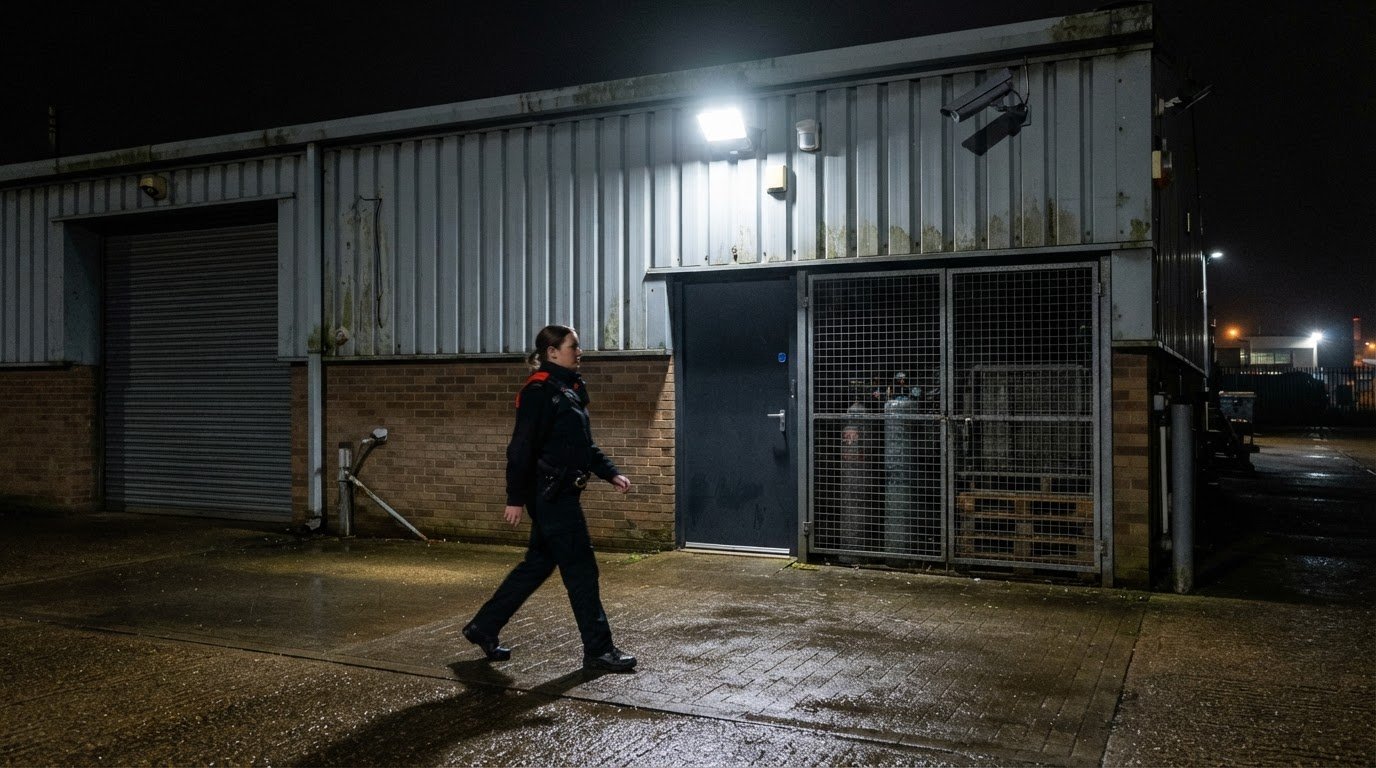
Motion-activated lights illuminate selected areas when movement is detected, providing light where needed without keeping every floodlight on. Perimeter lighting makes activity more visible during monitoring, while carefully aimed floodlights help officers check routes and access points. Positioning depends on the site layout, nearby properties and the areas that need protection. Poorly directed beams can cause glare and obscure vision, so lights should point into the site, not towards drivers or neighbouring windows.
Before an incident occurs, the out-of-hours response and escalation plan should identify who receives alerts, who reviews events, the nominated site contact and when incidents must be escalated. It should also explain how security staff report what they see and whether suspicious activity triggers lights, sirens or audible warnings. Clear instructions help prevent alerts from being missed or handled inconsistently.
To improve security without creating avoidable safety or privacy concerns, direct lights onto site boundaries and walkways, avoiding glare beyond the perimeter. Use reflective warning signs that remain visible at night and clearly state when CCTV or security patrols operate. This gives people notice of monitoring, while focused lighting supports safer movement without unnecessarily illuminating neighbouring spaces.
2. Camera placement at access points and valuable areas
Position cameras according to the risks identified in a site security assessment. On a construction site, prioritise gates, delivery entrances, storage zones and machinery yards, where unauthorised entry or theft of valuable equipment may occur. Aim cameras to capture faces and activity clearly, without leaving key approaches outside the field of view. A perimeter fence defines the boundary, while controlled gates direct personnel and visitors through visible entry points.
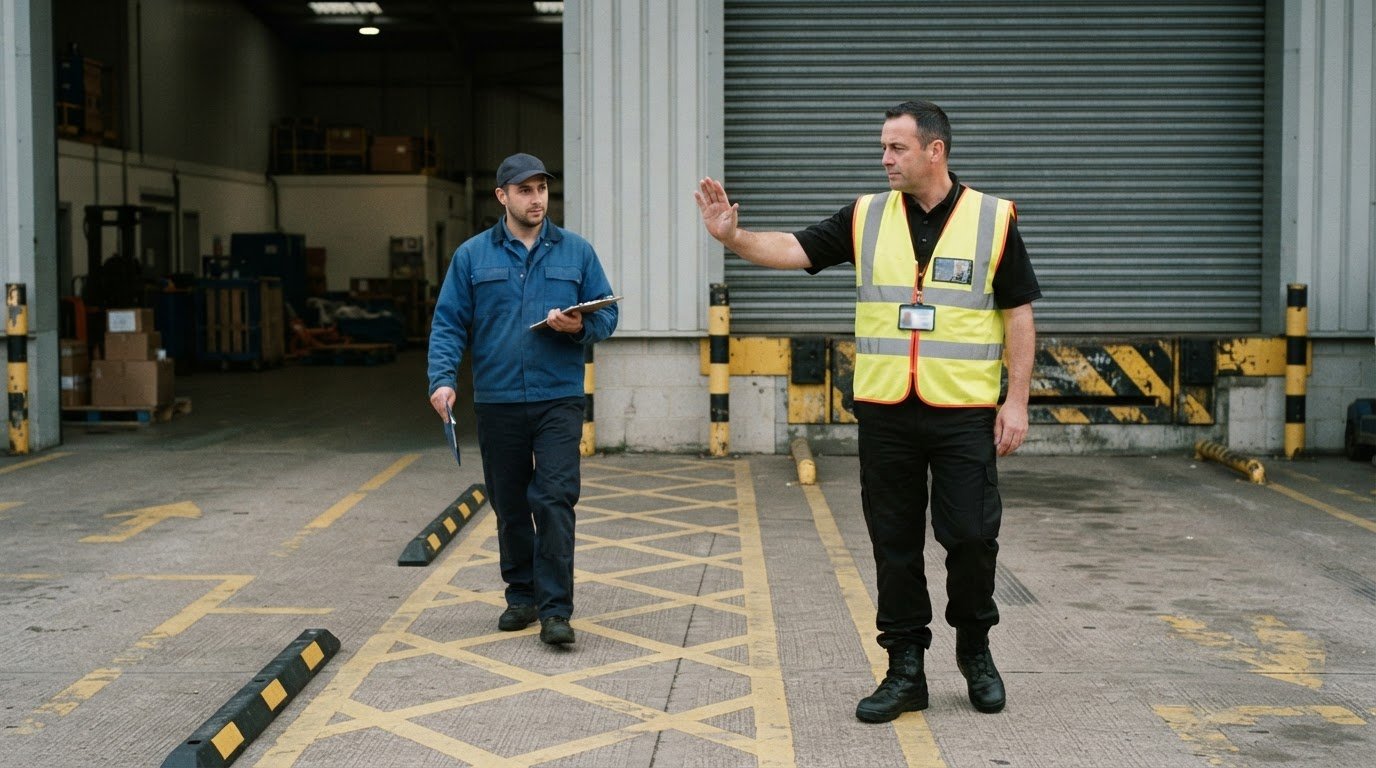
A site access register can record who enters and leaves, including visitors and contractors. Key cards or biometric systems can restrict access to authorised personnel, with permissions matched to roles and site areas. Coordinate access measures with fencing so the controlled entrance becomes the main route for arrivals. Clear records also help establish who was present if an incident is reported.
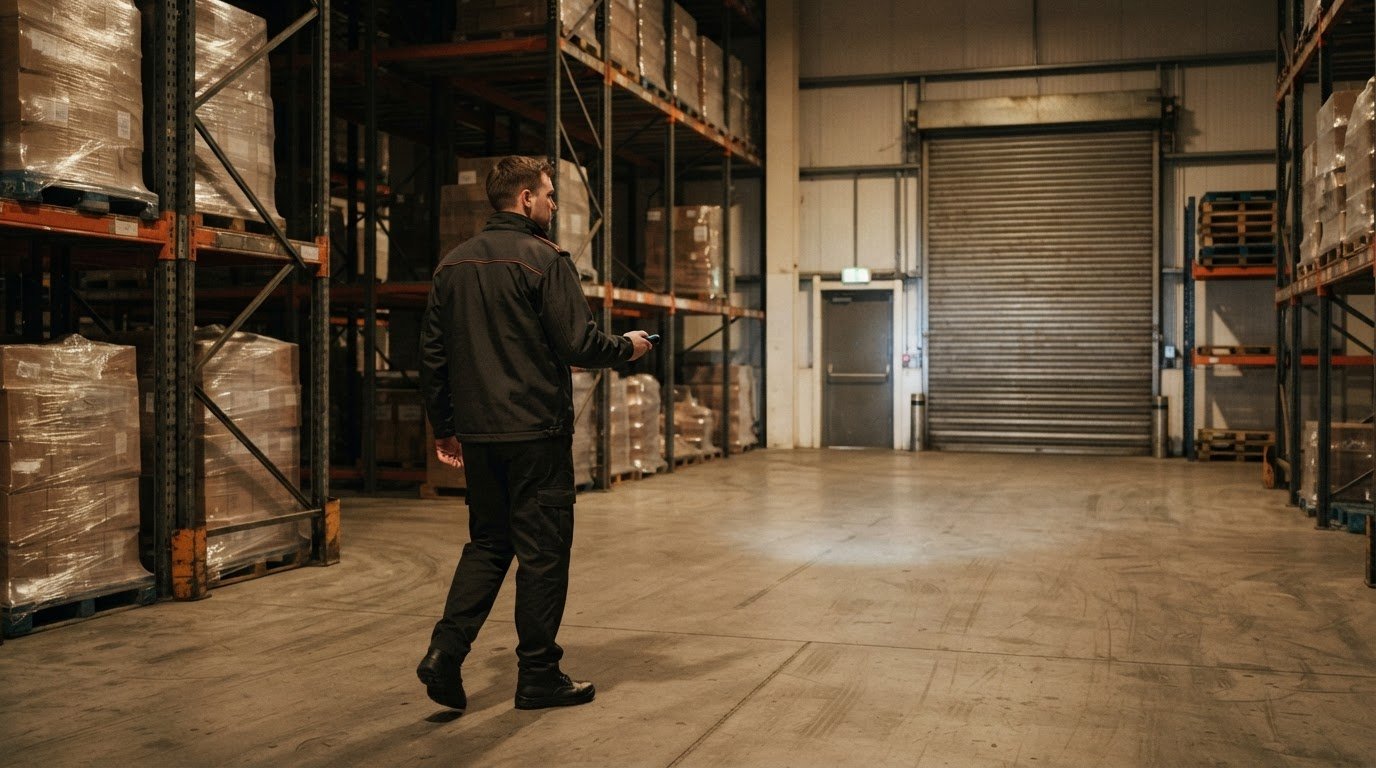
To assess out-of-hours risks, a business and its security provider should review vulnerable points at each construction phase, including changes to entrances, storage and machinery locations. On-site guards provide a visible presence and can respond directly; monitored alarms can alert responders to a breach, while mobile patrols add physical checks. The right balance depends on site layout, valuable assets and the level of response required.
Access control works best alongside clear key management. A provider can restrict access to authorised keyholders, keep a record of key use and arrange secure key holding for alarm response. This reduces the risk of uncontrolled access after closing. For sites needing that coordinated support, key holding and alarm response can complement access controls and patrol arrangements.
3. Working CCTV cameras and warning signs
Operational cameras matter more than imitation equipment. For construction sites, position cameras to record activity at gates, storage areas and machinery yards, then check that each view remains clear after dark. Night-vision cameras can capture activity in low light, while motion-activated alerts draw attention to movement. Some video analytics can distinguish people and vehicles from other movement, helping focus alerts on potential security events.
Remote monitoring towers offer another option where fixed cameras leave gaps. These mobile units can use solar panels or generators and be relocated as the construction site changes. For continuous coverage, a CCTV system can record 24/7; professional monitoring operators can review live feeds, verify suspicious activity and trigger an on-site alarm or audio warning. Recording alone mainly supports later review, so the response plan should explain who receives alerts and what happens next.
Warning signs should clearly state when CCTV or security patrols are operating. Place them where people approach the site, such as beside the main entrance, and keep them visible after dark. Working cameras, access control and alarms can deter intruders and help detect attempted entry. Regular testing and maintenance can identify faults before they create a blind spot during an incident.
In the UK, the UK GDPR security principle is set out in Article 5(1)(f). CCTV surveillance should be managed with appropriate care for recorded footage; staffed security can use SIA-licensed officers.
For sites that need a visible presence alongside camera coverage, discuss static guarding support as part of the out-of-hours security plan.
Q-Winn Security
Q-Winn Security helps businesses coordinate practical protection for sites that are quieter after closing, including sites with valuable equipment or changing access needs. Its services can complement lighting and CCTV with a clear human response when an alarm activates or a site needs a physical presence.
Depending on the site’s requirements, support can include Key Holding & Alarm Response, Mobile Patrol, Lock-Up & Unlock Services or Static / Manned Guarding. Each addresses different needs: alarm response, patrols, controlled opening and closing, or an on-site guard. The right arrangement depends on the site layout, access points and identified risks.
If you’re planning how to strengthen out-of-hours protection, contact Q-Winn Security to discuss your site’s requirements.
Make your next security decision a coordinated one
As your site changes, its security arrangements should keep pace. New access routes, stored equipment or altered working patterns can change who needs to enter and which areas need attention. A clear handover between site management and security staff keeps responsibilities understood, from closing procedures to reporting overnight concerns.
A coordinated plan can improve site security out of hours by matching practical support to the site’s needs. Q-Winn Security provides Key Holding & Alarm Response, Mobile Patrol and Lock-Up & Unlock Services to support different parts of that plan. Contact Q-Winn Security to discuss your site, its access arrangements and the out-of-hours support required in Bracknell and the surrounding area.
Contact Q-Winn Security today to discuss a practical approach for your site. A clear conversation can help you decide what support fits your priorities and move forward with greater confidence.
Frequently Asked Questions
How Can Communication and Coordination Among Teams Enhance Night-Time Security?
Clear handovers help security staff act on site-specific information rather than make assumptions. For example, the outgoing site manager can record a damaged gate, an early delivery or a temporary change to an access route. The security team can log incidents consistently and escalate them to the nominated contact, so the next shift knows what has changed.
What are the best ways for a security provider to improve site security out of hours?
Match protective measures to the site’s current risks and working arrangements. For example, a construction project may need its security plan reviewed when equipment moves or a new entrance opens. Combining physical checks, controlled access and clear incident reporting can close gaps between shifts and keep procedures relevant as the site changes.
How can a security provider secure gates, doors, windows, fences and equipment overnight?
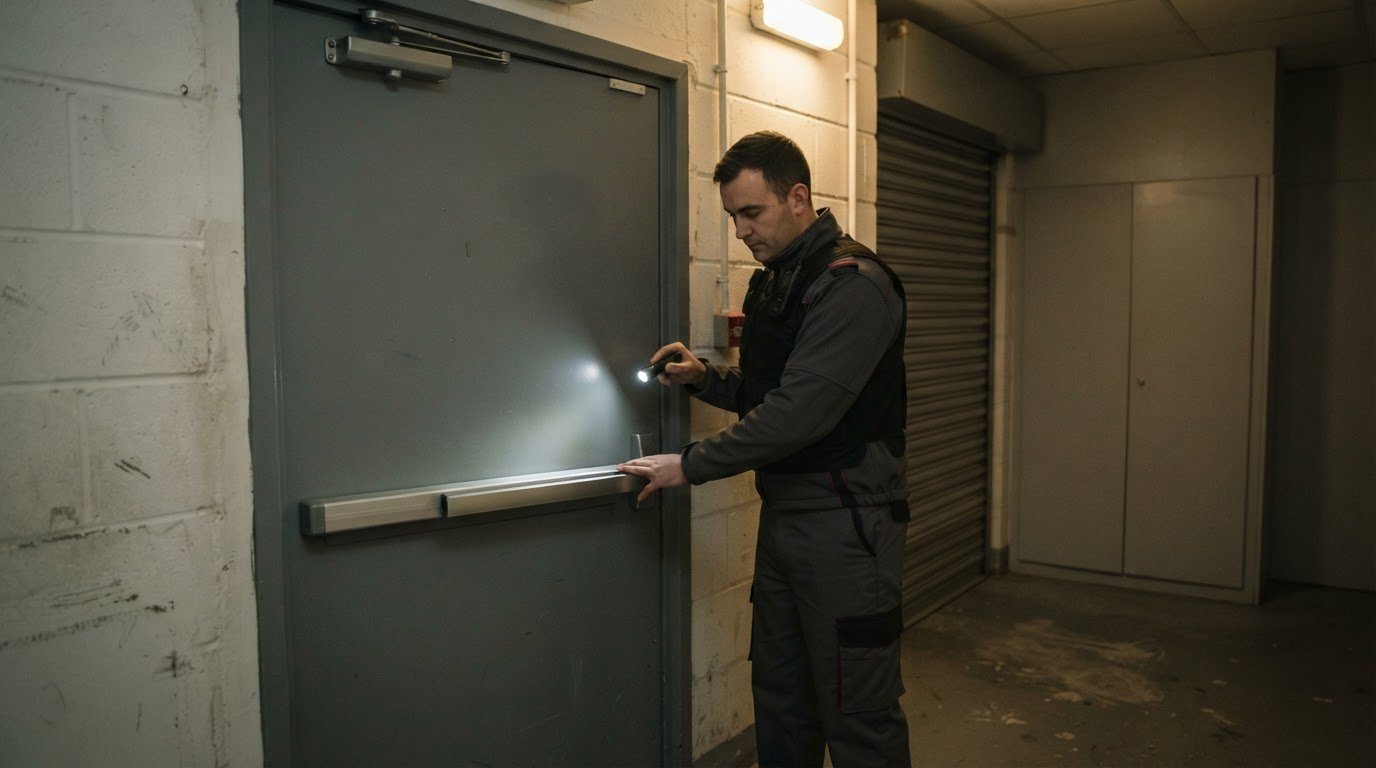
Include gates, doors, windows and perimeter fencing in a documented closing inspection, recording faults for the site contact. Before workers leave, secure valuable equipment, immobilise machinery and move materials away from boundaries where practical. Report a damaged lock or fence section promptly instead of leaving it unnoticed until the next shift.
How can a security provider help reduce theft, vandalism and trespassing on construction or industrial sites after hours?
Reduce opportunities for unauthorised entry by combining visible security activity with clear site routines. Workers should know how to report suspicious behaviour and which contact receives the report. Keeping tools and materials out of sight, closing access points and varying patrol routes can also make unauthorised entry less predictable. Review incident records to identify recurring weak spots.
What are the pros and cons of on-site guards versus monitored alarms and mobile patrols?
On-site guards provide a visible presence and can respond directly; monitored alarms alert responders to a breach, while mobile patrols add physical checks. The right balance depends on the site layout, valuable assets and the response required.
Frequently Asked Questions
Clear handovers help security staff act on site-specific information rather than make assumptions. For example, the outgoing site manager can record a damaged gate, an early delivery or a temporary change to an access route. The security team can log incidents consistently and escalate them to the nominated contact, so the next shift knows what has changed.
Match protective measures to the site’s current risks and working arrangements. For example, a construction project may need its security plan reviewed when equipment moves or a new entrance opens. Combining physical checks, controlled access and clear incident reporting can close gaps between shifts and keep procedures relevant as the site changes.
Include gates, doors, windows and perimeter fencing in a documented closing inspection, recording faults for the site contact. Before workers leave, secure valuable equipment, immobilise machinery and move materials away from boundaries where practical. Report a damaged lock or fence section promptly instead of leaving it unnoticed until the next shift.
Reduce opportunities for unauthorised entry by combining visible security activity with clear site routines. Workers should know how to report suspicious behaviour and which contact receives the report. Keeping tools and materials out of sight, closing access points and varying patrol routes can also make unauthorised entry less predictable. Review incident records to identify recurring weak spots.
On-site guards provide a visible presence and can respond directly; monitored alarms alert responders to a breach, while mobile patrols add physical checks. The right balance depends on the site layout, valuable assets and the response required.