Internal Patrol Security Service: Site Checks and Reports
A quiet site can still hide a security problem. An internal patrol security service checks access points, restricted areas, equipment and potential safety hazards, then records what officers find and what action they take. The detail matters: a clear report shows which areas were covered, not simply that someone attended.
It’s natural to expect patrols to deter intruders, but their value goes further. Regular site visits can help identify vulnerabilities early, document recurring issues and give businesses a clearer picture of what’s happening on their premises.
This article explains what officers check during an internal patrol, what a useful patrol report should include and how patrol security can support a business. It also covers how Mobile Patrol, Key Holding & Alarm Response and Static / Manned Guarding can suit different security needs.
Key Takeaways
- A clear patrol report records when the visit happened, which checkpoints were covered, what officers found and what action followed.
- Site visits can focus on access points, restricted areas, security equipment and safety concerns, with dedicated patrols providing continuous surveillance in a specific area.
- Visible, regular patrols can help deter wrongdoing, identify vulnerabilities and give employees greater confidence on site.
- Mobile patrols, lock-up and unlock visits, alarm response or manned guarding can address different security needs across business premises.
What Should Be Included in a Security Patrol Report?
A useful report clearly records attendance, findings and follow-up actions, not just an officer’s arrival.
Patrol monitoring and incident reporting
Patrol monitoring combines a written or digital visit record with route or checkpoint evidence. Timestamps, site location, officer reference and completed checkpoints show which areas officers covered and when. In the UK, security officers carrying out licensable work need a valid SIA licence. Patrol training covers patrolling methods, conflict management and emergency response. In-house teams can build familiarity with a site, while contracted services provide patrol cover without the business managing officers directly.
Recording exceptions and incidents
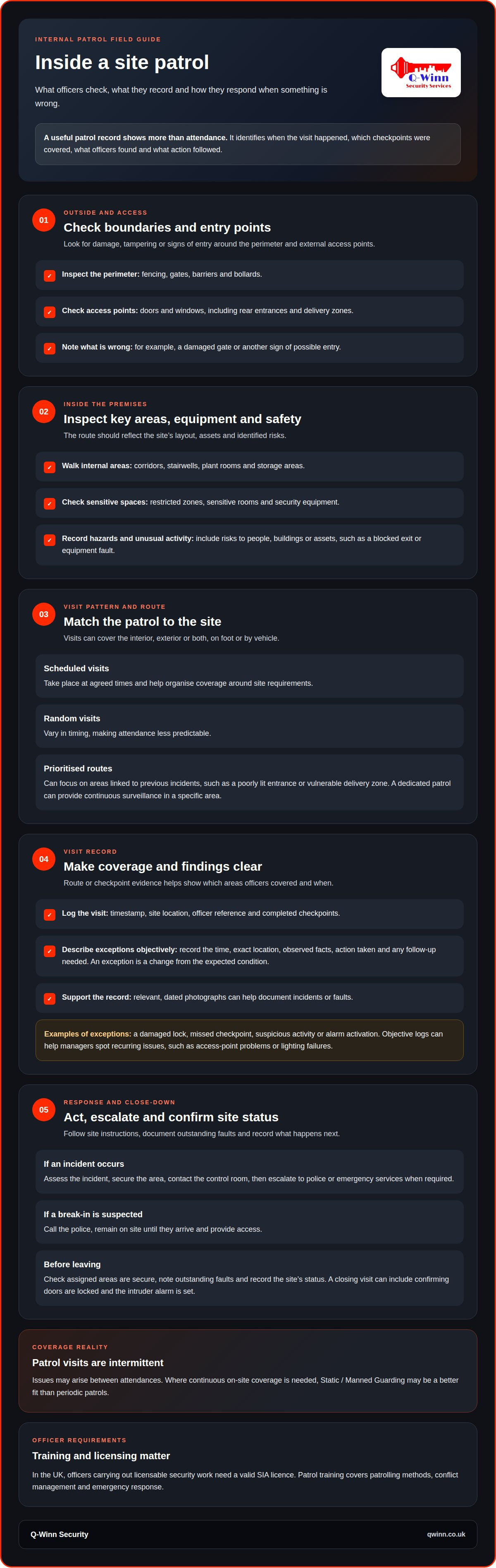
An exception is a change from the expected condition, such as a damaged lock, missed checkpoint, suspicious activity or alarm activation. Record the time, exact location, observed facts, action taken and any follow-up needed. Relevant, dated photographs can support the record. Objective incident logs help managers spot recurring access-point issues or lighting failures. Patrol costs depend on factors such as site size, risk, visit frequency, duration and reporting needs. Visits are intermittent, so issues may arise between attendances.
Incident response and escalation
Officers should assess an incident, secure the area, contact the control room, then escalate to police or emergency services when required. For a suspected break-in, they call police, remain on site until they arrive and provide access. British Standards Institution states that security companies must comply with British Standard 7499 for their security guard services. UK Government, legislation.gov.uk states that engaging in licensable conduct without acting under and in accordance with a licence is an offence.
What Do Security Patrol Officers Check During a Site Visit?
Patrol checks follow site instructions and focus on access, safety and the condition of key areas. Their scope should reflect the site’s layout, assets and identified risks.
A dedicated patrol assigns officers to a specific area for continuous surveillance. Officers can inspect sensitive rooms, restricted zones and equipment, then record faults or unusual activity for follow-up.
Perimeter and site security observations
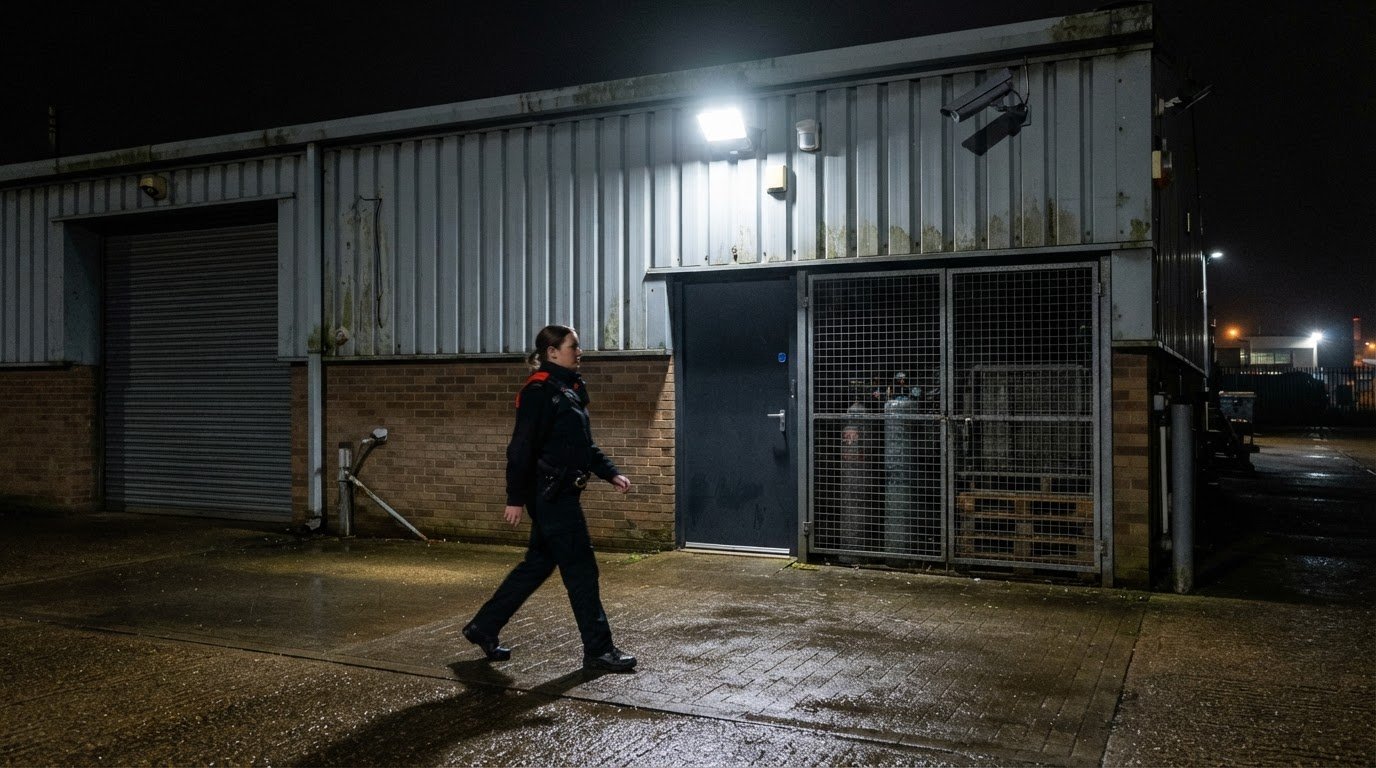
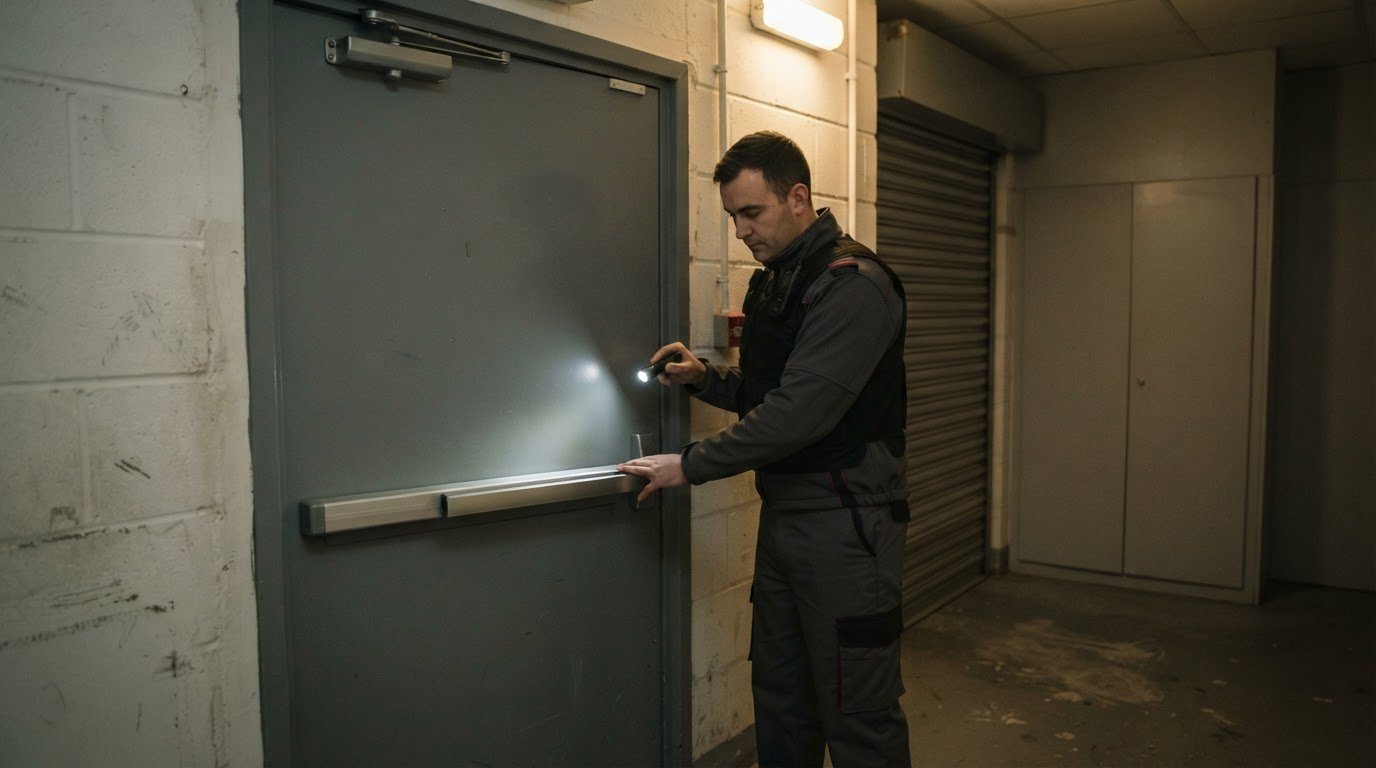
A perimeter inspection checks boundaries and external access points for damage, tampering or signs of entry. Officers look at fencing, gates, barriers, bollards, doors and windows, including rear entrances and delivery zones. Internal checks may cover corridors, stairwells, plant rooms and storage areas. This focused presence can help identify risks to people, buildings and assets, such as a damaged gate or blocked exit.
Random and scheduled site visits
Scheduled visits take place at agreed times, while random visits vary in timing. Both can include vehicle or foot inspections of the property’s interior, exterior or both. Varying visit times can make patrols less predictable, while scheduled attendance helps organise coverage around site requirements. Routes can prioritise areas linked to previous incidents, such as a poorly lit entrance or vulnerable delivery zone.
In the UK, officers undertaking licensable security work need a valid SIA licence. Patrol training covers patrolling methods, conflict management and emergency response.
After a crisis, officers can secure premises against unauthorised access and support damage assessment and recovery. Before leaving, they check that assigned areas are secure, note outstanding faults and record the site’s status. A closing visit can include confirming that doors are locked and the intruder alarm is set.
Benefits of patrol security for businesses
Patrol security adds a visible human presence that can help deter wrongdoing and identify vulnerabilities before they are exploited. Consistent monitoring can also reveal patterns that a single site visit might miss.
Mobile patrols use vehicles to cover larger areas or multiple sites. Random visits can make attendance less predictable, while planned routes ensure priority areas receive attention. For businesses that don’t need a guard on site continuously, patrol visits can be a more cost-effective option than maintaining a permanent presence.
Regular inspections can flag issues such as a damaged access point, repeated alarm activation or a lighting fault. Recording these observations gives managers practical evidence to address recurring problems and review whether security arrangements still suit the site. A visible patrol can also help employees feel more secure and provide a point of contact when concerns arise.
To plan an internal patrol service, start by assessing site risks and defining the patrol’s purpose, priority areas, routes, schedule and reporting requirements. Set out officer responsibilities and escalation procedures, then review the plan as risks or incident patterns change.
Patrols have limits: officers are not continuously present between periodic visits. A business that needs continuous on-site coverage may be better served by Static / Manned Guarding.
For a tailored approach to business security, discuss patrol coverage for your site.
Q-Winn Security: Mobile Patrol
Q-Winn Security provides Mobile Patrol for businesses that need site visits without an officer stationed there continuously. Patrols can focus on priority areas, monitor changing site conditions and provide a documented account of each visit.
For opening and closing routines, Lock-Up & Unlock Services can help ensure premises are secured at the end of the working day. Key Holding & Alarm Response is suited to businesses that need a security response when an alarm activates. Where a continuous on-site presence is required, Static / Manned Guarding may be a better fit than periodic patrols.
The right arrangement depends on your premises, operating routines and security priorities. Contact Q-Winn Security to discuss a tailored option for your business.
Put a clear security plan in motion
Start by matching your site’s specific risks with the level of protection it needs. An internal patrol security service can form part of that plan, alongside opening and closing arrangements or alarm response. Consider which areas need attention, when the premises are most vulnerable and whether periodic visits provide the coverage your business requires.
Q-Winn Security offers Mobile Patrol, Lock-Up & Unlock Services, Key Holding & Alarm Response, and Static / Manned Guarding. These services address different operational needs, from site visits and securing premises at opening or closing to responding to alarm activations and providing an on-site presence.
Share your site’s priorities and operating routines to discuss a suitable approach. Contact Q-Winn Security to take the next step towards a more considered security plan.
Frequently Asked Questions
What is an internal patrol security service?
An internal patrol security service involves officers checking areas inside a business’s premises, rather than focusing only on the grounds or boundary. For example, an office patrol may cover shared corridors and staff-only rooms, while an industrial site may prioritise internal storage areas. The patrol’s purpose and access limits should reflect how the premises are used.
What duties do internal security patrol officers perform?
Officers follow agreed site instructions and report concerns through the designated process. They may also listen to employees’ observations, such as repeated unauthorised access near a staff entrance, and pass relevant information to the appropriate contact. Their role is to observe, document and escalate concerns, not make unsupported assumptions about people or incidents.
How often should internal security patrols be conducted?
There is no single schedule suited to every site. Patrol frequency should reflect the premises’ risk profile, operating hours, previous incidents and changes in activity. For example, repeated concerns around a delivery area may warrant a review of its coverage, while quieter periods may call for a different schedule. Regular reviews help keep patrol arrangements aligned with changing site conditions.
How to choose a UK internal patrol security provider?
Consider the provider’s experience, reputation and service range. Look for clear communication, a tailored security plan based on your site’s needs and appropriately licensed officers.
In-house security patrols vs contracted security services: which is better?
In-house teams can build familiarity with a site, while contracted services provide patrol cover without the business managing officers directly. The right fit depends on your site’s needs and whether you want to manage officers yourself.
Frequently Asked Questions
An internal patrol security service involves officers checking areas inside a business’s premises, rather than focusing only on the grounds or boundary. For example, an office patrol may cover shared corridors and staff-only rooms, while an industrial site may prioritise internal storage areas. The patrol’s purpose and access limits should reflect how the premises are used.
Officers follow agreed site instructions and report concerns through the designated process. They may also listen to employees’ observations, such as repeated unauthorised access near a staff entrance, and pass relevant information to the appropriate contact. Their role is to observe, document and escalate concerns, not make unsupported assumptions about people or incidents.
There is no single schedule suited to every site. Patrol frequency should reflect the premises’ risk profile, operating hours, previous incidents and changes in activity. For example, repeated concerns around a delivery area may warrant a review of its coverage, while quieter periods may call for a different schedule. Regular reviews help keep patrol arrangements aligned with changing site conditions.
Consider the provider’s experience, reputation and service range. Look for clear communication, a tailored security plan based on your site’s needs and appropriately licensed officers.
In-house teams can build familiarity with a site, while contracted services provide patrol cover without the business managing officers directly. The right fit depends on your site’s needs and whether you want to manage officers yourself.