
SIA licensed guards and what their licence means for safety
An SIA licence is a legal baseline, not proof that a guard is competent for every site. The importance of SIA-licensed guards lies in the training and background checks required for licensing, as well as compliance with the law when carrying out licensable security work.
A licensed officer is expected to understand core security responsibilities. But each site has its own risks, procedures and people, so a licence alone cannot show how effectively someone will handle its day-to-day demands. This article explains what SIA licensing means for training, public protection and legal compliance in the UK, and where its limits lie. It also covers how licensing can contribute to safer premises and why site-specific competence needs separate consideration.
Key Takeaways
- An SIA licence reflects role-linked training and checks, but it doesn’t by itself show how well an officer can handle the specific demands of a site.
- Consider how security presence, access management and incident response can support safety across different premises.
- The Private Security Industry Act 2001 is legislation under which enforcement action may be taken against unlicensed security activity in the UK, according to The National Archives (legislation.gov.uk).
- Match the security arrangement to the site’s needs: options include manned guarding, mobile patrols, key holding and lock-up or unlock services.
General security education versus licence-linked training
General security education builds awareness; licence-linked training is tied to a specific licensable activity. The distinction matters because a qualification alone doesn’t establish competence for every site.
Licence-linked training requirements
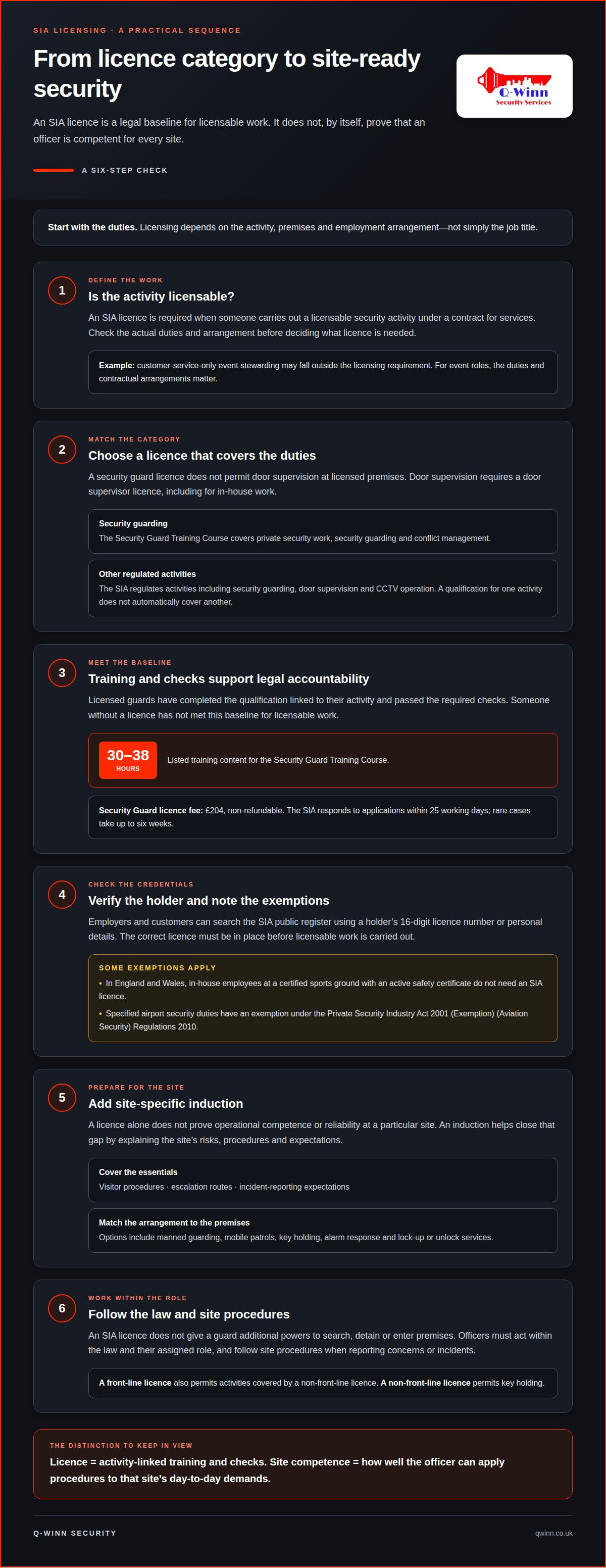
An SIA licence is required when someone performs a licensable security activity under a contract for services. The Security Guard Training Course covers private security work, security guarding and conflict management, with listed training content of 30-38 hours. A door supervisor licence is required for door supervision at licensed premises, including in-house work. A security guard licence doesn’t permit that activity.
Some exceptions apply. In England and Wales, in-house employees at a certified sports ground with an active safety certificate do not need an SIA licence. For event roles, licensing depends on the duties and contractual arrangements; customer-service-only stewarding may fall outside the requirement.
Training, accountability and reliability
Licensed security guards have completed the qualification linked to their activity and passed the required checks. Someone without a licence has not met this baseline for licensable work. Licensing supports legal accountability, but a licence alone does not prove an officer’s operational competence or reliability at a particular site.
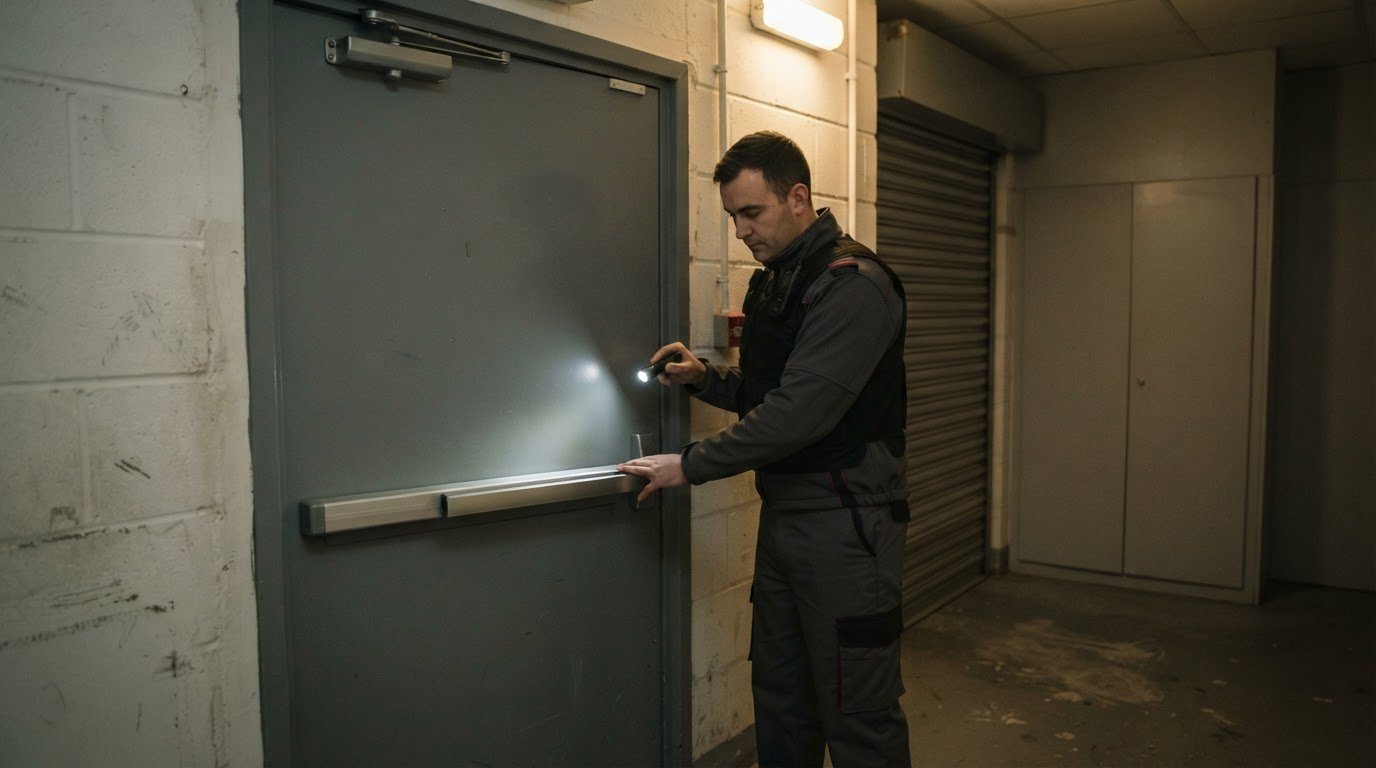
A site-specific induction helps address that gap. Employers can explain visitor procedures, escalation routes and incident-reporting expectations, for example, at an office or industrial site.
To choose a contracted provider, match the officers’ licence categories to their duties, then review how site procedures are covered. Employers and customers can search the SIA public register using a holder’s 16-digit licence number or personal details.
An SIA Security Guard licence costs £204 and is non-refundable. The SIA responds to applications within 25 working days, although rare cases take up to six weeks.
Community safety and public protection
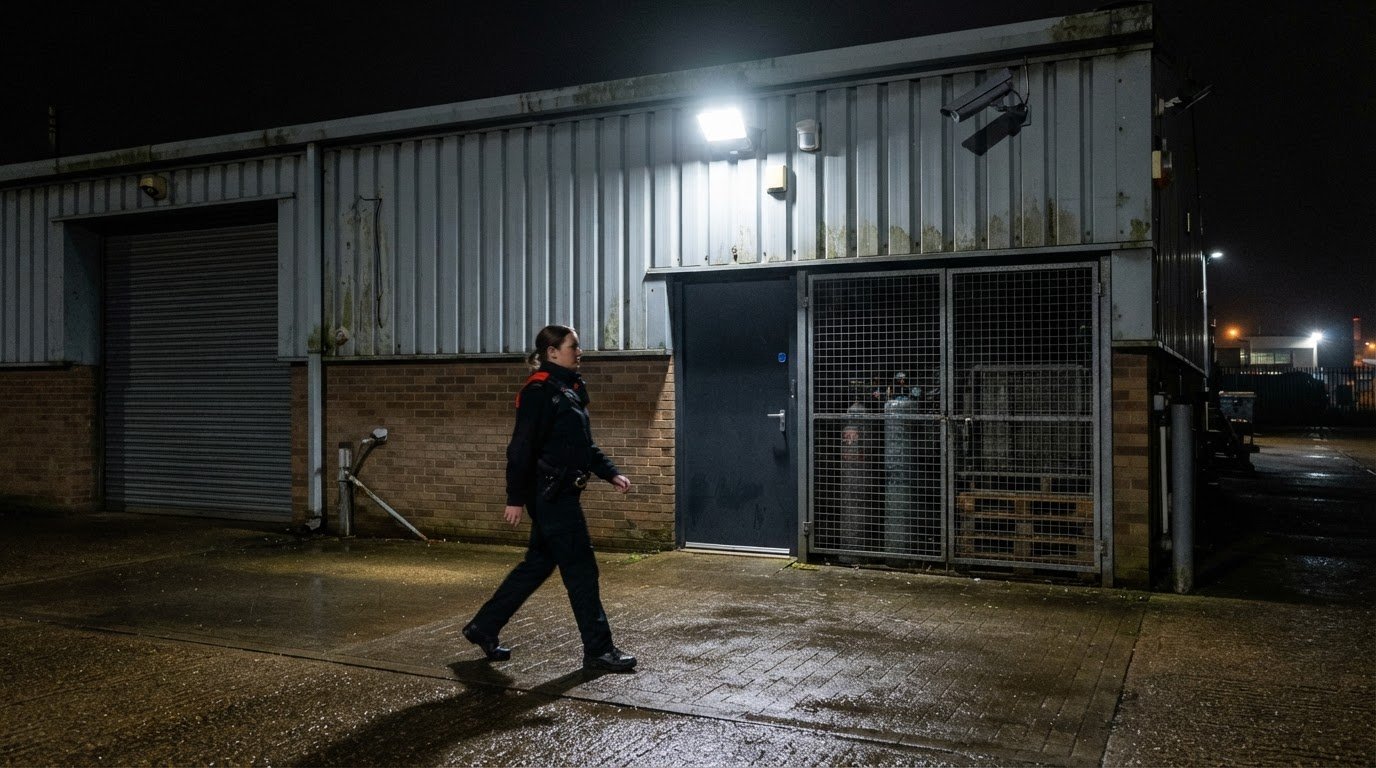
Security officers can help protect people, premises and property through a visible presence and practical intervention. Their work spans retail spaces, events, residential developments, transport hubs and industrial sites.
At a retail entrance, a visible guard can deter criminals from targeting the premises. Guards may check identification, record visitors and monitor access points. These actions help staff know who is on site and support a controlled response to suspicious behaviour. At an event, officers can help manage crowds and respond to emergencies.
Protection also depends on how officers respond when an incident begins. Training covers situations such as trespassing, theft, fire alarms, evacuations and medical emergencies. Clear communication helps a guard raise concerns with a supervisor and follow site procedures. Incident reports and daily logs can give employers a record to support ongoing risk management.
Close protection is a distinct activity. Close-protection operatives guard individuals against physical assault or injury, rather than focusing solely on premises or property. The training content includes a common module of 140 hours, and a level 3 or higher first-aid qualification is required before close-protection licence-linked training. Those requirements reflect the role’s specific responsibilities.
The value of visible security comes from presence, observation and a considered response, not from a badge alone. For premises that need an on-site security presence, static and manned guarding can provide a practical option.
Legal compliance
Licensing rules depend on the activity, premises and employment arrangement. The correct licence must be in place before someone carries out licensable work.
Working without a licence
Working without the required licence can expose people to enforcement action. The Private Security Industry Act 2001 is an example of legislation under which enforcement action may be taken against unlicensed security activity in the UK, according to The National Archives (legislation.gov.uk). Some exemptions apply: in England and Wales, employees working in-house at a certified sports ground with an active safety certificate do not need an SIA licence. Specified airport security duties also have an exemption under the Private Security Industry Act 2001 (Exemption) (Aviation Security) Regulations 2010.
Licensing depends on the duties performed, not just the job title. For example, door supervision at licensed premises requires a door supervisor licence; a security guard licence does not cover that activity.
Legal and professional standards
The Security Industry Authority regulates activities including security guarding, door supervision and CCTV operation. Security professionals must hold the correct licence for their duties; a qualification for another activity does not automatically cover them. A front-line licence also permits activities covered by a non-front-line licence, while a non-front-line licence permits key holding. These distinctions help employers match credentials to the work.
An SIA licence does not give a guard additional powers to search, detain or enter premises. Guards must act within the law and their assigned role, and follow site procedures when reporting concerns or incidents.
For a site where access or alarm response needs structured handling, discuss security requirements.
Q-Winn Security
Q-Winn Security helps businesses address site security with practical protection tailored to their premises and requirements. SIA licensing is an important baseline, while an effective security arrangement must also reflect the site, its risks and the duties involved.
Q-Winn Security offers Static / Manned Guarding, Mobile Patrol, Key Holding & Alarm Response, and Lock-Up & Unlock Services. These services address different needs, from a visible on-site presence to managing keys or securing a building at opening and closing times.
If you’re assessing security arrangements for your premises, contact Q-Winn Security to discuss your requirements.
Set a clear direction for site security
Use the importance of SIA-licensed guards as a starting point for a wider decision: what needs protecting, when your site is most exposed, and how staff should respond to concerns. A practical security plan connects those needs with clear responsibilities and consistent procedures.
Q-Winn Security’s Key Holding & Alarm Response, Mobile Patrol and Lock-Up & Unlock Services can support sites whose security needs extend beyond a guard’s presence, such as managing access at closing or responding to an alarm.
Bring your site requirements into focus and discuss a suitable approach with Contact Q-Winn Security. A considered next step can help you build security arrangements that fit the way your premises operate.
Frequently Asked Questions
Does an SIA Licensed Security Officer make an individual operationally competent?
No. A licence shows that its holder has met requirements for a licensable activity, but it does not prove they can manage every site-specific situation. The importance of SIA-licensed guards includes meeting this regulatory baseline; employers should also consider practical readiness. For example, an officer assigned to a residential development needs to understand its visitor procedures and escalation contacts.
Do SIA guards receive regular training?
Licence-linked training is required for the relevant qualification, and refresher training is required when renewing an SIA badge. However, the licence itself does not prove that an officer has received ongoing training for every site. A workplace induction can explain local procedures, such as how staff report a damaged entrance or who receives an incident log.
What does an SIA licence mean for security guards in the UK?
An SIA licence authorises its holder to perform the licensable activity it covers. The Security Industry Authority regulates roles such as security guarding, door supervision and CCTV operation. For example, a security guard licence does not authorise door supervision at licensed premises. The licence must match the duties being carried out.
Which security jobs legally require an SIA licence in the UK?
Licensable activities include security guarding, door supervision, CCTV operation and close protection. The requirement depends on the activity and circumstances, not just the job title. For example, guarding licensed premises where alcohol is supplied or regulated entertainment takes place requires a door supervisor licence. Specific exemptions apply, including certain in-house duties at certified sports grounds.
What are the penalties for using or working as an unlicensed security guard in the UK?
Unlicensed security activity can lead to enforcement action. The Private Security Industry Act 2001 is an example of legislation under which enforcement action may be taken in the UK, according to The National Archives (legislation.gov.uk). The key practical point for employers is to ensure the required licence is in place before assigning someone to a licensable activity.
Frequently Asked Questions
No. A licence shows that its holder has met requirements for a licensable activity, but it does not prove they can manage every site-specific situation. The importance of SIA-licensed guards includes meeting this regulatory baseline; employers should also consider practical readiness. For example, an officer assigned to a residential development needs to understand its visitor procedures and escalation contacts.
Licence-linked training is required for the relevant qualification, and refresher training is required when renewing an SIA badge. However, the licence itself does not prove that an officer has received ongoing training for every site. A workplace induction can explain local procedures, such as how staff report a damaged entrance or who receives an incident log.
An SIA licence authorises its holder to perform the licensable activity it covers. The Security Industry Authority regulates roles such as security guarding, door supervision and CCTV operation. For example, a security guard licence does not authorise door supervision at licensed premises. The licence must match the duties being carried out.
Licensable activities include security guarding, door supervision, CCTV operation and close protection. The requirement depends on the activity and circumstances, not just the job title. For example, guarding licensed premises where alcohol is supplied or regulated entertainment takes place requires a door supervisor licence. Specific exemptions apply, including certain in-house duties at certified sports grounds.
Unlicensed security activity can lead to enforcement action. The Private Security Industry Act 2001 is an example of legislation under which enforcement action may be taken in the UK, according to The National Archives (legislation.gov.uk). The key practical point for employers is to ensure the required licence is in place before assigning someone to a licensable activity.