
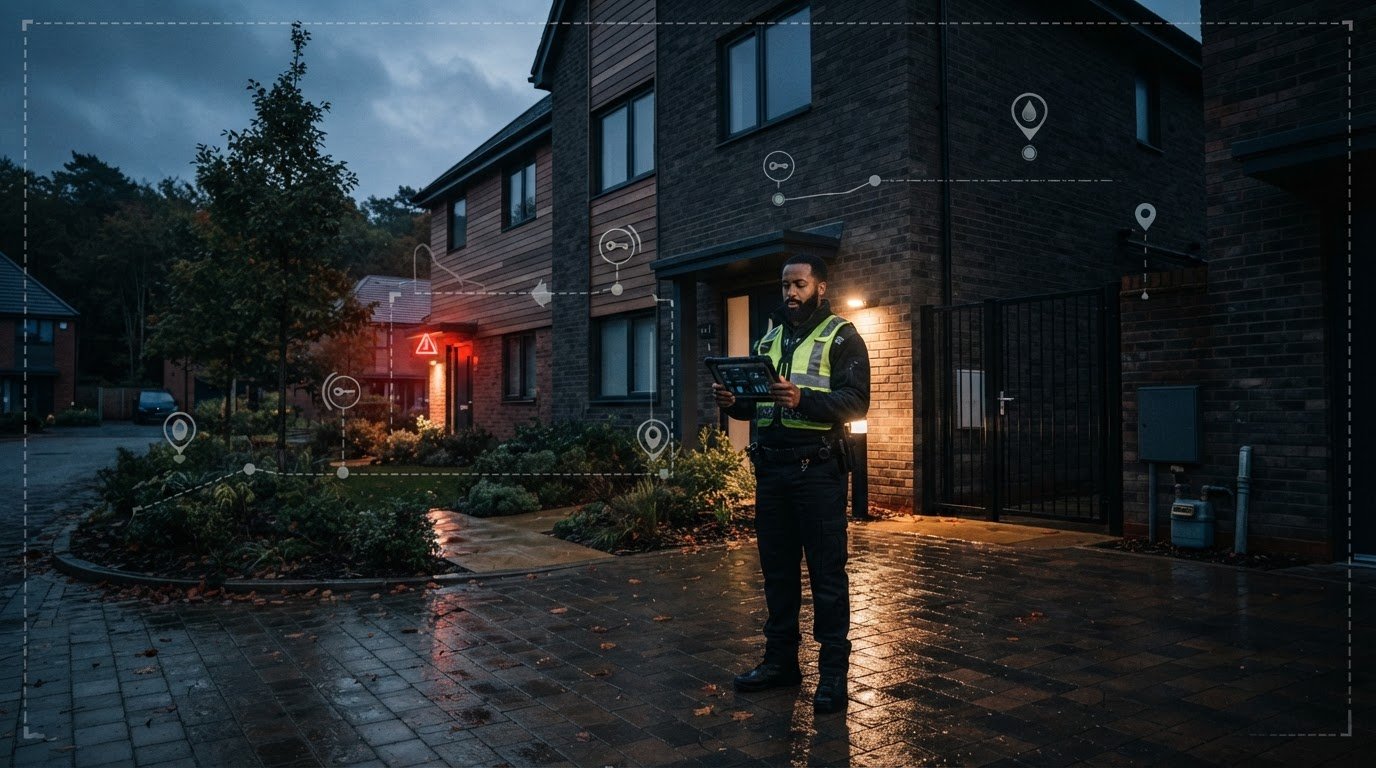
Vacant Property Inspections in Berkshire: 2026 Guide
What if an empty property’s greatest risk is the problem no one spots between visits? A break-in, leak or sign of unauthorised access can go unnoticed unless checks are planned and recorded. Effective vacant property inspections Berkshire owners can rely on are more than occasional walk-throughs. They follow a consistent routine shaped by the site’s risks and insurance conditions.
If you’re unsure what to check or how often to visit, start with a clear checklist and your insurer’s requirements. This guide covers practical checks inside and outside the property, how to set a proportionate visit schedule and what to record. Check your policy for the required frequency and safeguards rather than relying on a one-size-fits-all timetable. Where owner or agent visits leave gaps, local security support may also help. Mobile patrols or key holding can complement your routine, but confirm the arrangements and availability for the specific property. The aim is a documented plan that helps you spot issues early and act promptly.
Key Takeaways
- Plan vacant property inspections Berkshire around the site’s risks and your insurer’s instructions, rather than relying on a universal visit schedule.
- Use a consistent visual checklist to note access concerns, signs of forced entry, visible damage, leaks and hazards.
- Build a routine: assess the site, review policy terms, agree checks, record visits and review findings.
- Compare owner, agent and security-provider support. Before agreeing arrangements, clarify access, records, escalation contacts and service-area coverage.
Why vacant property inspections matter for Berkshire owners
A vacant-property inspection is a planned visual check of an empty building and its immediate surroundings, intended to flag apparent concerns for follow-up. It isn’t a substitute for maintenance, repairs or specialist assessments, and it can’t confirm that a building is defect-free.
A routine can help bring four kinds of concern into view: security breaches such as forced entry or trespass; visible damage; water-related signs, including leaks or damp; and apparent access or safety issues. The longer a property is empty, the more time a problem may go unnoticed between checks. A consistent, documented routine helps owners respond to what’s visible instead of assuming all is well.
Which vacant properties in Berkshire may need a routine?
A temporarily empty home has different features from a shop, commercial unit or site awaiting occupation. For a house, check accessible doors and windows, along with visible signs of water ingress. A larger site may have several entrances, shared areas or outbuildings to include in the agreed scope. Set checks around the layout, the circumstances of the vacancy and how long the property is expected to remain empty. Owners with properties in Bracknell, Wokingham, Ascot or Crowthorne can use the same risk-led approach without assuming local crime patterns are identical.
What an inspection can, and cannot, tell you
A visual visit can identify apparent changes, such as a damaged entrance, broken glazing, water marks or an obstruction. It can’t establish the cause, assess hidden defects or certify safety. Record concerns and arrange appropriate follow-up. Don’t treat a visual check as a repair or technical test.
Security oversight is also distinct from property management, which can involve broader responsibilities such as maintenance and oversight. An inspection doesn’t itself provide those services, nor does it replace specialist safety inspections. Keep responsibilities clear: agree who checks the property, who handles maintenance and who is contacted when an issue needs attention. That clarity makes vacant property inspections Berkshire more useful to owners and agents.
What a vacant property inspection in Berkshire should cover
Keep each visit visual, consistent and within agreed access permissions. A useful checklist records what was seen, not what someone assumes or diagnoses. The Propertymark report on empty properties offers wider context on why vacant buildings need considered oversight.
Security, access and visible condition checks
Compare the site with the previous visit and note obvious changes. A practical scope can include:
- External doors, windows, gates, boundaries and other accessible entry points.
- Signs of forced entry, trespass, damage or unexpected items on site.
- Visible water marks, leaks, damp, broken fittings, debris or apparent hazards.
Don’t force entry, carry out repairs or perform technical tests as part of a visual check. If something appears wrong, note its location and condition, then report it through the agreed contact or escalation route.
Inspection notes, photographs and escalation
For each visit, record the date and time, areas checked, observations, any agreed photographs and who was notified about each concern. Describe what you can see precisely: “water mark visible below the upstairs window” is more useful than “leak confirmed”. A visual observation flags an issue for follow-up; it isn’t a verified diagnosis.
Agree in advance who receives routine updates and how urgent concerns should be reported. Set boundaries for access and photography, and follow any relevant privacy requirements. Clear records help owners and agents track changes without suggesting that an inspection replaces maintenance or specialist assessment.
If you’re considering security-provider support alongside your own checks, Q-Winn Security offers mobile patrols and key holding. You can discuss security support for your property and confirm which arrangements, records and escalation steps can be agreed for the site.
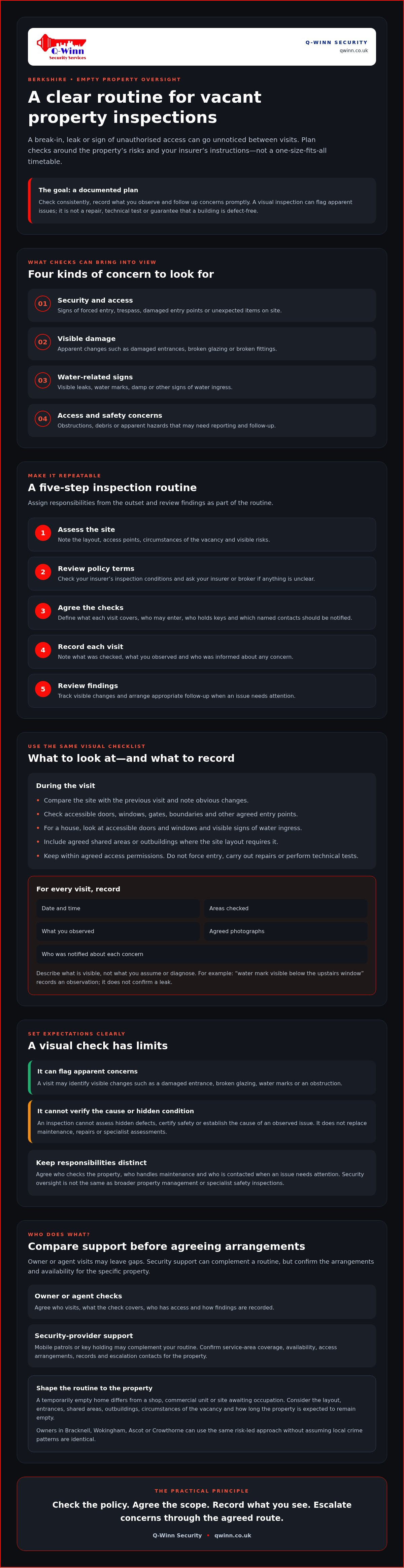
How to plan and carry out a vacant-property inspection routine
Make the routine repeatable and assign responsibilities from the outset. For vacant property inspections Berkshire owners can manage confidently, use these five steps:
- Assess the site: Note the layout, access points, circumstances of the vacancy and visible risks.
- Review policy terms: Check your insurer’s wording for inspection conditions. Ask your insurer or broker if anything is unclear.
- Agree the checks: Define what each visit covers, who has permission to enter, who holds keys and which named contacts should be notified.
- Record each visit: Log when it took place, what was observed, any follow-up required and whether the relevant person was informed.
- Review findings: Look for recurring concerns and update the routine when circumstances change.
Use a Berkshire empty-property checklist to help shape the agreed checks. Before the first visit, make sure everyone involved understands the access arrangements and how urgent concerns should be escalated.
How often should an empty property be checked?
There’s no universal interval that suits every home, shop or commercial site. Set the frequency in light of the property’s risks and vacancy circumstances, and follow the insurer’s instructions. Seek relevant professional advice where needed. Review the schedule if access changes, a concern is found or an incident affects the site.
A simple record-and-review process
Keep a consistent log of observations, photographs where agreed, follow-up actions, responsible contacts and notification status. Review entries for repeat issues, such as recurring signs of water ingress, and confirm who is responsible for the next step. If access permissions or occupancy change, update the arrangements and tell everyone involved.
If you’d like to discuss whether security support could complement your owner or agent checks, contact Q-Winn Security about your property. Confirm the available arrangements, visit records and service-area coverage for your site.
Choosing vacant-property security support in Berkshire
The right support depends on the task. An owner or agent can carry out agreed visual visits and report concerns. A property manager may coordinate wider oversight, depending on their remit. A security provider can offer security-focused support, such as mobile patrols, key holding and alarm response, or manned guarding. These roles can complement one another, but don’t assume a security visit includes maintenance or a full property inspection.
Questions to ask a local security provider
Before agreeing support, clarify what the provider will and won’t do. Ask whether officers are SIA-licensed, which checks are available, how visits are recorded and who receives urgent notifications. Confirm access permissions, key arrangements, escalation contacts and whether the property is within the provider’s current service area. Put the agreed scope and responsibilities in writing.
Where Q-Winn Security may fit into a Berkshire plan
Q-Winn Security is a family-run company based in Bracknell. Its services include key holding and alarm response, mobile patrols, lock-up and unlock services, and static or manned guarding. The company describes its officers as SIA-licensed. These services may complement owner or agent checks, but whether vacant-property inspections can be arranged, and what they would cover, needs to be confirmed for the specific site.
For more context, explore the related guides on commercial security in Bracknell and keyholding and alarm response. If you’re comparing options for vacant property inspections Berkshire, an enquiry to Q-Winn Security can help clarify whether the required support is available and confirm coverage for your property. Agree the scope before relying on any service as part of your inspection routine.
Put a clear protection plan in place
Protecting an empty property starts with a routine that fits the building. Keep checks visual, record what you find and follow your insurer’s instructions. Review the plan when access, occupancy or site conditions change. That’s the foundation of effective vacant property inspections Berkshire owners can adapt to their circumstances.
Owner or agent visits may be enough for some sites. Where additional security oversight could help, clarify the provider’s role, the agreed arrangements and who will be notified if a concern arises. Q-Winn Security is a family-run company based in Bracknell, with over 30 years of combined experience. Its stated services include SIA-licensed officers and 24/7 alarm response. Confirm directly whether inspection support is available for your property.
To discuss what may suit your site, contact Q-Winn about your Berkshire site security requirements.
Frequently Asked Questions
What does a vacant property inspection include?
A vacant property inspection is a planned visual check for apparent security or condition concerns. Depending on agreed access, it may include looking at doors, windows, boundaries and visible signs of trespass, damage, leaks or hazards. The person visiting can record observations, the date and time, and agreed photographs, then notify the named contact. It doesn’t diagnose hidden faults, test systems or include repairs.
How often should a vacant property be inspected?
There’s no single inspection frequency that suits every empty property. Check your insurance policy first, then consider the building’s layout, how long it’s been vacant, access arrangements and any changing site conditions. Ask your insurer or broker if the wording is unclear. Review the agreed schedule after an incident, a new concern or a change in occupancy, rather than assuming the original routine remains suitable.
Do vacant property inspections satisfy insurance requirements?
Not automatically. Whether visits meet your insurance conditions depends on the specific policy, including any stated frequency, security measures and record-keeping requirements. Tell your insurer that the property is vacant and ask what checks they require, how visits should be documented and whether a particular person must carry them out. Keep their guidance with your inspection records. A visit alone doesn’t confirm that cover conditions have been met.
Can a security company inspect an empty property in Berkshire?
A security company may be able to provide agreed site checks or related security support, but confirm the precise scope before relying on it as an inspection service. Q-Winn Security, based in Bracknell, offers key holding and alarm response, mobile patrols and guarding. Its officers are described as SIA-licensed. Ask whether the requested checks and records are available, and confirm current coverage for your property’s location.
What is the difference between a security inspection and a property management visit?
A security-focused visit centres on access and apparent security concerns, such as signs of forced entry, trespass or visible damage, with concerns reported through agreed contacts. A property management visit may cover broader oversight, depending on the manager’s responsibilities, including coordinating maintenance follow-up. Neither type should be assumed to include specialist assessments or repairs. Agree who checks what, who receives updates and who arranges any further action.
Frequently Asked Questions
A temporarily empty home has different features from a shop, commercial unit or site awaiting occupation. For a house, check accessible doors and windows, along with visible signs of water ingress. A larger site may have several entrances, shared areas or outbuildings to include in the agreed scope. Set checks around the layout, the circumstances of the vacancy and how long the property is expected to remain empty. Owners with properties in Bracknell, Wokingham, Ascot or Crowthorne can use the same risk-led approach without assuming local crime patterns are identical.
There’s no universal interval that suits every home, shop or commercial site. Set the frequency in light of the property’s risks and vacancy circumstances, and follow the insurer’s instructions. Seek relevant professional advice where needed. Review the schedule if access changes, a concern is found or an incident affects the site.
A vacant property inspection is a planned visual check for apparent security or condition concerns. Depending on agreed access, it may include looking at doors, windows, boundaries and visible signs of trespass, damage, leaks or hazards. The person visiting can record observations, the date and time, and agreed photographs, then notify the named contact. It doesn’t diagnose hidden faults, test systems or include repairs.
There’s no single inspection frequency that suits every empty property. Check your insurance policy first, then consider the building’s layout, how long it’s been vacant, access arrangements and any changing site conditions. Ask your insurer or broker if the wording is unclear. Review the agreed schedule after an incident, a new concern or a change in occupancy, rather than assuming the original routine remains suitable.
Not automatically. Whether visits meet your insurance conditions depends on the specific policy, including any stated frequency, security measures and record-keeping requirements. Tell your insurer that the property is vacant and ask what checks they require, how visits should be documented and whether a particular person must carry them out. Keep their guidance with your inspection records. A visit alone doesn’t confirm that cover conditions have been met.
A security company may be able to provide agreed site checks or related security support, but confirm the precise scope before relying on it as an inspection service. Q-Winn Security, based in Bracknell, offers key holding and alarm response, mobile patrols and guarding. Its officers are described as SIA-licensed. Ask whether the requested checks and records are available, and confirm current coverage for your property’s location.
A security-focused visit centres on access and apparent security concerns, such as signs of forced entry, trespass or visible damage, with concerns reported through agreed contacts. A property management visit may cover broader oversight, depending on the manager’s responsibilities, including coordinating maintenance follow-up. Neither type should be assumed to include specialist assessments or repairs. Agree who checks what, who receives updates and who arranges any further action.