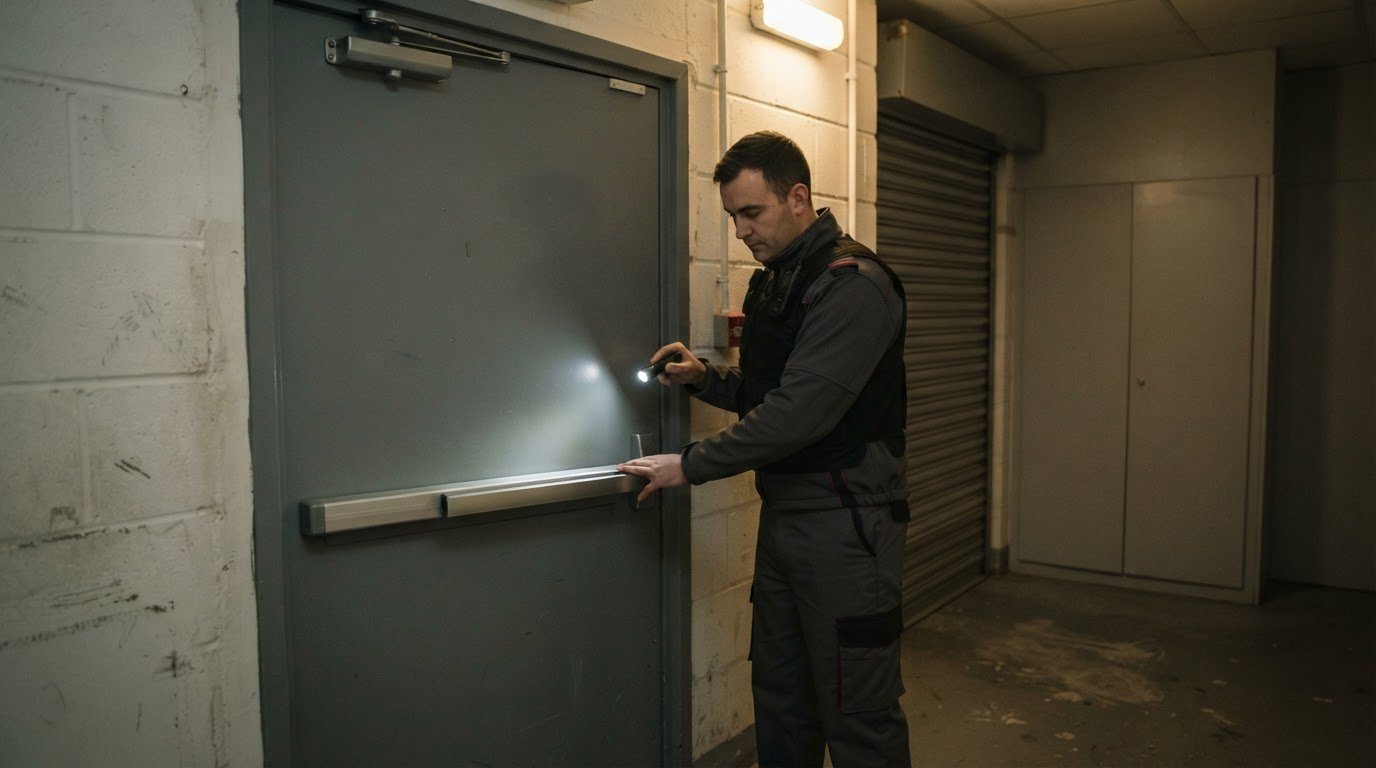

Outsourced key holding benefits for Bracknell firms
Security cover should protect your working day, not take it over. Outsourced key holding benefits include more time for core work, access to specialist expertise and the potential to reduce the costs of staffing key response in-house. For Bracknell firms, an external specialist can handle this defined task while your team retains oversight of wider security decisions.
It’s understandable to weigh the cost of outsourcing against keeping the responsibility in-house. The right choice depends on your operational needs, resources and priorities. This article explains how outsourced key holding can support day-to-day business activity, where specialist expertise adds value and which staffing costs it may help reduce. You’ll also learn what to consider when deciding whether this approach fits your organisation.
Key Takeaways
- Keep strategic security decisions in-house while assigning defined key-holding tasks to a specialist.
- Set clear expectations for response handling, reporting and accountability so the service fits your operations.
- Assess the full cost of in-house cover, including staffing overheads and the resources needed to manage it.
- Consider how professional key holding and alarm response could support your Bracknell premises and existing security arrangements.
Focus on core business activities
Outsourced key holding means an external specialist keeps authorised access to a business’s premises and responds when an alarm activation requires attendance. The business retains strategic oversight, while the provider carries out this defined function. That division can free managers to focus on customers, operations and growth rather than arranging key access.
The main benefits for businesses are more focused staff time, access to specialist processes and the potential to improve efficiency. For example, a retail manager can concentrate on stock and customer service instead of coordinating a keyholder response. Clear service scope, reporting and accountability help keep that arrangement aligned with wider security priorities.
When choosing a UK provider, assess its service scope, reporting and written agreement. The agreement should explain what the service covers, how responsibilities are allocated and how updates are shared. Agreed workflows also help the provider coordinate with the people responsible for your premises.
Key collection, secure storage and handover form the practical chain of custody. The provider collects authorised keys, stores them securely and follows agreed procedures when access is needed. Clear records and handover arrangements help avoid confusion about who holds the keys and when they may be used.
Outsourcing also means the business gives up direct control over some day-to-day execution. Poor communication or delays can affect operations, so clarify responsibilities, reporting and response arrangements in the agreement. Retain internal oversight of security decisions and review whether the service continues to fit your business needs.
Businesses outsource many defined tasks, from bookkeeping and payroll to procurement and customer service. Key holding is another example: commercial, industrial, retail and residential premises can use external support for key custody and alarm response, allowing staff to focus on core work. The important distinction is that outsourced key holding covers this specific security function, not general management of the premises.
Access to specialist expertise
One of the outsourced key holding benefits is access to a dedicated process for key custody, alarm instructions and incident updates, without assigning the task to an employee. This can help when managers are balancing several priorities but need premises access handled consistently. The business retains strategic oversight of its security arrangements.
A clear service agreement should set out the provider’s responsibilities and how relevant updates are shared. Your organisation retains responsibility for its own governance and security decisions. Regular, understandable reporting helps managers see what action has been taken and where an internal decision is needed.
External support can offer flexibility as business needs change. A Bracknell firm opening another site, changing its operating pattern or facing seasonal demand may need different support over time. A defined service scope helps align that support with current requirements, without recruiting a new in-house specialist for every change. Agreed workflows also connect the provider’s work with internal teams.
Payroll illustrates the value of specialist resources. A growing employer may need more expertise to process pay accurately as its workforce expands, without creating a larger internal payroll function. Likewise, customer service can be outsourced as a defined activity, leaving managers focused on strategic work. For firms weighing outsourced key holding benefits, the useful test is whether specialist delivery matches the task and supports business growth. Professional key-holding expertise can form part of that assessment.
Reducing costs compared with in-house staffing
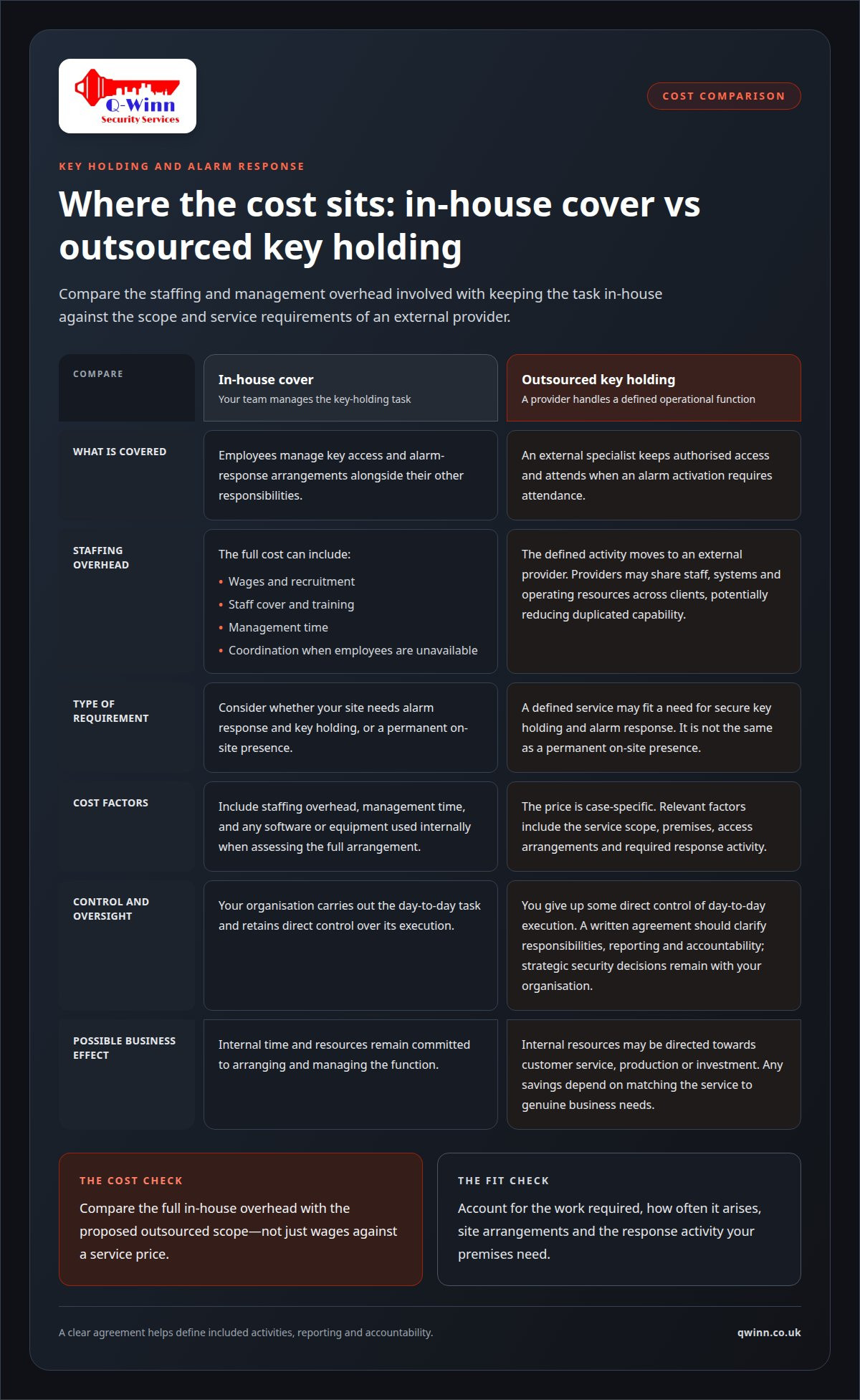
Keeping key access and alarm response in-house can involve more than an employee’s wages. Recruitment, staff cover, training and management time all contribute to the total overhead. Temporary staffing can add further coordination when existing employees are unavailable. Outsourcing shifts a defined operational activity to an external provider, which may help firms direct internal resources towards customer service, production or investment.
The right arrangement depends on the work required and how often it arises. A business that needs alarm response and secure key holding has different needs from a site requiring a permanent on-site presence. Compare the tasks, responsibilities and staff time involved when deciding whether outsourced key holding fits your operation.
Providers may share staff, systems and operating resources across clients. Those economies of scale can reduce duplication compared with each business building its own capability. However, outsourcing still has a cost. The scope, premises, access arrangements and required response activity shape the pricing structure. For key-holding services, the price depends on the case and is provided after a quote request; the site and agreed service requirements are relevant factors.
Review the full arrangement before deciding. Include management time, staffing overhead and any software or equipment used internally, then compare these with the proposed outsourced scope. A clear agreement should explain included activities, reporting and accountability, helping prevent unexpected work from undermining the projected savings. Reduced overhead can release resources for investment elsewhere and support a more competitive operation, but savings depend on matching the service to genuine business needs.
Q-Winn Security: Key Holding & Alarm Response
Q-Winn Security provides Key Holding & Alarm Response for Bracknell businesses that need a professional to hold premises keys and attend following an alarm activation. This can suit firms that want employees to focus on their roles rather than carry responsibility for site access and alarm attendance. The service uses SIA-licensed officers, with 24/7 rapid response.
Support can also align with wider site routines. Lock-Up & Unlock Services cover opening and closing premises at agreed times, while Mobile Patrol and Static / Manned Guarding address different security requirements. The right arrangement depends on your premises, operating patterns and the tasks you want handled. Clear instructions establish who can request action and how updates are shared.
For a Bracknell firm considering external key holding, Q-Winn Security is a local point of contact for discussing how Key Holding & Alarm Response could fit its operational needs. Contact Q-Winn Security to discuss your requirements.
Put a clear security plan in place
If you’re weighing outsourced key holding benefits, decide which responsibilities should sit outside the business and which security decisions should remain under internal oversight. Consider how premises are accessed, who needs updates and how external support should fit existing routines. A focused discussion can turn those priorities into a clearly scoped arrangement.
Q-Winn Security provides Key Holding & Alarm Response, Mobile Patrol and Lock-Up & Unlock Services. These services can support different operational needs, from alarm attendance to routine site access. The right fit depends on the tasks your business wants handled and how its premises operate.
Take the next step at a pace that suits your business. Contact Q-Winn Security to discuss key holding and explore an approach that supports your day-to-day operations with confidence.
Frequently Asked Questions
What are the benefits of outsourcing?
Outsourcing can give a business access to specialist capacity without building every function internally. For example, a firm facing a temporary rise in customer enquiries can transfer a defined workload externally, leaving managers to focus on decisions and service quality. The value depends on matching the outsourced scope to business priorities, while retaining internal oversight of outcomes and accountability.
How does a UK key holding service respond to an alarm activation?
Following an alarm activation, Key Holding & Alarm Response uses securely stored keys and a trained responder to attend the premises. The response follows the agreed site instructions and incident information. For a Bracknell shop, instructions might identify an authorised contact and relevant access points, helping the responder follow the business’s established process.
What affects the price of a commercial key holding service?
Pricing depends on the service scope and charging structure. Q-Winn Security describes annual or monthly retainer fees for secure key storage and emergency response availability, with additional charges for alarm activations or call-outs. The number of sites, access requirements and expected activity can shape a tailored quote. Contact Q-Winn Security for pricing on request.
How does outsourced key holding compare with using in-house staff?
With in-house cover, the business schedules employees, manages absences and remains responsible for the task. Outsourcing assigns defined work externally while managers retain strategic oversight. For premises with limited keyholder capacity, this can reduce reliance on an employee being available. A site needing a permanent on-site presence has different staffing requirements.
What UK standards, licences or legal requirements apply to key holding companies?
Q-Winn Security’s SIA-licensed officers deliver its security services. For a commercial site, clarify how the agreement sets out key custody, authorised contacts, alarm instructions and incident reporting. These practical details explain how access and response are managed, and who will attend your premises.
Frequently Asked Questions
Outsourcing can give a business access to specialist capacity without building every function internally. For example, a firm facing a temporary rise in customer enquiries can transfer a defined workload externally, leaving managers to focus on decisions and service quality. The value depends on matching the outsourced scope to business priorities, while retaining internal oversight of outcomes and accountability.
Following an alarm activation, Key Holding & Alarm Response uses securely stored keys and a trained responder to attend the premises. The response follows the agreed site instructions and incident information. For a Bracknell shop, instructions might identify an authorised contact and relevant access points, helping the responder follow the business’s established process.
Pricing depends on the service scope and charging structure. Q-Winn Security describes annual or monthly retainer fees for secure key storage and emergency response availability, with additional charges for alarm activations or call-outs. The number of sites, access requirements and expected activity can shape a tailored quote. Contact Q-Winn Security for pricing on request.
With in-house cover, the business schedules employees, manages absences and remains responsible for the task. Outsourcing assigns defined work externally while managers retain strategic oversight. For premises with limited keyholder capacity, this can reduce reliance on an employee being available. A site needing a permanent on-site presence has different staffing requirements.
Q-Winn Security’s SIA-licensed officers deliver its security services. For a commercial site, clarify how the agreement sets out key custody, authorised contacts, alarm instructions and incident reporting. These practical details explain how access and response are managed, and who will attend your premises.