How to secure a vacant commercial property with a clear plan and alarm response
An alarm alone isn’t a complete security plan. Knowing how to secure a vacant commercial property means addressing access points, maintaining the building and ensuring an alarm activation prompts a clear response. The plan should reflect the site’s risks and cover what happens while the property is empty.
An unoccupied building can attract intruders if it appears unattended, so protection should be coordinated rather than relying on a single measure. A practical security plan combines physical safeguards, inspections and a defined response to alarms. For a vacant property in Bracknell, the right measures depend on the building, its access points and how it will be used.
Key Takeaways
- Build a layered plan that combines secure access points with alarms, key holding and patrols suited to the property.
- Set out how an alarm activation will be handled, including who can access the building and respond on site.
- Review the insurer’s conditions for unoccupied premises, as some UK commercial insurers tighten or restrict cover after 30 days.
- Keep the building’s fire safety arrangements and risk assessment in view alongside its physical security.
1. How does key holding and alarm response help?
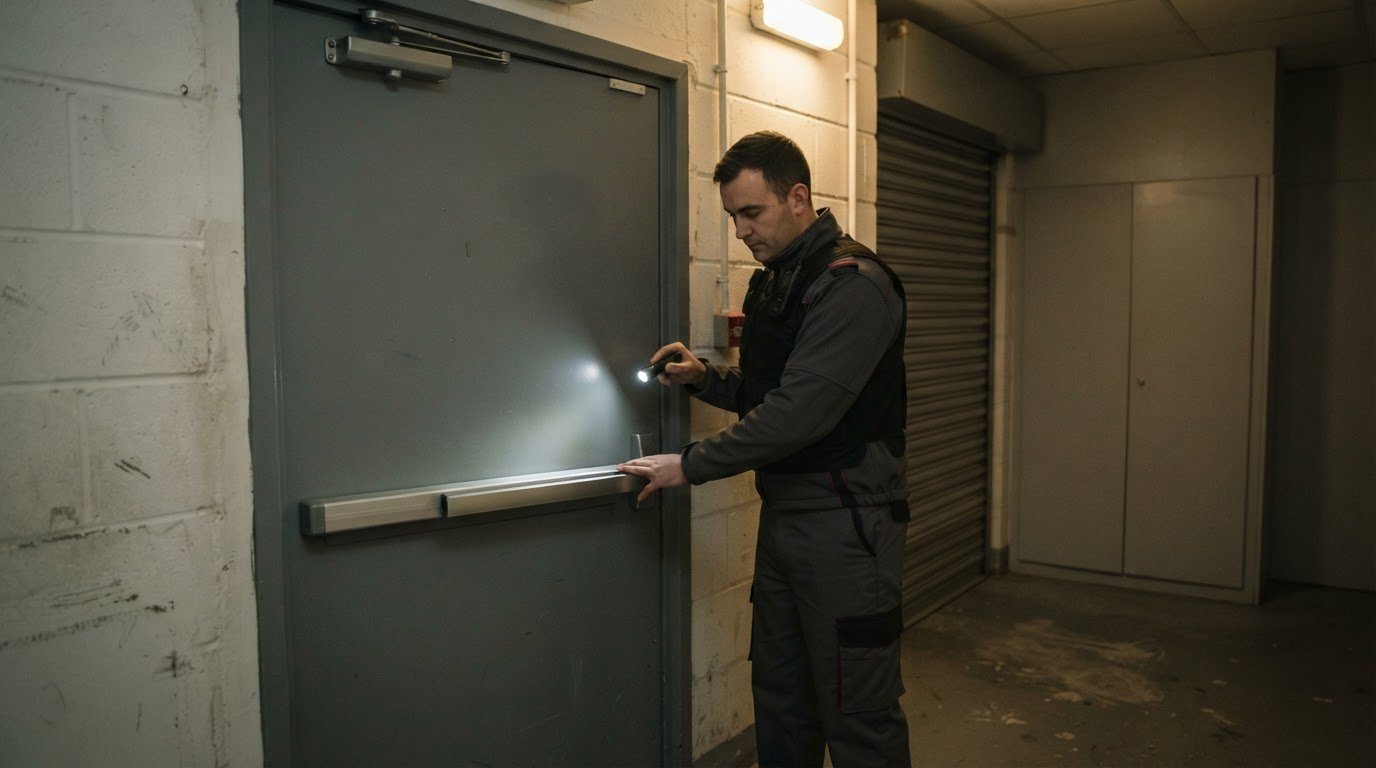
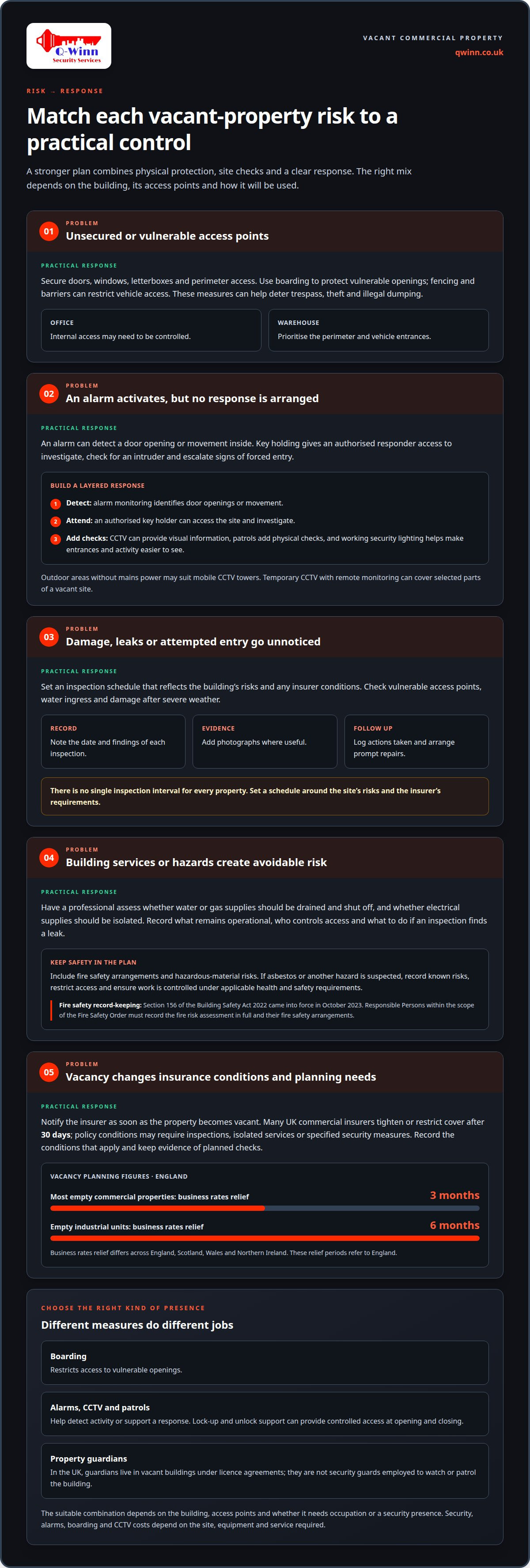
A monitored alarm can detect a door opening or movement inside an empty building. Key holding allows an authorised responder to access the site and investigate an activation, rather than leaving someone without keys to attend. A planned response can help identify trespass, check for an intruder and escalate signs of forced entry. Controlled access, inspections and prompt alarm response can also help deter unauthorised entry, squatting and theft.
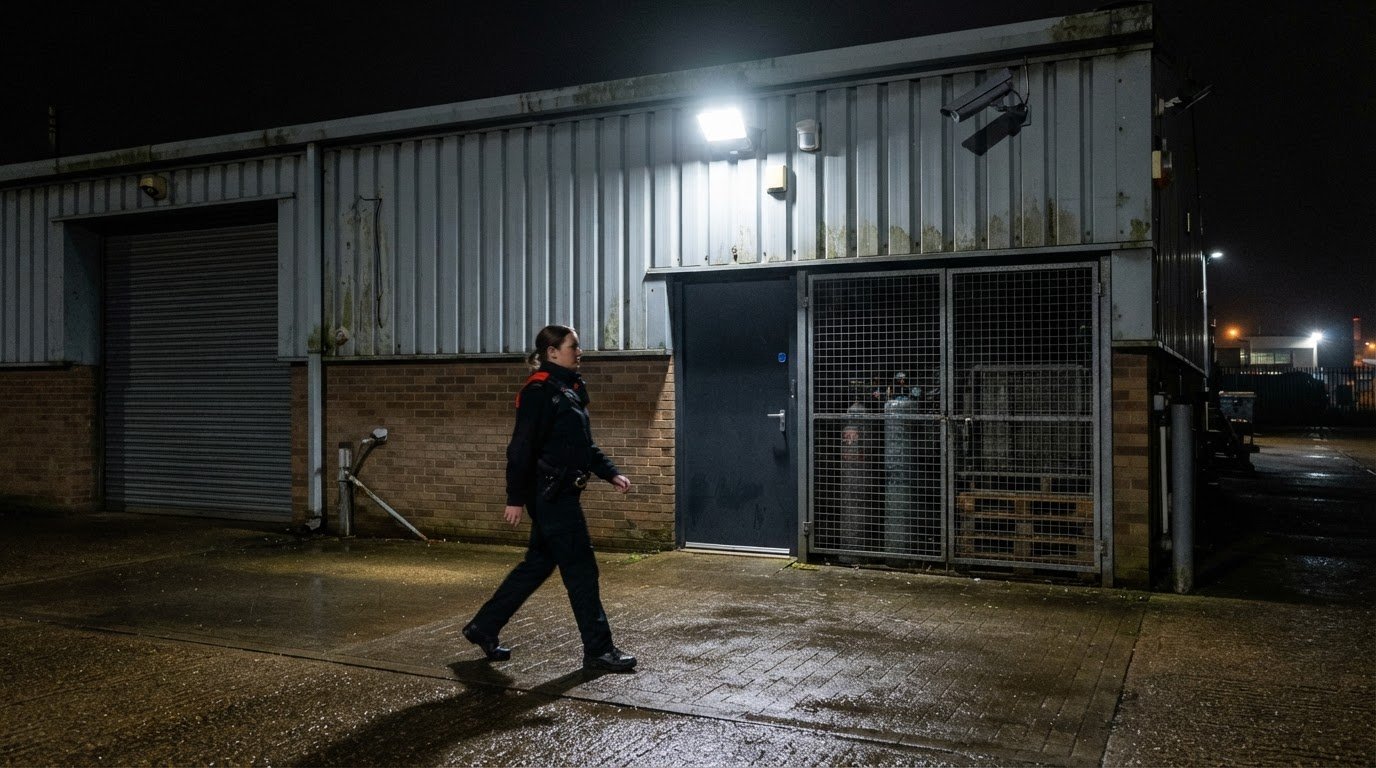
Physical measures strengthen that response. Secure doors, windows and other vulnerable access points, and use boarding where openings need extra protection. CCTV can provide visual information alongside alarms, while security patrols add physical checks. Outdoor areas without mains power may suit mobile CCTV towers, and temporary CCTV with remote monitoring can cover selected parts of a vacant site. Working security lighting makes entrances and activity easier to see.
Property guardianship is different from security patrols. In the UK, property guardians live in vacant buildings under licence agreements; they are not security guards employed to watch or patrol the building. Boarding restricts access, while alarms, CCTV and patrols help detect or respond to activity. The right combination depends on the building, its access points and whether it needs occupation or a security presence.
Costs for vacant property security, alarms, boarding and CCTV depend on the site, equipment and service required; a quote request determines the price. Section 156 of the Building Safety Act 2022 came into force in October 2023 and requires Responsible Persons within the scope of the Fire Safety Order to record the fire risk assessment in full and their fire safety arrangements, according to UK Parliament. Include fire safety arrangements alongside security planning.
What should a professional vacant property security plan include?
A professional plan combines measures to address the building’s risks. Secure doors, windows, letterboxes and perimeter access, then schedule inspections to spot damage, attempted entry or water leaks. Fencing and barriers can restrict vehicle access, while boarding can protect vulnerable openings. Together, these measures can deter trespass and reduce opportunities for theft or illegal dumping.
Building services also need careful attention. A professional can assess whether water or gas supplies should be drained and shut off, and whether electrical supplies should be isolated. Record what remains operational, who controls access and what to do if an inspection finds a leak. This helps owners reduce avoidable damage without disrupting essential systems.
Before work begins, professionals can identify equipment and materials for office clearance and arrange removal to prepare the property for reoccupation. Suitable measures differ between commercial buildings, industrial units and retail premises. An empty office may need internal access controlled, while a warehouse may need its perimeter and vehicle entrances prioritised. These site details help determine how to secure a vacant commercial property effectively.
Owners should arrange security and notify their insurer as soon as a property becomes vacant. Include fire safety arrangements and hazardous-material risks in the plan. If asbestos or another hazard is suspected, record known risks, restrict access and ensure work is controlled under applicable health and safety requirements. Relevant duties depend on the building and the work involved.
Business rates relief differs across England, Scotland, Wales and Northern Ireland. In England, most empty commercial properties receive three months of relief, according to UK Government; empty industrial units usually receive six months. Owners planning how to secure a vacant commercial property can factor applicable relief into vacancy planning, rather than assuming the same period applies across the UK.
For controlled access at opening and closing, professional lock-up and unlock support can form part of the plan.
3. Why are empty commercial properties such a target?
Once a tenant leaves, regular activity stops and unusual changes can go unnoticed. An intruder may find an unattended entrance, damaged windows or equipment left inside. Vacant premises can also face leaks and deterioration, leading to costly damage. An empty building therefore presents a different insurance risk from an occupied one.
In the UK, many commercial insurers tighten or restrict cover after a property has been vacant for 30 days. Policy conditions may require regular inspections, isolated services or specified security measures. A missed inspection or unsecured window could affect how a claim is handled. Owners should notify their insurer as soon as the premises become unoccupied, then record the conditions that apply during the vacancy.
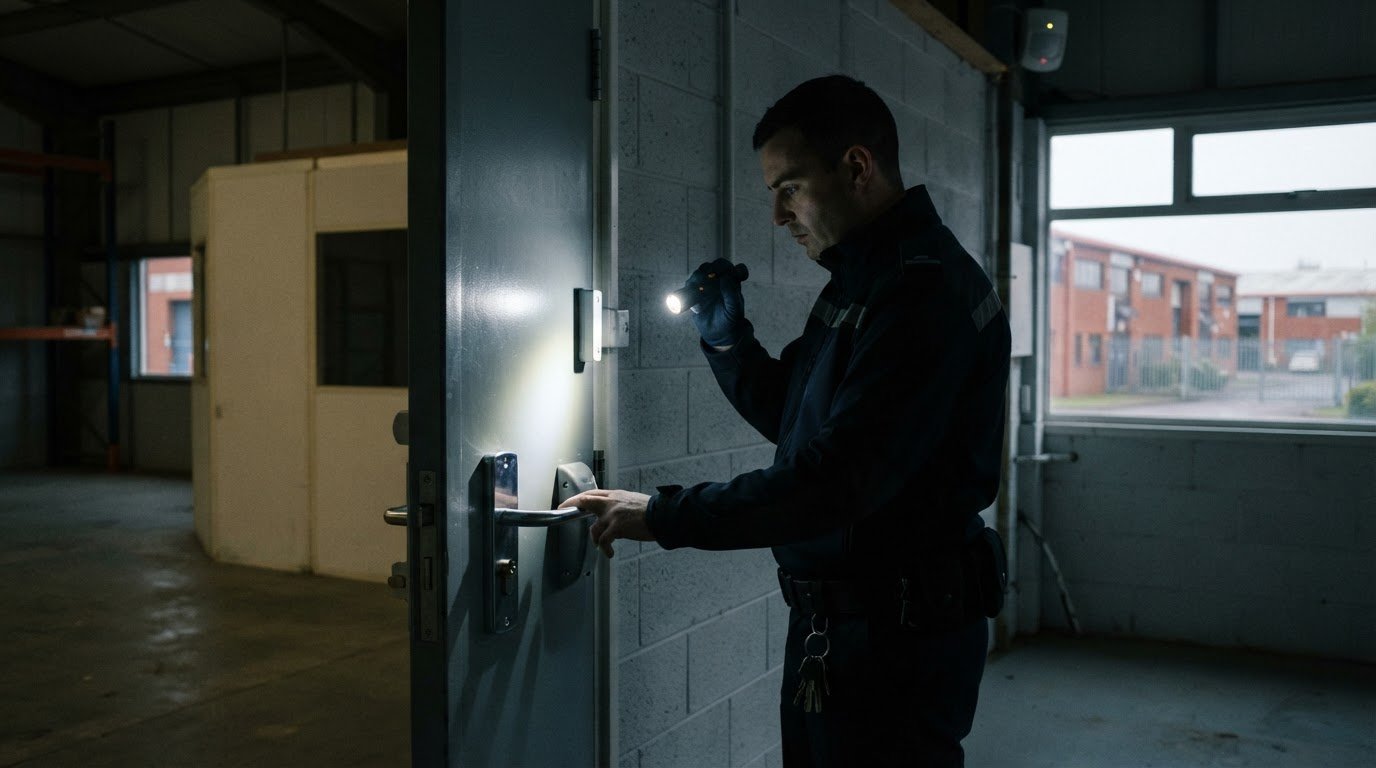
There is no single inspection interval that suits every vacant commercial property. Set a schedule that meets the insurer’s conditions and reflects the building’s risks, including vulnerable access points, water ingress and damage after severe weather. Record the date and findings of each inspection, add photographs where useful, and note any action taken. This creates a clear maintenance history and helps identify developing problems.
Prompt repairs matter. A broken lock, open window or leak can worsen if it remains unnoticed between visits. A written inspection log also helps owners track recurring issues and demonstrate that planned checks took place. For premises needing a visible on-site presence, arrange professional manned guarding as part of the wider security response.
Q-Winn Security
Q-Winn Security helps owners put a practical response plan in place for vacant commercial premises. When a building needs controlled access, alarm attendance or a visible security presence, its services can be matched to the site’s requirements. Key Holding & Alarm Response provides a route for responding to alarm activations, while Mobile Patrol and Static / Manned Guarding add on-site checks or presence. Lock-Up & Unlock Services can support controlled opening and closing.
The right combination depends on the building, its access points and how it will be used during the vacancy. Share the property’s layout, known vulnerabilities and relevant insurer conditions to shape a suitable approach. Contact Q-Winn Security to discuss security for your vacant property.
Put a clear security arrangement in place
To decide how to secure a vacant commercial property, turn the plan into an arrangement that fits the building’s next chapter. Whether it will remain empty briefly, undergo refurbishment or await a new tenant, clarify responsibilities and access arrangements from the outset.
Q-Winn Security can help shape a practical response through Key Holding & Alarm Response, Mobile Patrol and Lock-Up & Unlock Services. The appropriate mix depends on the site and the support it needs, without adding measures that serve no clear purpose.
Bring together the property’s layout, known access concerns and any insurer conditions when discussing the next step. A focused conversation can help establish what support makes sense for your premises. Contact Q-Winn Security to discuss a suitable security arrangement, and move forward with a clearer plan for the property.
Frequently Asked Questions
What should a professional vacant property security plan include?
The plan should set out site-specific risks, controls and who responds if something changes. Include a property access map, authorised keyholders, inspection records, alarm escalation arrangements and a process for reporting damage. For example, a plan for an office awaiting refurbishment should identify which rooms contain equipment and which entrances contractors may use. This gives everyone involved a shared, practical reference.
Why are empty commercial properties such a target?
When staff and customers are no longer routinely present, signs of forced entry, damage or unauthorised occupation may take longer to notice. A building may also contain materials or equipment that attract theft, and an unattended site can be used for dumping waste. Regular, documented visits help make changes visible. Risks vary with the property’s location, contents, condition and surrounding activity.
Is CCTV enough on its own to protect a vacant site?
No. CCTV can help capture activity, but it cannot physically prevent access or respond to an alarm activation by itself. A camera may record someone testing a door, for example, while a secure entrance, monitored alarm and planned response provide additional layers of protection. The useful combination depends on the site, including camera coverage, power access, lighting and how an incident is escalated.
What should you arrange when a commercial property becomes vacant?
Start by notifying the insurer and recording the vacancy date, then establish who controls keys and authorised access. Arrange an inspection schedule, document the building’s condition and note which utilities remain in use. Give relevant contacts a clear way to report leaks, damage or alarm activations. For a Bracknell property, a written handover can help keep owners and security personnel aligned.
What is the most cost-effective way to secure an empty building?
A risk-led plan is more useful than a fixed package. Prioritise weaknesses that could lead to entry or damage, then choose measures that address those risks without adding equipment or attendance the site doesn’t need. A small office with little left inside may need different arrangements from a warehouse holding valuable stock. Review the plan if the building’s use or condition changes.
Frequently Asked Questions
The plan should set out site-specific risks, controls and who responds if something changes. Include a property access map, authorised keyholders, inspection records, alarm escalation arrangements and a process for reporting damage. For example, a plan for an office awaiting refurbishment should identify which rooms contain equipment and which entrances contractors may use. This gives everyone involved a shared, practical reference.
When staff and customers are no longer routinely present, signs of forced entry, damage or unauthorised occupation may take longer to notice. A building may also contain materials or equipment that attract theft, and an unattended site can be used for dumping waste. Regular, documented visits help make changes visible. Risks vary with the property’s location, contents, condition and surrounding activity.
No. CCTV can help capture activity, but it cannot physically prevent access or respond to an alarm activation by itself. A camera may record someone testing a door, for example, while a secure entrance, monitored alarm and planned response provide additional layers of protection. The useful combination depends on the site, including camera coverage, power access, lighting and how an incident is escalated.
Start by notifying the insurer and recording the vacancy date, then establish who controls keys and authorised access. Arrange an inspection schedule, document the building’s condition and note which utilities remain in use. Give relevant contacts a clear way to report leaks, damage or alarm activations. For a Bracknell property, a written handover can help keep owners and security personnel aligned.
A risk-led plan is more useful than a fixed package. Prioritise weaknesses that could lead to entry or damage, then choose measures that address those risks without adding equipment or attendance the site doesn’t need. A small office with little left inside may need different arrangements from a warehouse holding valuable stock. Review the plan if the building’s use or condition changes.