Do I Need Key Holding for My Business? A 2026 Guide
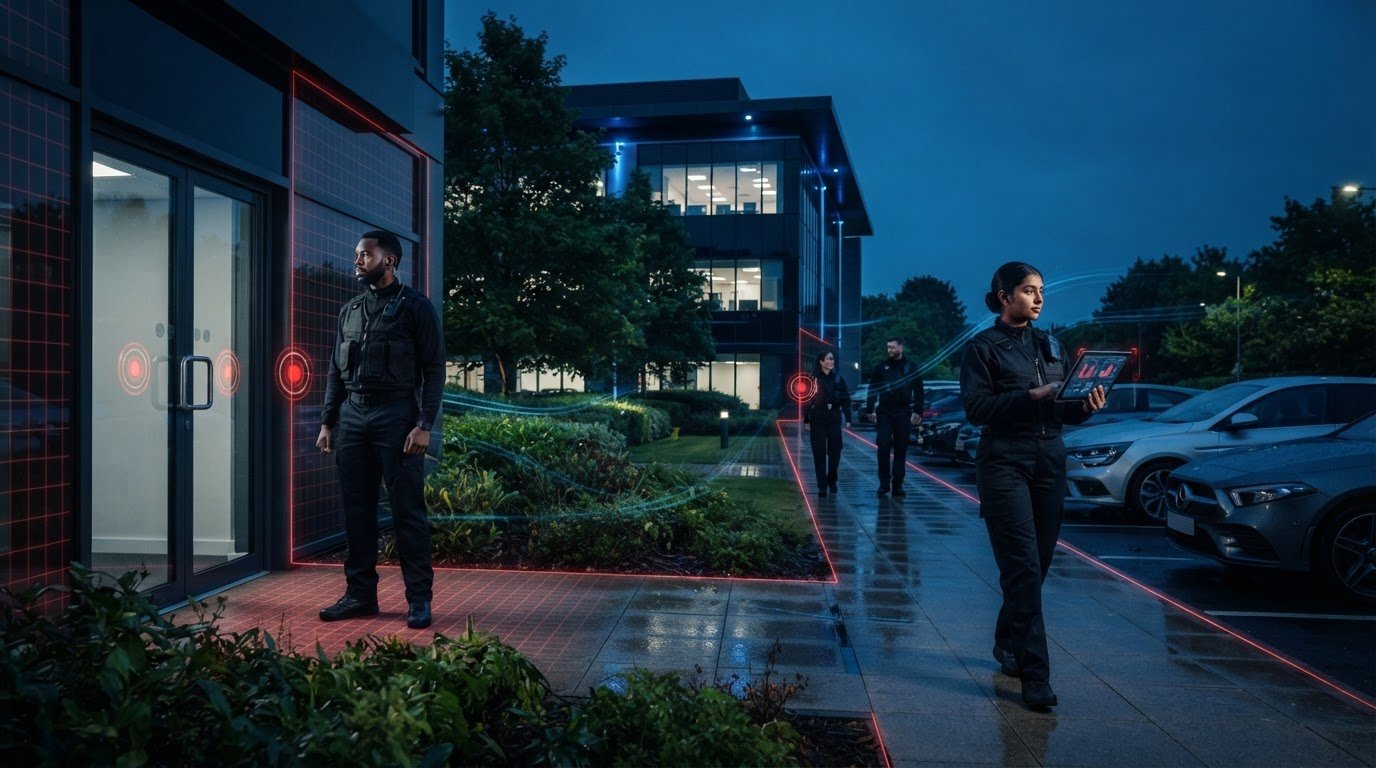
Who responds when your alarm sounds in the middle of the night, and would you want an employee making that journey alone? If you’re asking, “do I need a key holding service for my business?”, the answer depends on your premises, opening hours and the risks of relying on staff to attend out of hours.
An in-house keyholder may seem like the simplest option. But if employees can’t respond safely or reliably, professional cover can keep alarm call-outs separate from their personal time and give your response plan a dependable backup. This guide helps you compare staff response with professional key holding, assess your operating pattern and prepare clear site instructions. Q-Winn Security provides secure key storage and alarm response, with 24/7 response availability for businesses in Bracknell and nearby areas.
Key Takeaways
- To answer “do I need a key holding service for my business?”, assess your alarm history, site risks and whether a dependable keyholder can attend safely.
- Compare staff-held keys with contracted cover by looking at availability, employee burden, key security and who is responsible for responding.
- Set out your alarm procedures, access points, emergency contacts and essential site instructions to shape a clear response plan.
- Q-Winn Security’s secure key storage and alarm response, delivered by SIA-licensed officers, supports businesses in and around Bracknell.
Do I need a key holding service for my business? Start with your response plan
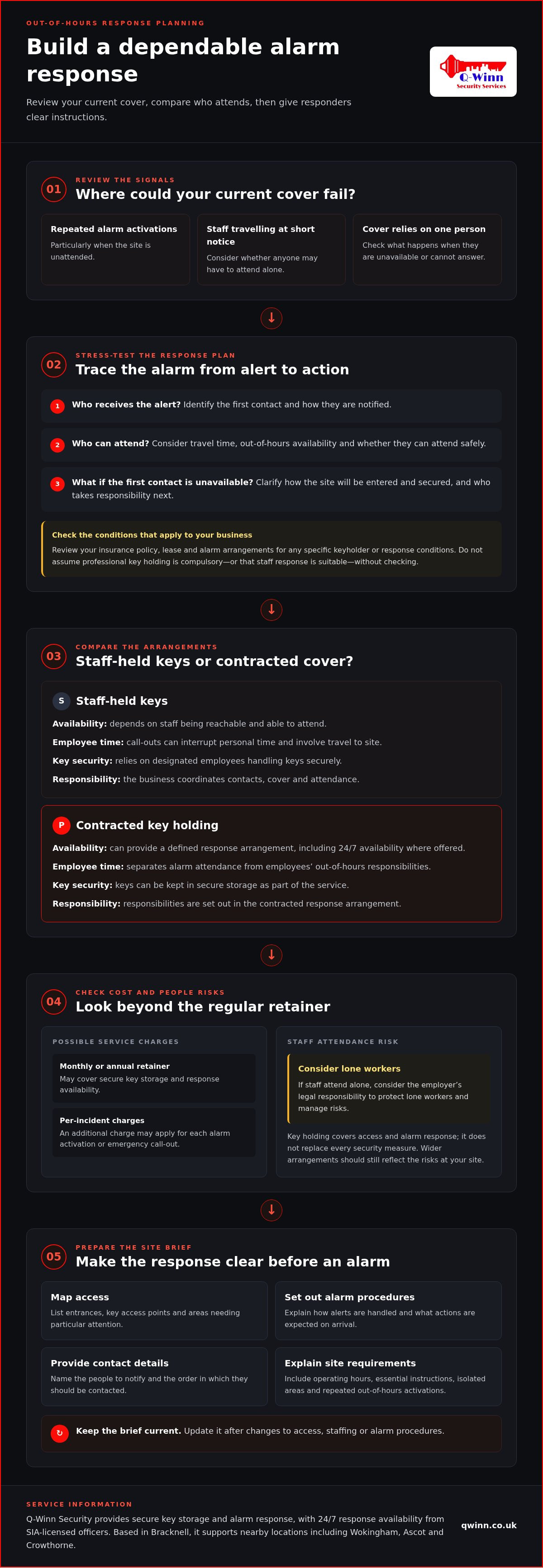
There’s no single answer to “do I need a key holding service for my business?” It depends on your out-of-hours cover, the risks at your premises and whether someone can attend reliably. Professional key holding may be worth considering if:
- Your alarm activates repeatedly, particularly when the site is unattended.
- Staff would need to travel to the premises at short notice or attend alone.
- No dependable keyholder is available outside business hours, or your cover depends on one person being reachable.
These are prompts to review your arrangements, not proof that every business needs contracted cover. Check your insurance policy, lease and alarm arrangements for any specific keyholder or response conditions. Requirements can depend on the circumstances, so don’t assume professional key holding is compulsory or that staff response is suitable without checking the terms that apply to your business.
Which gaps in your alarm response plan matter most?
Start with three questions: who receives an alarm alert, who can attend, and what happens if the first contact is unavailable? A plan that relies on one person can leave a gap when they’re ill, away or unable to answer. Consider how quickly someone can travel to the site, whether they can attend safely, how they’ll enter and secure it, and the disruption of leaving home at short notice.
Keys are part of how access is managed. Reviewing access control principles can help you think through who should hold keys and when entry is authorised. If your current procedure feels unclear, use this key holding and alarm response Bracknell guide to explore how a structured response plan can work. The aim is a dependable process with clear responsibility and no unnecessary risk to staff.
Staff-held keys or professional key holding: compare the practical trade-offs
There isn’t one right arrangement for every site. To decide whether staff-held keys are workable, compare how each option handles an alarm activation when employees are off duty.
| Consideration | Staff-held keys | Contracted key holding |
|---|---|---|
| Availability | Depends on staff being reachable and able to attend. | Can provide a defined response arrangement, including 24/7 availability where offered. |
| Employee burden | Call-outs may interrupt personal time and involve travel to site. | Separates alarm attendance from employees’ out-of-hours responsibilities. |
| Key security | Keys are held by designated employees, so arrangements rely on their secure handling. | Keys can be kept in secure storage as part of the service. |
| Responsibility | The business coordinates contacts, cover and attendance. | Responsibilities are set out in the contracted response arrangement. |
When comparing costs, look at the whole arrangement, not just the regular retainer. Key holding may involve a monthly or annual retainer for secure key storage and response availability, plus a charge for each alarm activation or emergency call-out. If staff attend alone, consider the employer’s legal responsibility to protect lone workers and manage risks. Professional key holding can reduce reliance on one employee, but it doesn’t replace every security measure. It covers access and alarm response; your wider arrangements should still reflect the risks at your site.
When is professional alarm response a better operational fit?
It may suit a business when staff can’t reliably attend at any hour, or when relying on a single keyholder leaves a weak point in the plan. Q-Winn Security provides secure key storage alongside alarm response, with 24/7 response availability. To see how the service works, explore Q-Winn’s key holding and alarm response, or visit Q-Winn Security.
Choosing key holding for a Bracknell business: define the cover you need
Once you’ve identified a gap in your response plan, turn it into clear site instructions. A useful brief describes how your premises operate and what should happen when an alarm activates, rather than leaving the response to assumptions.
What should you prepare before arranging key holding?
Gather the practical details an attending officer needs to understand the site and respond to an alarm:
- Map access: list entrances, key access points and any areas that need particular attention.
- Set out alarm procedures: explain how alerts are handled and what actions are expected on arrival.
- Provide contacts: name the people to notify and the order in which they should be contacted.
- Explain site requirements: note operating hours, essential instructions, isolated areas and repeated out-of-hours activations.
Keep these details current, particularly after changes to access, staffing or alarm procedures. For a wider view of site risks and planning, see commercial security planning for Bracknell businesses.
Q-Winn Security provides secure key storage and alarm response, with 24/7 response availability from SIA-licensed officers. Based in Bracknell, the company supports nearby locations including Wokingham, Ascot and Crowthorne. If you’re still weighing up “do I need a key holding service for my business?”, use your site information to define the response you need, then discuss cover for your Bracknell premises or nearby site with Q-Winn Security.
Make your out-of-hours plan dependable
Whether you need key holding depends on your premises, alarm response plan and who can attend reliably. Repeated activations, difficult out-of-hours access or reliance on one employee may signal that your current arrangements need a rethink. Compare staff-held keys with contracted cover, considering availability, employee time, key security and who is responsible for responding.
Before arranging support, organise your access details, alarm procedures, contacts and essential site instructions. Clear, up-to-date information helps shape the response around how your business operates.
Q-Winn Security is a Bracknell-based, family-run company with over 30 years of combined industry experience. Its key holding and alarm response service includes secure key storage, 24/7 response availability and SIA-licensed officers, supporting businesses in Wokingham, Ascot and Crowthorne. Discuss key holding and alarm response for your business and take a clear next step towards more dependable cover.
Frequently Asked Questions
Is a key holding service legally required for my business?
A professional key holding service isn’t automatically required for every business. Your insurance policy, lease or alarm arrangements may set specific conditions about who holds keys or responds to activations. Check the terms that apply to your premises before deciding. Don’t assume staff response is acceptable if your policy or other arrangements set out specific requirements.
Can my employees keep the business keys and respond to alarms?
Employees can be part of your keyholding arrangements, but consider whether they can attend reliably and safely whenever needed. A plan that relies on one person may leave a gap if they’re unavailable, and call-outs can intrude on personal time. To decide whether you need a key holding service, weigh these practical risks against the cover your site needs.
What happens when a key holding service receives an alarm call-out?
The service receives the alarm notification and arranges attendance under the agreed response procedure. An officer uses the securely stored key to access the premises, follows the site instructions and contacts the nominated people as required by the arrangement. The exact steps depend on the site plan. Clear access information, escalation contacts and instructions help make the response orderly.
How do I know whether my business needs 24-hour alarm response?
Consider whether your alarm is monitored outside opening hours, how often the premises are unattended and whether a staff member can respond reliably at any time. If an overnight activation could leave the site without an appropriate response, round-the-clock cover may be useful. Q-Winn Security provides 24/7 alarm response availability for businesses in Bracknell and nearby areas.
Frequently Asked Questions
Start with three questions: who receives an alarm alert, who can attend, and what happens if the first contact is unavailable? A plan that relies on one person can leave a gap when they’re ill, away or unable to answer. Consider how quickly someone can travel to the site, whether they can attend safely, how they’ll enter and secure it, and the disruption of leaving home at short notice. Keys are part of how access is managed. Reviewing access control principles can help you think through who should hold keys and when entry is authorised. If your current procedure feels unclear, use this key holding and alarm response Bracknell guide to explore how a structured response plan can work. The aim is a dependable process with clear responsibility and no unnecessary risk to staff. There isn’t one right arrangement for every site. To decide whether staff-held keys are workable, compare how each option handles an alarm activation when employees are off duty. When comparing costs, look at the whole arrangement, not just the regular retainer. Key holding may involve a monthly or annual retainer for secure key storage and response availability, plus a charge for each alarm activation or emergency call-out. If staff attend alone, consider the employer’s legal responsibility to protect lone workers and manage risks. Professional key holding can reduce reliance on one employee, but it doesn’t replace every security measure. It covers access and alarm response; your wider arrangements should still reflect the risks at your site.
It may suit a business when staff can’t reliably attend at any hour, or when relying on a single keyholder leaves a weak point in the plan. Q-Winn Security provides secure key storage alongside alarm response, with 24/7 response availability. To see how the service works, explore Q-Winn’s key holding and alarm response, or visit Q-Winn Security. Once you’ve identified a gap in your response plan, turn it into clear site instructions. A useful brief describes how your premises operate and what should happen when an alarm activates, rather than leaving the response to assumptions.
Gather the practical details an attending officer needs to understand the site and respond to an alarm: Keep these details current, particularly after changes to access, staffing or alarm procedures. For a wider view of site risks and planning, see commercial security planning for Bracknell businesses. Q-Winn Security provides secure key storage and alarm response, with 24/7 response availability from SIA-licensed officers. Based in Bracknell, the company supports nearby locations including Wokingham, Ascot and Crowthorne. If you’re still weighing up “do I need a key holding service for my business?”, use your site information to define the response you need, then discuss cover for your Bracknell premises or nearby site with Q-Winn Security. Whether you need key holding depends on your premises, alarm response plan and who can attend reliably. Repeated activations, difficult out-of-hours access or reliance on one employee may signal that your current arrangements need a rethink. Compare staff-held keys with contracted cover, considering availability, employee time, key security and who is responsible for responding. Before arranging support, organise your access details, alarm procedures, contacts and essential site instructions. Clear, up-to-date information helps shape the response around how your business operates. Q-Winn Security is a Bracknell-based, family-run company with over 30 years of combined industry experience. Its key holding and alarm response service includes secure key storage, 24/7 response availability and SIA-licensed officers, supporting businesses in Wokingham, Ascot and Crowthorne. Discuss key holding and alarm response for your business and take a clear next step towards more dependable cover.
A professional key holding service isn’t automatically required for every business. Your insurance policy, lease or alarm arrangements may set specific conditions about who holds keys or responds to activations. Check the terms that apply to your premises before deciding. Don’t assume staff response is acceptable if your policy or other arrangements set out specific requirements.
Employees can be part of your keyholding arrangements, but consider whether they can attend reliably and safely whenever needed. A plan that relies on one person may leave a gap if they’re unavailable, and call-outs can intrude on personal time. To decide whether you need a key holding service, weigh these practical risks against the cover your site needs.
The service receives the alarm notification and arranges attendance under the agreed response procedure. An officer uses the securely stored key to access the premises, follows the site instructions and contacts the nominated people as required by the arrangement. The exact steps depend on the site plan. Clear access information, escalation contacts and instructions help make the response orderly.
Consider whether your alarm is monitored outside opening hours, how often the premises are unattended and whether a staff member can respond reliably at any time. If an overnight activation could leave the site without an appropriate response, round-the-clock cover may be useful. Q-Winn Security provides 24/7 alarm response availability for businesses in Bracknell and nearby areas.