Construction Site Security Bracknell: The 2026 Essential Protection Checklist
A secure perimeter can slow an intruder, but it cannot recover a stolen telehandler or undo damage once someone is inside. When planning construction site security Bracknell, ask how an alarm will be handled and who is responsible for responding.
Plant and tool theft can disrupt schedules, while vandalism and arson can leave site managers facing costly setbacks. Insurer requirements can vary, so check your policy rather than assume one checklist applies to every development.
This practical checklist sets out steps to reduce theft, deter unauthorised access and document your arrangements for your insurer. It covers site boundaries, access routines, valuable equipment and out-of-hours protection, including where mobile patrols, manned guarding, key holding and lock-up services may fit. Q-Winn Security is a family-run, Bracknell-based company with over 30 years of combined industry experience. The aim is a better-protected site and greater peace of mind when you are away.
Key Takeaways
- Map high-value plant, fuel and vulnerable boundaries to identify where your construction site security Bracknell plan needs extra attention.
- Review hoarding and anti-climb measures, then set a consistent lock-up and unlock routine for every shift change.
- Check who responds to out-of-hours alarms and how keys are held, so staff are not left to manage incidents themselves.
- Before appointing a security partner, verify SIA licensing, relevant experience and the response arrangements for your site.
Construction Site Security Bracknell: Assessing Your Site Risks
Start with a site walk-through before deciding where security needs strengthening. Mark plant compounds, fuel bowsers, tool stores and temporary offices, then note which assets are visible from outside the boundary. For practical context on hazards and controls, review this overview of construction site safety, then focus your audit on the risks specific to your site.
Inspect the perimeter from both sides where access is permitted. Look closely at public footpaths, wooded edges, gates and joins in the hoarding. Check whether lighting covers entrances and valuable storage areas after dark, and whether parked machinery, stacked materials or site cabins create hidden corners. Ask a colleague to view the site from the street: are there places where someone could approach or linger without being easily seen?
Local Bracknell Risk Factors
Map how the A329(M), M4 and nearby business parks relate to your site’s entrances and delivery routes. Their proximity does not prove a greater security risk, but it can inform your assessment of vehicle access, visibility and how assets could be moved. Record practical observations too. Note reports of trespassing or fly-tipping from site staff and neighbours, and check boundary sections beside footpaths or less-used land rather than relying on assumptions about particular areas.
Inventory and Asset Mapping
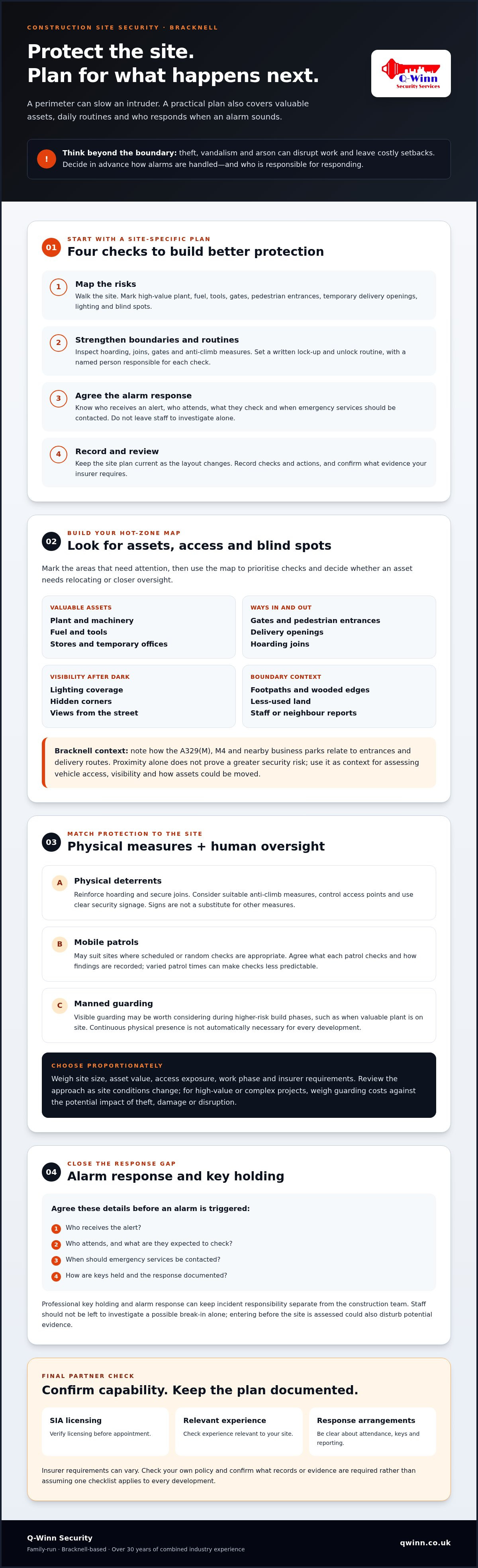
Create a simple site plan and mark high-value machinery, fuel, tools, gates and pedestrian entrances. Use it as a hot-zone map to prioritise checks and identify assets that may need relocating or closer oversight. Include lighting coverage, blind spots and any boundary that deserves a closer inspection.
Document every access point, including temporary openings used for deliveries. Assign responsibility for closing and locking each gate, and use the map during the daily lock-up routine. Update it as the layout changes. A current, Bracknell-specific audit gives your construction site security plan a practical foundation and helps you choose proportionate measures.
Layering Your Site Protection: Physical and Human Deterrents
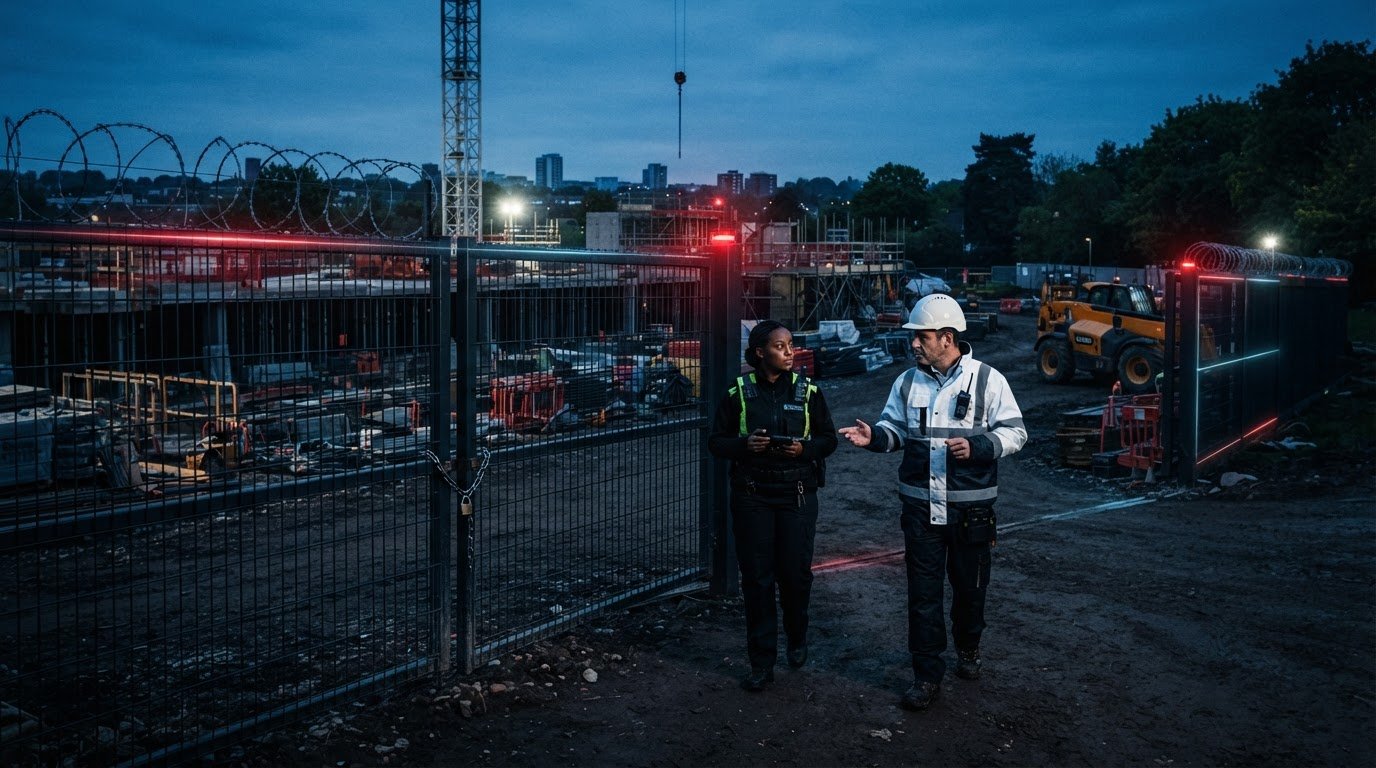
A secure site needs more than a strong boundary. Reinforce hoarding, secure joins and consider suitable anti-climb measures, while keeping access points controlled and clearly assigned. The HSE site protection guidelines offer a useful reference for barriers and protecting the public from site hazards. Add clear security signage so people know access is restricted, but do not rely on signs alone.
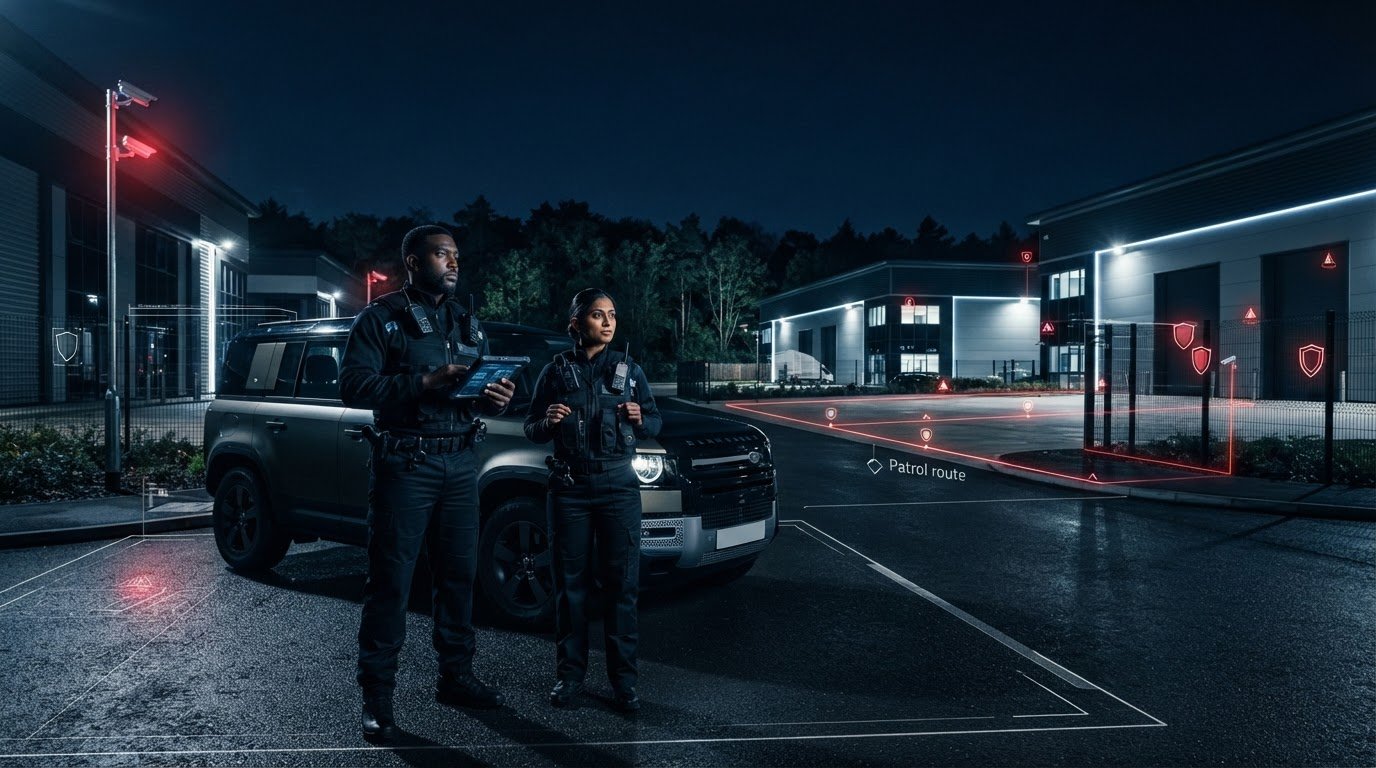
Set a written lock-up and unlock routine for every shift change. Name who checks each gate, store and plant area, and how they confirm the site is secure. For additional human oversight, discuss mobile security patrols. If varied patrol times are part of the agreed plan, checks are less predictable to anyone watching the site.
Patrols, Reports and Visible Deterrence
Ask what each patrol checks and how findings are recorded. A dated report of access points checked, concerns found and actions taken can support your security records. Confirm with your insurer what evidence it requires. Mobile patrols may suit sites where scheduled or random checks are appropriate, while visible manned guarding services may be worth considering during higher-risk build phases, such as when valuable plant is on site.
Choose Coverage to Match Site Risk
A continuous physical presence is not automatically necessary for every Bracknell development. Consider site size, asset value, access exposure, work phase and insurer requirements before deciding between static guarding and mobile checks. For a high-value or complex project, weigh the cost of guarding against the potential impact of theft, damage or disruption. Review the decision as site conditions change.
For construction site security Bracknell, a local partner can help you assess which combination of site security options fits your risk plan. Keep the approach practical, documented and responsive to the build.
Rapid Response and Key Holding: Managing Vulnerabilities
An alarm should trigger a clear response plan, not send a member of the site team alone to investigate a possible break-in. Staff could face an unsafe situation, and entering before the site has been assessed could disturb potential evidence. Agree in advance who receives alerts, who attends and when emergency services should be contacted. Professional key holding and alarm response can keep that responsibility separate from your construction team.
Why Professional Alarm Response Matters
Ask how an alarm is handled, what the responder is expected to check and how incidents are recorded. A consistent process can help distinguish an apparent fault from signs of intrusion, reducing the pressure on staff to attend every alert. Confirm the provider’s SIA licensing arrangements and how officers are instructed to act if they find damage, an open gate or evidence of entry.
Response coverage is a practical question to settle before appointing a provider. Q-Winn Security is based in Bracknell and serves a 15-mile radius, including Wokingham and Ascot. Ask for the expected arrangements for your exact site address, including in Crowthorne, and clarify how response times are measured.
Secure Key Management Protocols
Set out a documented key handover process: identify authorised contacts, record which keys operate which doors, and agree how keys are stored and released. Check that the storage arrangements suit the response plan rather than making assumptions about the provider’s base or key management. Build lock-up and unlock services into shift routines, with named responsibilities and a clear record of completed checks.
For construction site security Bracknell, a local, accountable partner can make communication more direct. Q-Winn Security provides 24/7 key holding and alarm response. Discuss key holding and alarm response and confirm the coverage and response expectations for your site.
Selecting a Local Security Partner: The Final Compliance Check
The right provider should understand your site’s layout, operating routine and risks, not simply offer a standard package. For construction site security in Bracknell, ask how the proposed service will work around deliveries, shift changes and changing build phases. Check that officers undertaking licensable roles hold the appropriate SIA licences, and ask about relevant construction experience. Q-Winn Security is a family-run Bracknell firm with over 30 years of combined industry experience.
Local Accountability and Communication
Before signing, find out who manages the account and who to contact if site conditions change. Ask to see a sample patrol or incident report, and check how concerns are passed to your nominated site contact. A local firm may bring useful familiarity with the area, but ask how that informs its plan rather than assuming it has specific intelligence about your site or current crime trends. Confirm that the service is tailored to your risk assessment, not copied from a standard template.
A Bracknell base alone does not establish response speed. Ask for the expected arrangements for your site address, how response times are recorded and what happens if the usual contact is unavailable. Get the agreed scope in writing, including coverage, responsibilities and escalation procedures.
Insurance and Compliance Checks
Insurer requirements vary, so check your own policy and ask what records it expects. Clarify whether it requires patrol logs, incident reports, proof of officer licensing or other evidence, and how these will be provided and retained. Do not assume a provider’s documentation automatically satisfies your insurer. Verify the relevant insurance cover and responsibilities directly with the provider. SIA licensing and insurance are separate checks.
A dependable partner gives clear answers and maintains open communication. Use this final review to confirm the service fits your site’s requirements, then keep the agreed documents accessible as the project changes.
Put a Stronger Site Security Plan in Place
Effective construction site security Bracknell starts with a clear view of your risks, consistent routines and a response plan that does not leave staff to manage an alarm alone. Keep your site map and access procedures current as the build changes, and check that your arrangements align with your insurer’s requirements.
The right partner should bring more than a standard contract. Q-Winn Security is family-run and based in Bracknell, with over 30 years of combined industry experience and SIA-licensed officers. Confirm the response arrangements for your specific site and the reporting you will receive.
With practical planning and accountable support, you can protect valuable assets and focus on keeping the project moving. Discuss security for your Bracknell site with Q-Winn Security and take the next step towards a more confident, well-managed site.
Frequently Asked Questions
What is the most common security risk for construction sites in Bracknell?
Plant and tool theft are important risks to assess, but the information available does not establish which offence is most common on Bracknell construction sites. Include machinery, fuel, tools and materials in your site risk review. Check where they are stored, how visible they are from outside the boundary and whether access points are secured. These checks help shape construction site security around your actual assets.
Why should I use a professional key holding service instead of my site manager?
A professional key holding service means your site manager does not have to attend an alarm call-out personally. That can reduce disruption and avoid placing an employee in a potentially unsafe situation before the site has been assessed. Agree in advance how alerts are handled, who may access the keys and what the responder should do if they find signs of intrusion. Check that the provider’s process suits your site and your insurer’s requirements.
How often should mobile security patrols visit my site?
There is no single patrol frequency that suits every site. Base the schedule on your risk assessment, valuable assets, access points, build phase and any requirements set by your insurer. Ask whether checks can take place at varied times, which areas are inspected and what gets recorded. For a Bracknell development, review the arrangement whenever site conditions change, such as when machinery or fuel is moved or new access routes open.
Is manned guarding necessary for small residential developments in Berkshire?
Not necessarily. The decision depends on the site’s specific risks, not its size alone. Consider the value of plant and materials, boundary exposure, access arrangements, project phase and insurance conditions. A small site with exposed access points may need a different approach from a larger, well-controlled development. Compare static guarding with mobile patrols and other measures, then document why your chosen level of protection is proportionate.
What happens if an alarm is triggered at my site at 3 AM?
The response depends on the arrangements agreed with your security provider. With key holding and alarm response, an authorised responder can attend using securely held keys, rather than requiring the site manager to go alone. Confirm how alerts are received, what verification and attendance involve, and when the police or emergency services may be contacted. Q-Winn Security provides 24/7 key holding and alarm response. Ask about the specific arrangements for your site.
How does local security knowledge help prevent site theft?
A Bracknell-based provider may be familiar with local routes, nearby developments and practical challenges for sites in the area. That familiarity can support clearer planning and communication, but it should not replace a site-specific assessment or be treated as proof of current crime patterns. Share details about your boundaries, access points and previous concerns, then ask how the provider will reflect them in patrols, reporting and alarm response.
Frequently Asked Questions
Plant and tool theft are important risks to assess, but the information available does not establish which offence is most common on Bracknell construction sites. Include machinery, fuel, tools and materials in your site risk review. Check where they are stored, how visible they are from outside the boundary and whether access points are secured. These checks help shape construction site security around your actual assets.
A professional key holding service means your site manager does not have to attend an alarm call-out personally. That can reduce disruption and avoid placing an employee in a potentially unsafe situation before the site has been assessed. Agree in advance how alerts are handled, who may access the keys and what the responder should do if they find signs of intrusion. Check that the provider’s process suits your site and your insurer’s requirements.
There is no single patrol frequency that suits every site. Base the schedule on your risk assessment, valuable assets, access points, build phase and any requirements set by your insurer. Ask whether checks can take place at varied times, which areas are inspected and what gets recorded. For a Bracknell development, review the arrangement whenever site conditions change, such as when machinery or fuel is moved or new access routes open.
Not necessarily. The decision depends on the site’s specific risks, not its size alone. Consider the value of plant and materials, boundary exposure, access arrangements, project phase and insurance conditions. A small site with exposed access points may need a different approach from a larger, well-controlled development. Compare static guarding with mobile patrols and other measures, then document why your chosen level of protection is proportionate.
The response depends on the arrangements agreed with your security provider. With key holding and alarm response, an authorised responder can attend using securely held keys, rather than requiring the site manager to go alone. Confirm how alerts are received, what verification and attendance involve, and when the police or emergency services may be contacted. Q-Winn Security provides 24/7 key holding and alarm response. Ask about the specific arrangements for your site.
A Bracknell-based provider may be familiar with local routes, nearby developments and practical challenges for sites in the area. That familiarity can support clearer planning and communication, but it should not replace a site-specific assessment or be treated as proof of current crime patterns. Share details about your boundaries, access points and previous concerns, then ask how the provider will reflect them in patrols, reporting and alarm response.