
Securing Vacant Commercial Property: A Practical Guide for Bracknell Landlords
Why Vacant Commercial Property Is a Bigger Risk Than You Think
Across Bracknell and the wider Thames Valley, vacant commercial units have become a magnet for trespass, vandalism, and metal theft. Insurance industry data consistently shows that empty premises face a significantly higher risk of break-in, arson, and squatting than occupied buildings — and the bill for cleanup, lost rent, and reinstatement falls squarely on the owner.
The good news is that the risk is manageable. With the right mix of physical presence, alarms, and routine checks, a vacant property can be secured to a standard that satisfies both insurers and local authorities. Here is what actually works.
The Three Threats Every Vacant Site Faces
Before choosing a security approach, it helps to understand what you are protecting against. Vacant sites attract three distinct threats, and each needs a different response.
- Opportunistic trespass: drifters and explorers who notice an unoccupied building and treat it as shelter. They rarely intend damage, but a broken window or forced door is the usual entry route — and the repair cost falls on you.
- Targeted theft: copper pipework, lead flashing, and even wiring are stripped out and sold for scrap. These attacks are planned, fast, and often happen overnight.
- Arson and vandalism: the most damaging threat by far. A single deliberate fire can write off a building that stood for decades and trigger months of insurance negotiation.
Mobile Patrols: The Cost-Effective Baseline
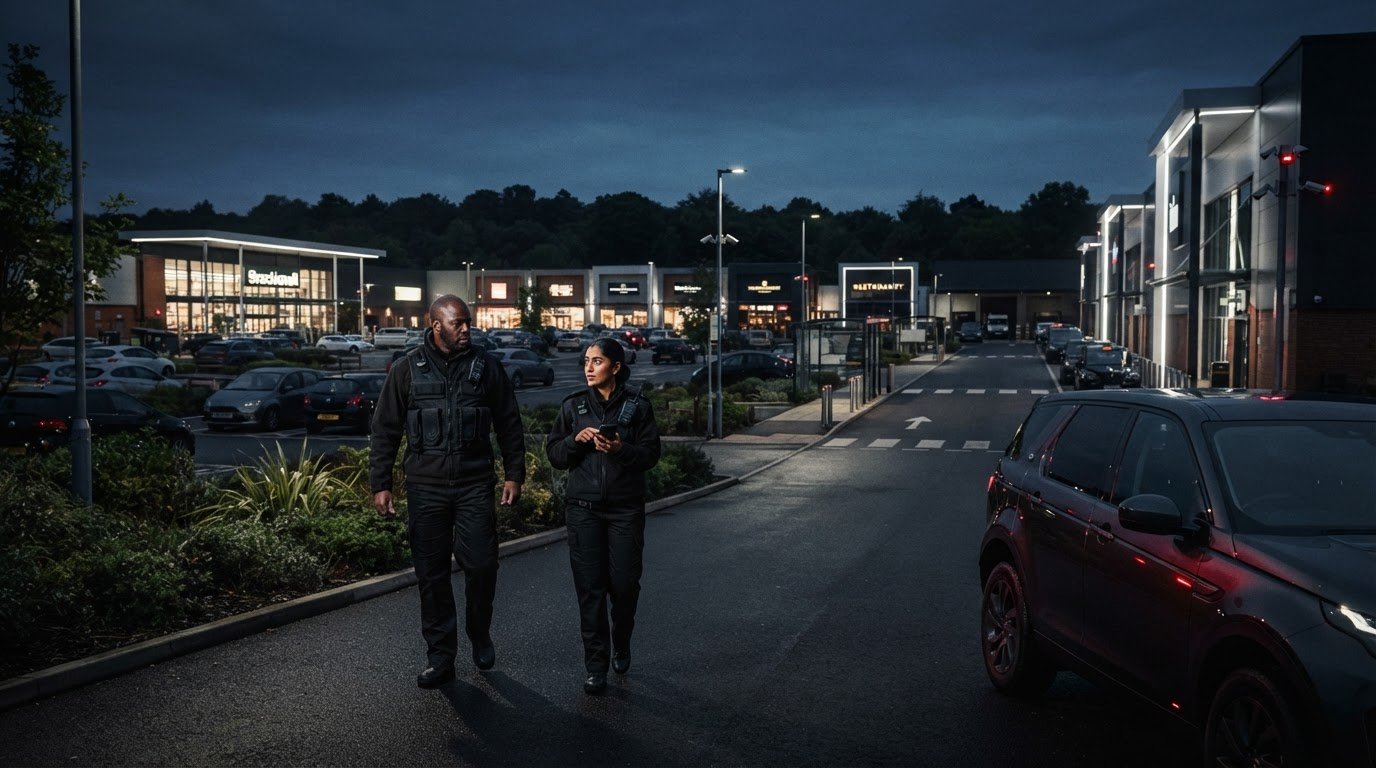
For most vacant commercial properties, a mobile patrol offers the best balance of cost and coverage. A uniformed officer visits the site on an unpredictable schedule — typically several times per night — checks all access points, and logs each visit. The unpredictability is the point: a fixed-time patrol can be observed and worked around, but a roving schedule cannot.
Each patrol should confirm perimeter integrity, check for signs of forced entry, and verify that alarms and lighting are functioning. A paper or digital log gives you an auditable record that insurers and landlords can rely on.
The key is consistency with variety: visit every night, but never at the same minute. That single principle defeats most opportunistic reconnaissance.
Key Holding and Alarm Response: When the Call Comes at 3am
If your site has a monitored intruder alarm — and it should — every activation has to be responded to. That response cannot be the owner driving across Berkshire in the small hours. It should be a key holding service with a trained, SIA-licensed officer who holds your keys securely and attends within an agreed response time.
A proper key holding service does three things: responds to alarm activations, resets the system, and secures the premises. If police attendance is required, the key holder liaises with officers on site. Crucially, you should not be woken for every false alarm — the service filters and handles them for you.
Manned Guarding for High-Value or High-Risk Sites
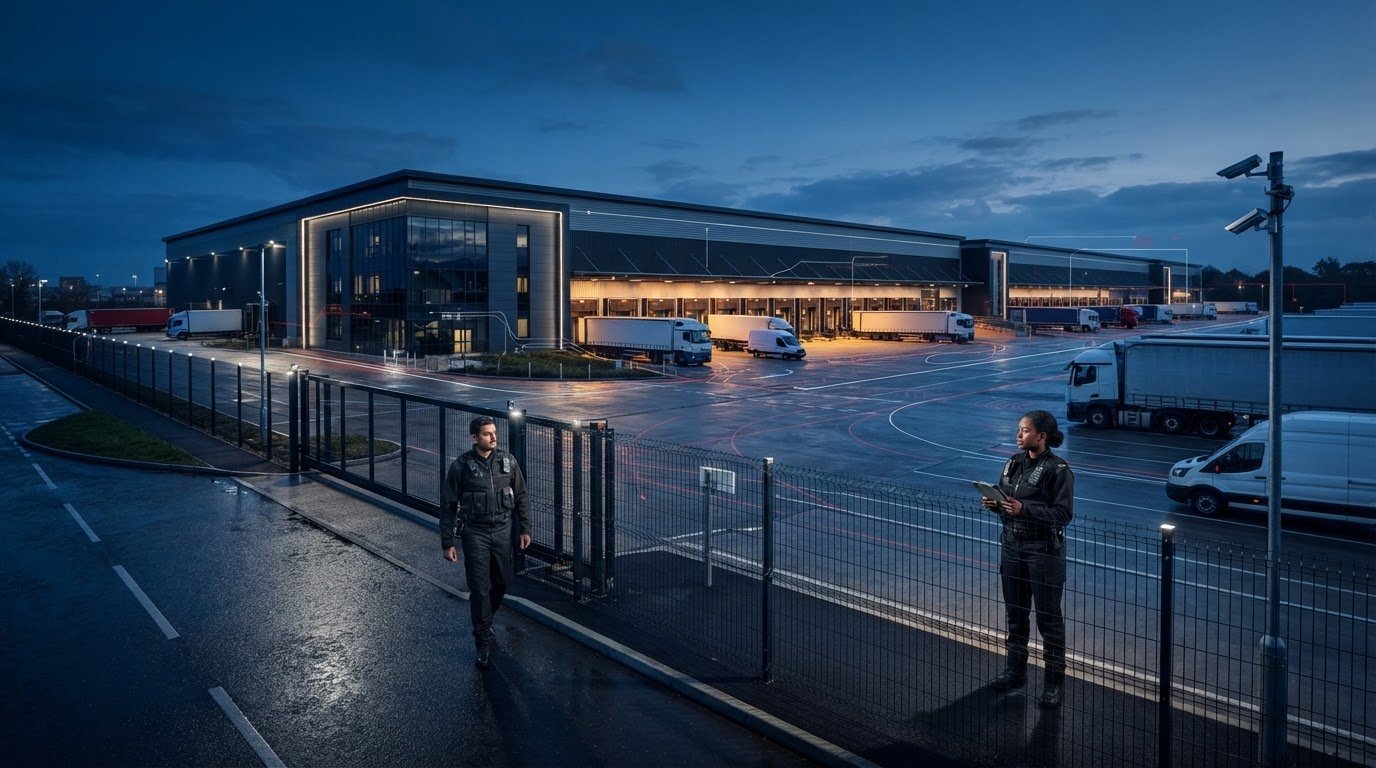
For sites with high-value contents, a history of repeat incidents, or long vacancy periods, manned guarding is the right call. A static officer on site provides an immediate deterrent and the fastest possible response to any incident. The cost is higher than a patrol, but for the right site it is the only option that genuinely removes the risk.
Look for guarding that is SIA-licensed, properly briefed on your site’s specific risks, and backed by a supervisor who carries out unannounced welfare and performance checks.
Lock-Ups and Open-Ups for Operating Sites
Even occupied premises benefit from a professional lock-up and open-up service. Having a security officer secure the building at close of business and open it again in the morning removes a routine burden from staff, ensures the building is checked twice daily, and provides a clear handover record. It is one of the highest-value, lowest-cost security investments a business can make.
Putting It Together: A Layered Approach
No single measure secures a vacant property. The most effective setups layer three elements:
- A physical presence — patrol, key holding, or guarding — that deters and responds.
- Electronic protection — monitored alarms and CCTV — that detects and records.
- Physical hardening — secure locks, lighting, and boarding — that slows an intruder down.
Each layer covers the gaps in the others. Patrols cover the time between alarm activations; alarms cover the time between patrols; hardening buys time for whichever responds first.
A Note on Insurance and Compliance
Most commercial property insurers now require documented security measures as a condition of cover for vacant premises. A professional security provider will supply the patrol logs, key holding agreement, and site-specific risk assessment that your insurer expects. Without them, a claim following an incident can be declined — turning a manageable risk into an uninsured loss.
If you hold a commercial property in or around Bracknell that is vacant or underused, the cheapest moment to secure it is before anything happens. A short site survey costs nothing and gives you a clear, insurer-ready plan.
Frequently Asked Questions
Most insurers require at least one patrol per night, but unpredictable timing matters more than frequency. A roving schedule of several checks per night, never at the same minute, is the standard recommendation for vacant commercial sites.
A key holding service securely stores your keys, responds to monitored alarm activations within an agreed time, resets the system, and secures the premises. It filters false alarms so the property owner is not disturbed unnecessarily.
Manned guarding offers the fastest response and strongest deterrent, but it costs more. For high-value or high-risk sites it is the right choice; for most vacant commercial properties, unpredictable mobile patrols provide a better balance of cost and coverage.
Most will, provided the patrol is documented with auditable logs, visits follow an unpredictable schedule, and a site-specific risk assessment is in place. Your security provider should supply these records on request.