Bracknell Logistics and Distribution Security: A Practical Site Guide
What if a security gap opens just as the last vehicle leaves? Bracknell logistics and distribution security needs to account for more than busy gates and loading bays. Unauthorised access, stock loss and delivery disruption can all become concerns when site activity changes or falls quiet overnight.
Visible protection matters, but so does having a clear response beyond operating hours. The right mix depends on your premises, people and daily movements. This guide shows you how to review priorities around your perimeter, loading areas and operations, then consider how static guarding, mobile patrols, lock-up and unlock services, and key holding with alarm response can support them.
Q-Winn Security is a family-run company based in Bracknell, with over 30 years’ combined experience and SIA-licensed officers. Read on for practical ways to match security support to your site’s activity and build a clear plan around your operation.
Key Takeaways
- Map valuable stock, staff areas, vehicle movements and access points to identify where your site may be most exposed.
- Prioritise risks by considering their potential impact on people, goods and operations.
- Match guarding, mobile patrols and alarm response to the coverage your site needs.
- Bring complementary services together in a practical plan for Bracknell logistics and distribution security.
Bracknell logistics and distribution security: where site risks arise
At a distribution site, security planning covers more than stock. It should account for staff, vehicles, goods and the routines that keep work moving. Exposure changes during the day: loading bays may be busy and visible during deliveries, then quieten later. Shift changes can also bring more people and vehicles through access points at once.
Logistics security is not simply a guard at the entrance. It means matching protection to the movement of people, vehicles and goods across the site. This operational view reflects the broader principles described in the Supply Chain Security Overview, where security concerns extend across the movement and handling of goods.
Which parts of a distribution site need particular attention?
Start with areas where activity, access and valuable goods meet. Loading bays, delivery entrances and vehicle parking each have different requirements. Set out how staff should manage authorised access, keep deliveries orderly and report unusual activity. Include contractor routes in your review: people unfamiliar with site routines may need clear directions and access procedures.
- Loading areas: Review who can approach goods during loading and unloading, and how activity is supervised.
- Vehicle access and parking: Map entry routes, waiting areas and places where vehicles are left when not in use.
- Boundaries and quieter periods: Note less active sections of the perimeter and the times when fewer staff are on site.
Compare these areas with your daily schedule. Shift changes may bring a brief increase in movement, while quieter periods can mean fewer people are available to notice a concern. Mark the relevant locations and times on a site plan before deciding where a visible guard or mobile patrol could add value. This gives Bracknell logistics and distribution security a practical focus: support the people and processes that keep the operation moving, not just the front gate.
How to plan logistics security around site activity
Build the plan around your operation rather than starting with a standard package. Use the steps below to turn site risks and working patterns into clear priorities. This is the foundation of effective Bracknell logistics and distribution security.
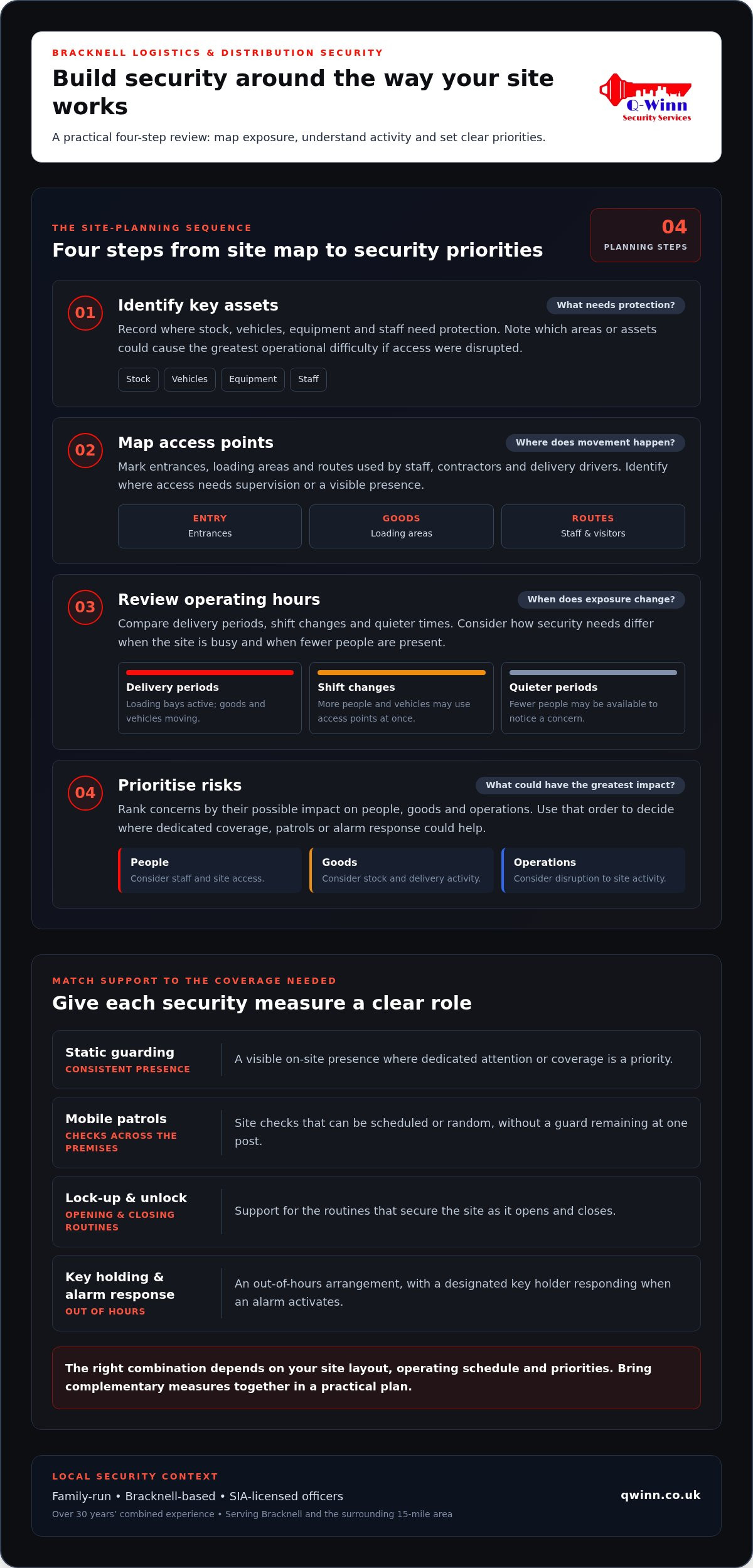
- Identify key assets. Record where stock, vehicles, equipment and staff need protection. Note which areas or assets would cause the greatest operational difficulty if access were disrupted.
- Map access points. Mark entrances, loading areas and routes used by staff, contractors and delivery drivers. Identify where access needs supervision or a visible presence.
- Review operating hours. Compare delivery periods, shift changes and quieter times. Consider how security needs differ when the site is busy and when fewer people are present.
- Prioritise risks. Rank concerns by their possible impact on people, goods and operations. Use that order to decide where dedicated coverage, patrols or alarm response could help.
Next, match the support to the coverage required. Static or manned guarding provides a visible on-site presence where dedicated attention is a priority. Mobile patrols provide site checks, which can be scheduled or random. For a closer look at how patrols can fit a site’s requirements, explore this mobile security patrols guide.
When do guarding, patrols and alarm response fit different needs?
Choose static guarding when you need a consistent on-site presence. Mobile patrols suit sites that need checks across the premises without a guard remaining at one post. Key holding and alarm response provide an out-of-hours arrangement, with a designated key holder responding when an alarm activates. Your site layout, operating schedule and priorities will shape the right combination.
Q-Winn Security provides static and manned guarding, mobile patrols, and key holding and alarm response. Explore Q-Winn’s logistics security support to see how these services can work together around your site.
Bracknell logistics security: build a joined-up local plan
Give each security measure a clear role. Lock-up and unlock services can support opening and closing routines. Static guarding provides an on-site presence where dedicated coverage is needed, while mobile patrols add checks across the premises. Key holding and alarm response provide an out-of-hours arrangement for alarm incidents. Together, these services can form a plan shaped around your operation rather than a collection of disconnected measures.
For Bracknell logistics and distribution security, choose arrangements that reflect the site’s location as well as its activity. Q-Winn Security is family-run and based in Bracknell, serving the town and surrounding 15-mile area. Its officers are SIA-licensed, and the company brings over 30 years of combined experience. For wider business protection context, see the Bracknell commercial security guide. If key holding and alarm response are central to your plans, the key holding and alarm response guide explores that support in more detail.
What should a site manager prepare before discussing security?
Prepare an outline of your operating hours, site layout and access points. Note when deliveries, shift changes and contractor visits occur, along with recurring concerns and areas that need closer attention. Include any procedures staff use to report an incident or manage access outside normal hours. These details make it easier to discuss where guarding, patrols, lock-up and unlock support, or alarm response could fit.
Ready to shape a considered plan for your premises? Discuss Bracknell site security with Q-Winn and outline the needs of your operation.
Make security part of your next operational review
Site needs can change as delivery schedules, staffing patterns and activity evolve. Include security in regular operational reviews so arrangements continue to reflect how the premises are used. Revisit the site plan when access routes, operating hours or working patterns change. A clear review helps keep priorities focused on people, stock and the flow of work.
For Bracknell logistics and distribution security, turn those priorities into a site-specific plan. Q-Winn Security is a family-run Bracknell company with over 30 years of combined experience, SIA-licensed officers and local coverage across Bracknell and the surrounding 15-mile area. Its 24/7 rapid response supports alarm response arrangements.
Share your site’s operating needs with Q-Winn Security to discuss a considered approach. Discuss your Bracknell site security with Q-Winn.
Frequently Asked Questions
Can a logistics site use mobile patrols alongside key holding and alarm response?
Yes. Together, these services can provide different layers of support for a Bracknell logistics site. Mobile patrols provide site checks, while key holding and alarm response provide a designated response arrangement if an alarm activates. Consider how these services fit your operating schedule and who needs to be informed if an incident affects deliveries or staff access.
What information should I prepare before arranging security for a distribution site?
Prepare a site plan showing entrances, vehicle routes, restricted areas and temporary access points. Note delivery patterns, contractor arrangements and who should be contacted if an incident disrupts operations. It also helps to record previous security concerns and planned changes to the site. This gives the planning discussion practical detail to work from.
Can security arrangements change when a logistics site has seasonal peaks?
Yes. Review the plan ahead of a seasonal peak, when staffing levels, delivery schedules, stock volumes or vehicle movements may change. Temporary loading areas or extended operating periods, for example, could affect where coverage is most useful. Review the arrangements again when the peak ends, so they reflect normal site activity.
Are Q-Winn Security officers SIA-licensed?
Yes. Q-Winn Security uses SIA-licensed officers. When planning Bracknell logistics and distribution security, include the duties and site requirements involved so the arrangement reflects the work officers are expected to carry out.
Frequently Asked Questions
Start with areas where activity, access and valuable goods meet. Loading bays, delivery entrances and vehicle parking each have different requirements. Set out how staff should manage authorised access, keep deliveries orderly and report unusual activity. Include contractor routes in your review: people unfamiliar with site routines may need clear directions and access procedures. Compare these areas with your daily schedule. Shift changes may bring a brief increase in movement, while quieter periods can mean fewer people are available to notice a concern. Mark the relevant locations and times on a site plan before deciding where a visible guard or mobile patrol could add value. This gives Bracknell logistics and distribution security a practical focus: support the people and processes that keep the operation moving, not just the front gate. Build the plan around your operation rather than starting with a standard package. Use the steps below to turn site risks and working patterns into clear priorities. This is the foundation of effective Bracknell logistics and distribution security. Next, match the support to the coverage required. Static or manned guarding provides a visible on-site presence where dedicated attention is a priority. Mobile patrols provide site checks, which can be scheduled or random. For a closer look at how patrols can fit a site’s requirements, explore this mobile security patrols guide.
Choose static guarding when you need a consistent on-site presence. Mobile patrols suit sites that need checks across the premises without a guard remaining at one post. Key holding and alarm response provide an out-of-hours arrangement, with a designated key holder responding when an alarm activates. Your site layout, operating schedule and priorities will shape the right combination. Q-Winn Security provides static and manned guarding, mobile patrols, and key holding and alarm response. Explore Q-Winn’s logistics security support to see how these services can work together around your site. Give each security measure a clear role. Lock-up and unlock services can support opening and closing routines. Static guarding provides an on-site presence where dedicated coverage is needed, while mobile patrols add checks across the premises. Key holding and alarm response provide an out-of-hours arrangement for alarm incidents. Together, these services can form a plan shaped around your operation rather than a collection of disconnected measures. For Bracknell logistics and distribution security, choose arrangements that reflect the site’s location as well as its activity. Q-Winn Security is family-run and based in Bracknell, serving the town and surrounding 15-mile area. Its officers are SIA-licensed, and the company brings over 30 years of combined experience. For wider business protection context, see the Bracknell commercial security guide. If key holding and alarm response are central to your plans, the key holding and alarm response guide explores that support in more detail.
Prepare an outline of your operating hours, site layout and access points. Note when deliveries, shift changes and contractor visits occur, along with recurring concerns and areas that need closer attention. Include any procedures staff use to report an incident or manage access outside normal hours. These details make it easier to discuss where guarding, patrols, lock-up and unlock support, or alarm response could fit. Ready to shape a considered plan for your premises? Discuss Bracknell site security with Q-Winn and outline the needs of your operation. Site needs can change as delivery schedules, staffing patterns and activity evolve. Include security in regular operational reviews so arrangements continue to reflect how the premises are used. Revisit the site plan when access routes, operating hours or working patterns change. A clear review helps keep priorities focused on people, stock and the flow of work. For Bracknell logistics and distribution security, turn those priorities into a site-specific plan. Q-Winn Security is a family-run Bracknell company with over 30 years of combined experience, SIA-licensed officers and local coverage across Bracknell and the surrounding 15-mile area. Its 24/7 rapid response supports alarm response arrangements. Share your site’s operating needs with Q-Winn Security to discuss a considered approach. Discuss your Bracknell site security with Q-Winn.
Yes. Together, these services can provide different layers of support for a Bracknell logistics site. Mobile patrols provide site checks, while key holding and alarm response provide a designated response arrangement if an alarm activates. Consider how these services fit your operating schedule and who needs to be informed if an incident affects deliveries or staff access.
Prepare a site plan showing entrances, vehicle routes, restricted areas and temporary access points. Note delivery patterns, contractor arrangements and who should be contacted if an incident disrupts operations. It also helps to record previous security concerns and planned changes to the site. This gives the planning discussion practical detail to work from.
Yes. Review the plan ahead of a seasonal peak, when staffing levels, delivery schedules, stock volumes or vehicle movements may change. Temporary loading areas or extended operating periods, for example, could affect where coverage is most useful. Review the arrangements again when the peak ends, so they reflect normal site activity.
Yes. Q-Winn Security uses SIA-licensed officers. When planning Bracknell logistics and distribution security, include the duties and site requirements involved so the arrangement reflects the work officers are expected to carry out.