Duties of a Static Security Guard for Visitors and Employees
A fixed security post is about people as much as premises. The duties of a static security guard include controlling access, watching for unusual activity, assisting visitors and employees, and responding to incidents in line with site procedures. Unlike mobile personnel who move between locations, a static guard stays at an assigned point, such as an entrance or another key area, providing a visible presence and a familiar first point of contact.
That balance of vigilance and practical assistance matters: people should feel welcome while the site maintains clear security controls. This article explains what static guarding involves, how guards support day-to-day safety, what they may do in an emergency, and how they assist visitors and employees. You’ll learn where a fixed post can make a difference and how its responsibilities fit a site’s needs.
Key Takeaways
- Learn how a fixed post helps manage entry, check visitor authorisation and keep track of who is on site.
- Understand how guards follow site procedures during alarms, medical incidents and other emergencies.
- See how clear directions and a helpful first point of contact can make visits smoother for staff and guests.
- Discover when a dedicated on-site presence can support the safety needs of your premises.
What Is Static Guarding in Security?
Static guarding places an officer at a fixed point, such as a building entrance. The duties of a static security guard can include access control, visitor assistance and monitoring activity on site.
Managing Visitor and Staff Access
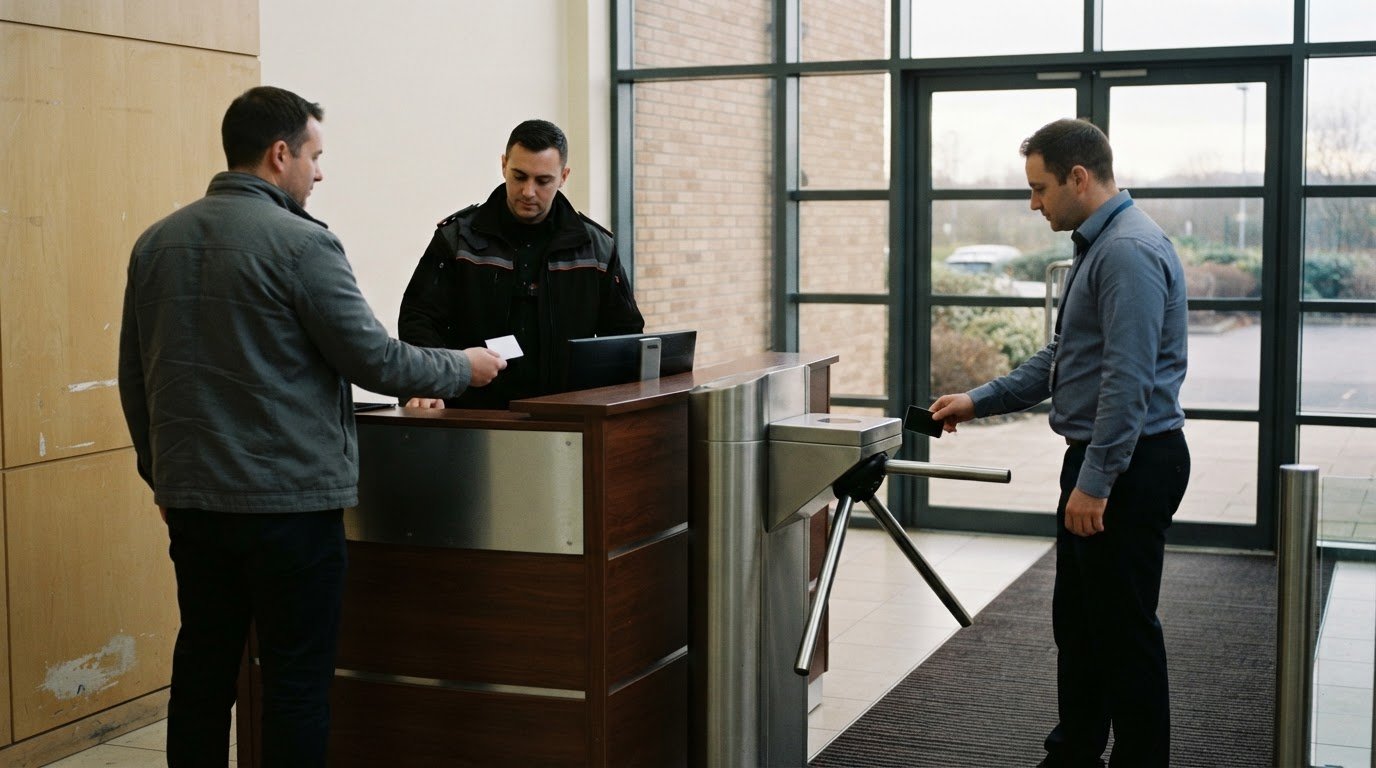
Managing access means checking who may enter and recording visitors and staff according to site procedures. At reception, a guard can greet a visitor, check identification and authorisation, and record their arrival before directing them to the right area. This helps prevent unauthorised entry and gives employees and guests a clear point of contact. A guard may also supervise deliveries or escort an authorised visitor into a secured area.
Training, Qualifications and Licensing
Training and licensing prepare guards to carry out their duties professionally and respond appropriately on site. According to the Security Industry Authority, an SIA licence is mandatory for people working in static guarding in the United Kingdom. Guards also complete approved training covering communication, conflict management and emergency response. The Security Industry Authority says guards are required to pass criminal record checks. These requirements support consistent conduct at the post.
Legal Powers and Limits
Static guards follow site procedures and operate within the law; they are not a substitute for the police. They can challenge unauthorised people and ask them to leave the premises. Any use of force must be necessary and lawful. Clear procedures help guards act proportionately, protect people nearby and report incidents to the appropriate contact.
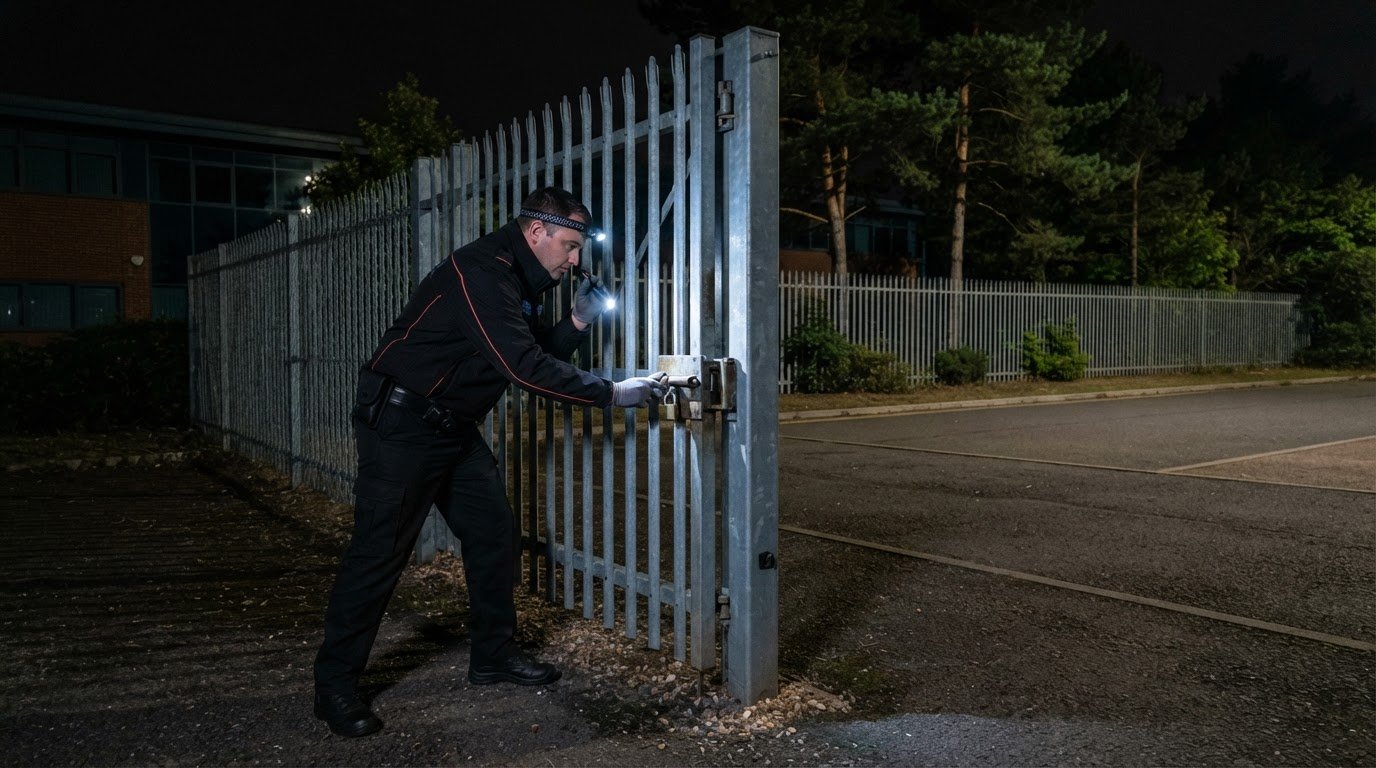
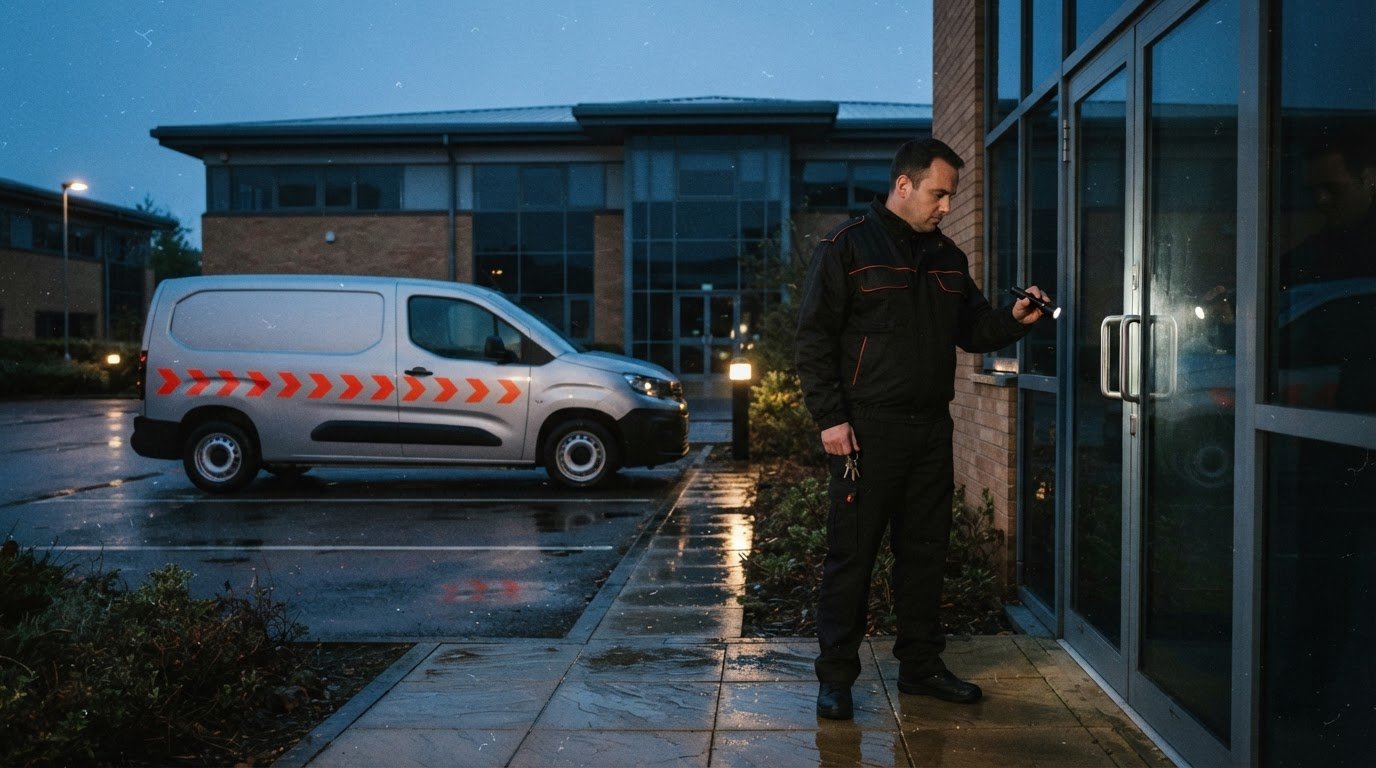
Unlike mobile patrol staff, a static guard remains at an assigned post, while mobile personnel move between areas or locations. Checking within the designated area can also be part of a static guard’s duties. Guards may check doors, windows and access points, watch for suspicious activity, and report concerns promptly.
When monitoring CCTV, alarms and other security equipment, guards watch for activity relevant to their assigned area and follow site procedures when an alert occurs. For example, an alarm may prompt a check of the affected access point and a report to the designated contact.
Emergency response and first aid
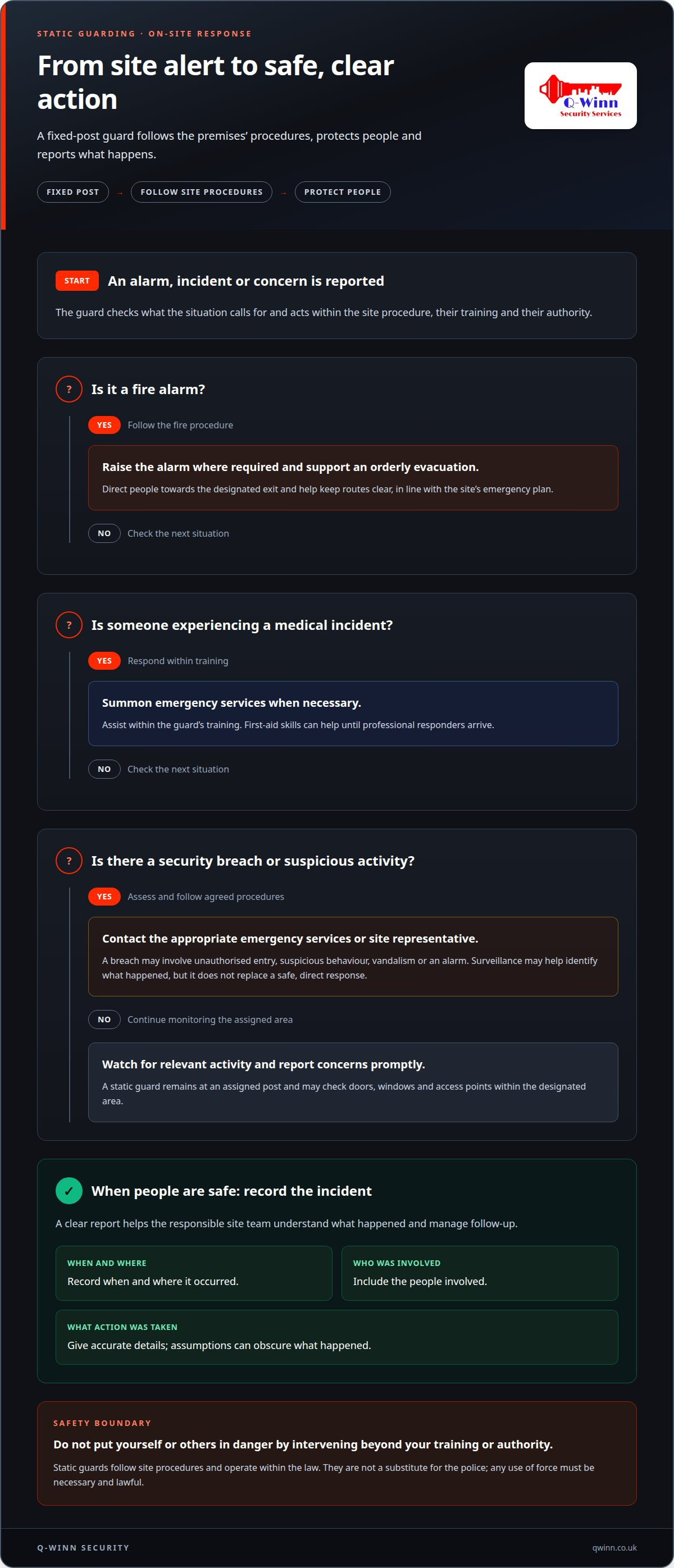
A guard may be the first person to respond to an emergency on site. Their role is to follow the premises’ procedures, protect people and report what happens.
Responding to Fires and Medical Incidents
For a fire alarm, the guard follows the site’s fire procedure, raises the alarm where required and supports an orderly evacuation. During a medical incident, they summon emergency services when necessary and assist within their training. First-aid skills can help until professional responders arrive. Clear action matters: people need direction, and staff and visitors must avoid entering unsafe areas.
Handling Security Breaches
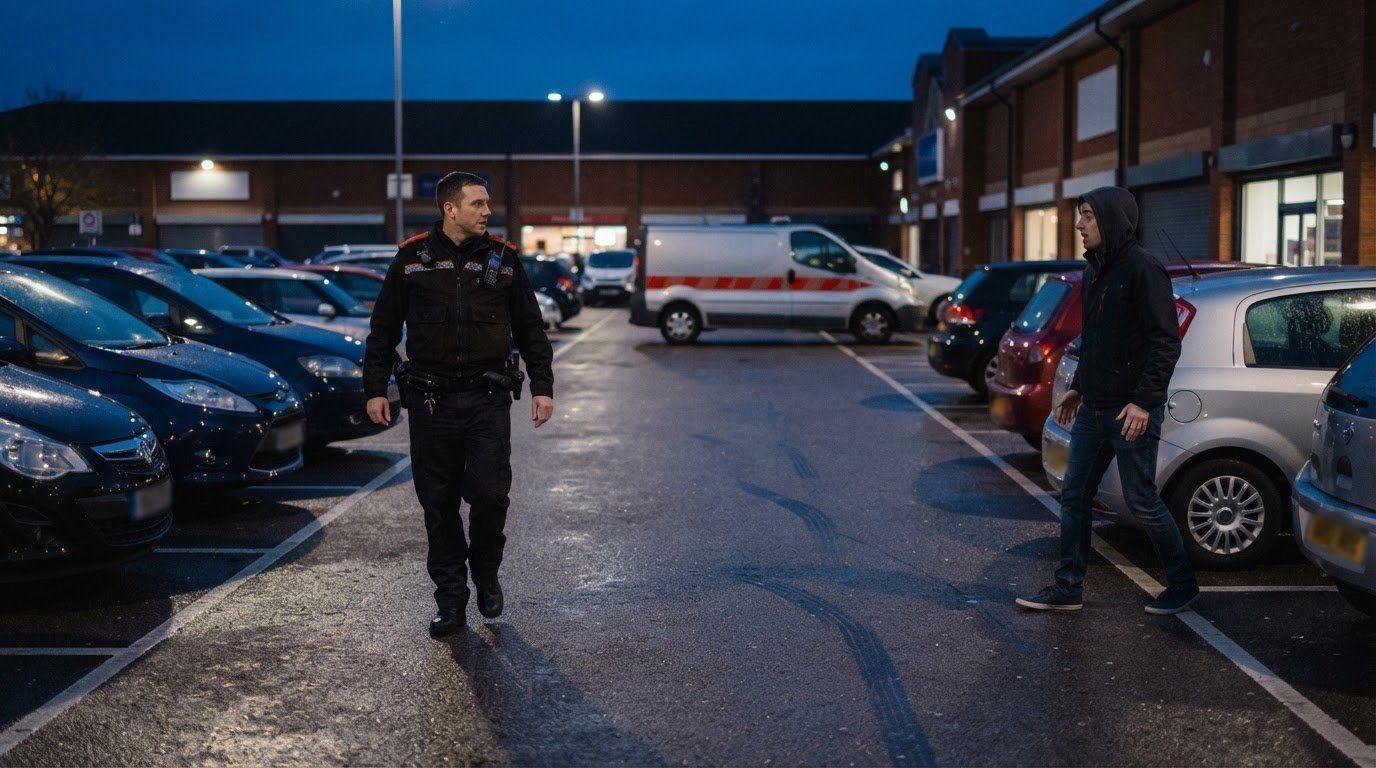
A security breach may involve unauthorised entry, suspicious behaviour, vandalism or an alarm. The guard assesses the situation, follows agreed procedures and contacts the appropriate emergency services or site representative. Health and safety risks include fire, medical emergencies and confrontation; guards should not put themselves or others in danger by intervening beyond their training or authority. Surveillance may help identify what happened, but it does not replace a safe, direct response.
Evacuations and Incident Reporting
During an evacuation, a guard can direct people towards the designated exit and help keep routes clear, following the site’s emergency plan. Once people are safe, the guard records the incident, including when and where it occurred, who was involved and what action was taken. A clear report helps the responsible site team understand events and manage follow-up. Accurate details matter; assumptions can obscure what happened.
For premises that need a consistent on-site response, static manned guarding can provide a dedicated presence alongside site procedures.
Customer service for visitors and employees
A guard can combine a visible security role with practical front-of-house service. Clear directions, polite communication and consistent checks help visitors and employees move through the premises appropriately.
Guiding Visitors
Guiding visitors means welcoming people, answering routine questions and helping them find the right destination. For example, a visitor arriving for a meeting can be directed to reception or asked to wait for their authorised host. This courteous first contact helps prevent confusion and limits unauthorised movement around the building. Guards can explain relevant site procedures, such as where to report on arrival, while keeping access requirements clear.
Interpersonal skills matter at the entrance. A calm greeting and concise instructions can help people unfamiliar with the building without weakening security controls. If someone’s behaviour raises concern, the guard can assess the situation, follow site procedures and report the issue to the appropriate personnel.
Assisting Visitors and Employees
Assistance can include giving directions, answering questions and helping staff understand site access arrangements. A visitor who cannot find a meeting room, for instance, can receive clear guidance; an employee arriving outside normal access procedures can be directed to the correct entrance. These small interactions help people navigate the premises while preserving authorised entry.
Guards should remain professional with different individuals, including people who are distressed or frustrated. Listening carefully, explaining the next step and involving the relevant site contact can keep a difficult exchange measured. Their role is to assist and communicate, not to assume someone has committed a criminal act. For a more attentive front-of-house presence, discuss visitor and employee support for your premises.
Q-Winn Security: Static / Manned Guarding
Q-Winn Security provides Static / Manned Guarding for sites that need an on-site security presence. It can suit commercial, industrial, retail and residential premises where access control, visitor assistance or visible security is part of daily operations.
The service is tailored to the post and the site’s priorities, from managing an entrance to supporting established security procedures. This gives your team a clear on-site point of contact and helps visitors know where to go. For sites needing a different type of support, Key Holding & Alarm Response, Mobile Patrol and Lock-Up & Unlock Services are also available.
Contact Q-Winn Security to discuss your premises and guarding requirements.
Plan the right security presence for your site
Understanding the duties of a static security guard is a useful starting point. Next, consider how your premises operate: where people enter, when access needs oversight and how security arrangements fit the working day. These details help shape a practical plan around your site rather than relying on a generic approach.
Q-Winn Security can discuss Static / Manned Guarding alongside related support, including Key Holding & Alarm Response, Mobile Patrol and Lock-Up & Unlock Services. The right combination depends on the security needs you want to address.
Contact Q-Winn Security today to discuss a suitable approach for your premises. A clear plan can help your people feel supported and your site better organised.
Frequently Asked Questions
What are the main duties of a static security guard in the UK?
A static guard’s duties are guided by the site’s security needs and post instructions. They can include overseeing access, observing activity, assisting people, checking assigned areas and reporting concerns. At a warehouse, for example, monitoring may focus on entry points and vehicle movements; in an office, welcoming expected visitors may be a key part of the post.
What does a static security guard do during a typical shift?
A shift commonly starts with a handover, so the incoming guard understands current concerns, outstanding issues and any changes to site instructions. They then maintain the assigned post, complete checks required for that location, record relevant activity and pass important updates to the next guard or site contact. The exact routine depends on the premises and the guard’s assigned responsibilities.
What are the responsibilities for access control and visitor management?
Guards follow the site’s entry arrangements and direct visitors through the authorised process. If a host is unavailable or a visitor’s details do not match the expected arrangement, the guard should use the site’s escalation procedure rather than assume entry is acceptable. This helps apply access rules consistently, including for familiar visitors and contractors arriving outside their usual schedule.
What are the procedures for handling emergencies, incidents and suspicious activity?
Guards follow the site’s response plan, communicate the location and nature of the concern, and contact the appropriate site representative or emergency service. For suspicious activity, they should report observable details, such as a person’s actions and location, rather than assume intent. They should avoid actions that could increase risk and follow instructions from the responsible authorities.
What records and reports must a static security guard maintain?
Records depend on site instructions and the guard’s assigned duties. A post may require a daily log, visitor entries, site-check records, alarm actions and incident reports. Entries should be factual, clear and made promptly, distinguishing what the guard observed from what someone else reported. A handover should also note unresolved issues so the next guard can continue monitoring them.
Frequently Asked Questions
A static guard’s duties are guided by the site’s security needs and post instructions. They can include overseeing access, observing activity, assisting people, checking assigned areas and reporting concerns. At a warehouse, for example, monitoring may focus on entry points and vehicle movements; in an office, welcoming expected visitors may be a key part of the post.
A shift commonly starts with a handover, so the incoming guard understands current concerns, outstanding issues and any changes to site instructions. They then maintain the assigned post, complete checks required for that location, record relevant activity and pass important updates to the next guard or site contact. The exact routine depends on the premises and the guard’s assigned responsibilities.
Guards follow the site’s entry arrangements and direct visitors through the authorised process. If a host is unavailable or a visitor’s details do not match the expected arrangement, the guard should use the site’s escalation procedure rather than assume entry is acceptable. This helps apply access rules consistently, including for familiar visitors and contractors arriving outside their usual schedule.
Guards follow the site’s response plan, communicate the location and nature of the concern, and contact the appropriate site representative or emergency service. For suspicious activity, they should report observable details, such as a person’s actions and location, rather than assume intent. They should avoid actions that could increase risk and follow instructions from the responsible authorities.
Records depend on site instructions and the guard’s assigned duties. A post may require a daily log, visitor entries, site-check records, alarm actions and incident reports. Entries should be factual, clear and made promptly, distinguishing what the guard observed from what someone else reported. A handover should also note unresolved issues so the next guard can continue monitoring them.