Dedicated Mobile Security Vehicles for Bracknell Alarm Response
Yes. A dedicated mobile security vehicle can attend an out-of-hours alarm activation when the response plan includes site access and an officer’s attendance. Its marked presence can also deter potential intruders, and officers can coordinate with emergency services if further support is needed.
It’s understandable to want more than an alert when a site is empty. You need a clear response, a site check and reliable communication. This guide explains how branded vehicles fit into alarm response in Bracknell, what officers can do when they arrive, and how mobile patrols differ from static guarding or CCTV monitoring. You’ll also learn which UK licence applies to guarding and patrol work, what shapes a response plan, and when a dedicated vehicle may suit your premises. The aim is to give you a straightforward picture of how this approach can support your site after closing time.
Key Takeaways
- Understand the SIA licence requirement for UK manned guarding and patrol officers, and the legislation behind it.
- Learn which legal considerations shape mobile patrol work and how to plan a compliant response for your site.
- See when mobile patrols can complement static guards and CCTV by providing visible deterrence and on-site attendance.
- Find out how key holding and alarm response can help manage out-of-hours activations at Bracknell premises.
UK mobile security guard qualifications and licences
UK requirements apply to the person carrying out security work, not the vehicle’s branding. Manned guarding and patrol officers in the UK must hold a valid SIA licence under the Private Security Industry Act 2001, according to the UK legislation register. This applies to patrol duties whether an officer travels in a marked vehicle or attends on foot. A branded vehicle can make a patrol visible, but it cannot replace the officer’s licence. For an alarm response, the relevant qualification is the officer’s authority to perform the assigned security role.
Licensing and screening are separate considerations. The Security Industry Authority licence relates to the officer’s work, while screening concerns checks on an individual employed in a security environment. The British Standards Institution identifies BS 7858 as the British Standard for that screening. It is a standard, not an SIA licence, so the two terms should not be used interchangeably. For example, an officer’s screening does not replace the valid licence required for manned guarding or patrol work.
When planning mobile patrols, define the duties clearly: routine site checks, alarm attendance, or both. This helps identify which officers should carry out the work and which licence requirement applies. A vehicle’s appearance, equipment or route does not establish an officer’s qualifications. What matters is the person performing the security duties.
For a Bracknell site, make the distinction practical. A patrol officer attending an alarm is carrying out security work, even if the vehicle is only one part of the response. BS 7858 screening and a valid SIA licence address different aspects of personnel assurance. Understanding both gives businesses a clearer basis for assessing how patrol duties are assigned, without confusing vehicle branding with professional credentials.
What UK laws and regulations apply to mobile security patrol vehicles?
For a Bracknell site, distinguish the rules for officers from the procedures for each patrol. As covered above, manned guarding and patrol work require the relevant SIA licence. Vehicle branding does not replace that requirement or determine an officer’s authority. Set out the duties clearly, including whether the patrol checks premises, attends alarms, or both. This keeps the response plan focused on the security work required.
Alarm handling also needs a defined process. Mobile patrol providers responding to alarms should be integrated with an alarm receiving centre, so activation details and relevant site information can be passed on. Before patrols begin, establish who receives the signal, who dispatches an officer and how the site is accessed. Record the escalation steps for signs of a break-in or damage, and for situations that may require emergency services.
False alarms matter operationally. Repeated false alarms can result in financial penalties for businesses and the withdrawal of a police response. A clear verification and attendance process can help reduce avoidable dispatches. The response plan should explain how officers report their findings and how the alarm receiving centre is updated. Mobile patrol teams can coordinate with emergency services when additional support is needed.
For a dedicated vehicle, separate legal obligations from good operating practice. Keep routes, access arrangements, contact details and incident-reporting steps clear. The right plan depends on the property, alarm system and risks on site, not the vehicle’s appearance. Mobile patrol arrangements can form part of a coordinated approach to site checks and alarm attendance.
How do mobile security vehicles compare with static guards and CCTV monitoring?
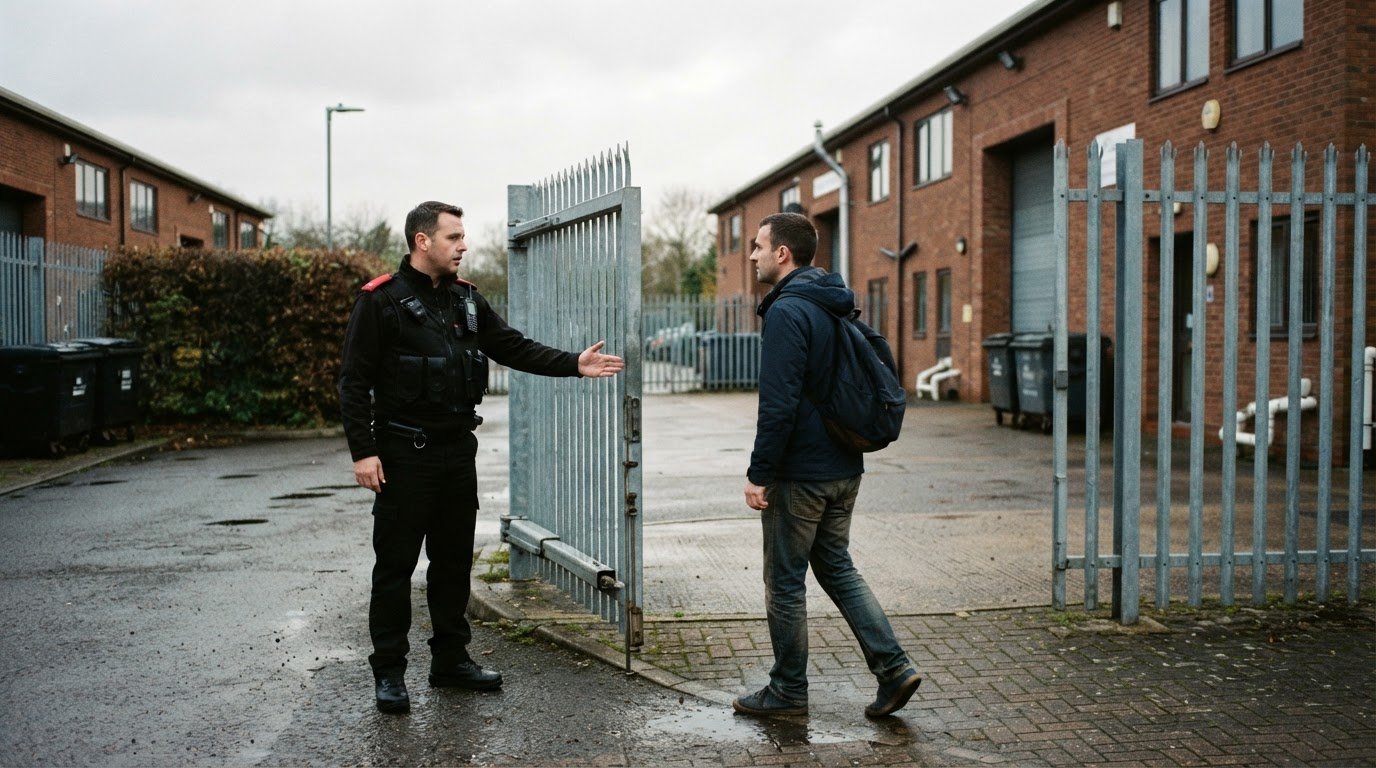
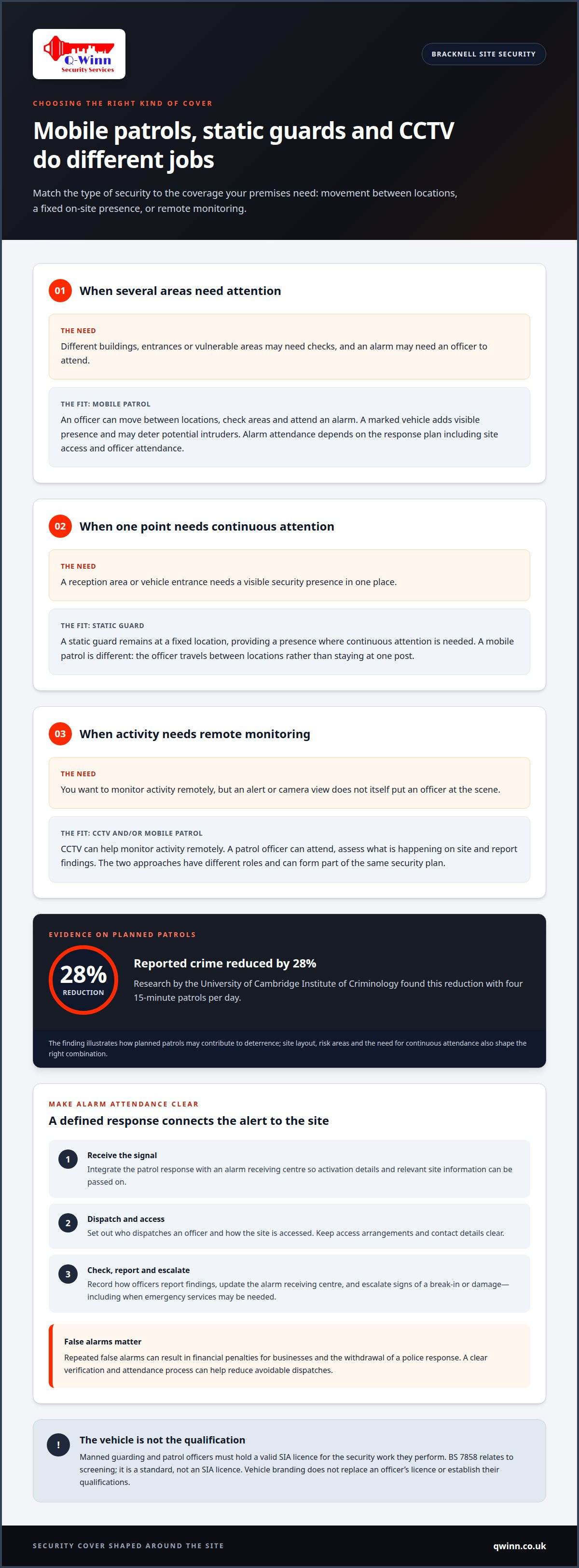
A dedicated mobile security vehicle lets an officer move between different parts of a site or several premises. Its marked presence can deter potential intruders, while the officer can check locations and respond to alarm activations. This mobility can suit sites with multiple buildings, entrances or vulnerable areas. Unlike a static post, the vehicle does not remain at one point.
A static guard provides a visible presence at a fixed location, such as reception or a vehicle entrance. This suits a site that needs continuous attention in one place. A mobile patrol provides a different type of coverage: an officer travels between locations, conducts checks and can attend a reported incident. Choose between them based on whether you need a fixed post or movement around your premises.
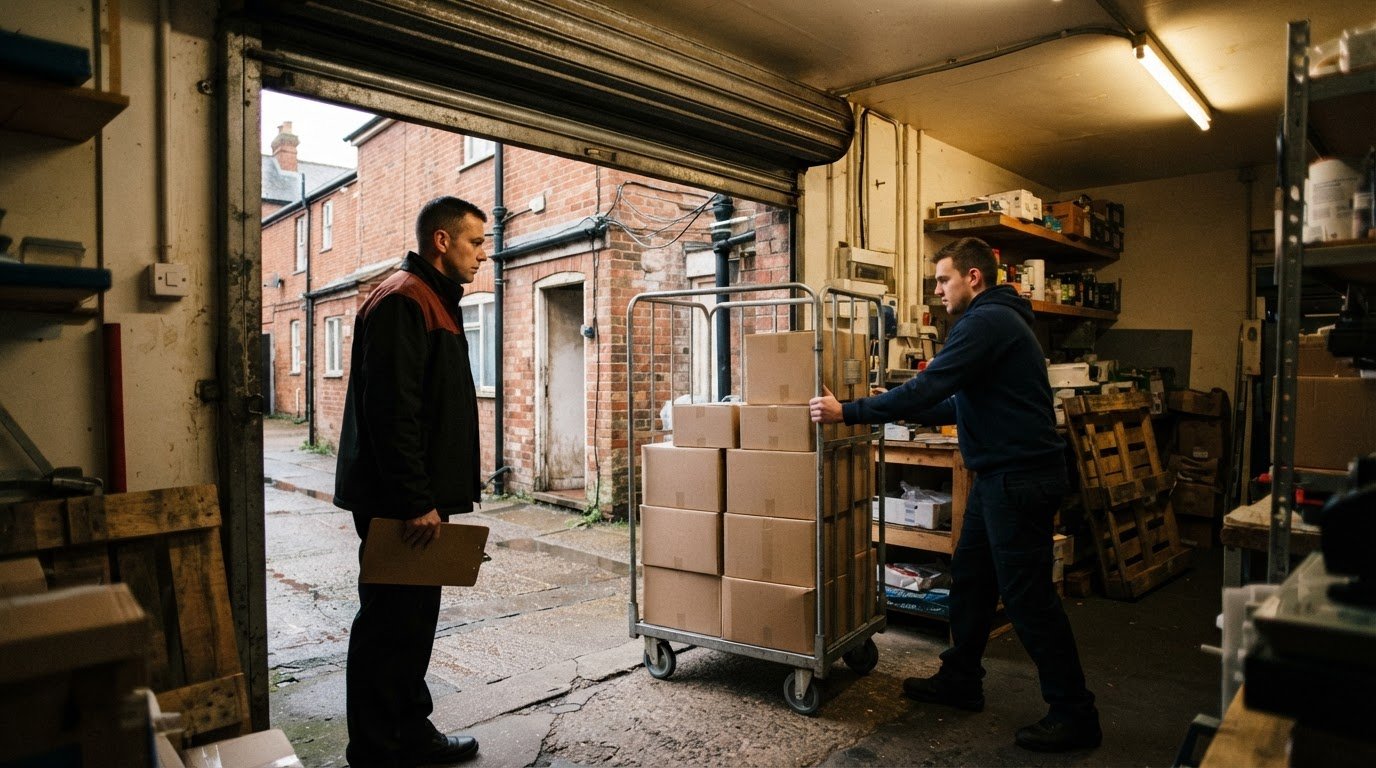
CCTV can help monitor activity remotely, but it does not place an officer at the scene. A mobile patrol provides an on-site presence, allowing an officer to assess what is happening and report findings. For example, CCTV may show activity near a warehouse entrance, while an officer can attend and inspect the area. The two approaches serve different roles.
Research by the University of Cambridge Institute of Criminology found that four 15-minute patrols per day reduced reported crime by 28%. That finding illustrates how planned patrols may contribute to deterrence, alongside the response they provide after an alarm. Site layout, risk areas and the need for continuous attendance all shape the right combination.
For Bracknell premises requiring mobile checks, arrange mobile patrol cover as part of a security plan suited to the site.
Q-Winn Security: Key Holding & Alarm Response
Q-Winn Security provides Key Holding & Alarm Response for Bracknell premises that need an organised response when an alarm activates. Key holding lets an appointed response team access the site and assess the situation, rather than relying on a member of your staff to attend. Mobile Patrol can add visible checks across the property, while Lock-Up & Unlock Services help secure or open premises.
The right arrangement depends on your site layout, alarm process and areas requiring attention. A business with several access points, for example, may benefit from patrol checks, while a fixed reception or entrance may call for Static / Manned Guarding. Clear access instructions and escalation steps help align the response with your site’s needs.
Planning out-of-hours alarm cover in Bracknell? Contact Q-Winn Security to discuss a tailored response for your premises.
Plan a clearer response for your Bracknell site
Choose a response based on what should happen after an alarm, not simply on how visible a vehicle looks. A dedicated mobile security vehicle may suit premises where officers need to move between locations. Site access, escalation instructions and the areas requiring attention all help shape the plan. Mapping these details gives your security arrangements a practical starting point.
Q-Winn Security offers Key Holding & Alarm Response, Mobile Patrol and Lock-Up & Unlock Services to support different site requirements. Discuss the access arrangements and response priorities that matter to your premises, then decide what coverage fits. Contact Q-Winn Security to talk through your Bracknell site’s needs and take the next step with confidence.
Frequently Asked Questions
Can branded security vehicles respond to alarm activations out of hours?
Yes. Q-Winn Security provides 24/7 rapid response to alarm activations, supported by secure key storage and trained officers. With key holding arranged, an officer can use the stored keys to attend and access the premises as required. For a Bracknell business, this can help avoid relying on an employee to travel to an empty site after an alert.
What is a dedicated mobile security vehicle?
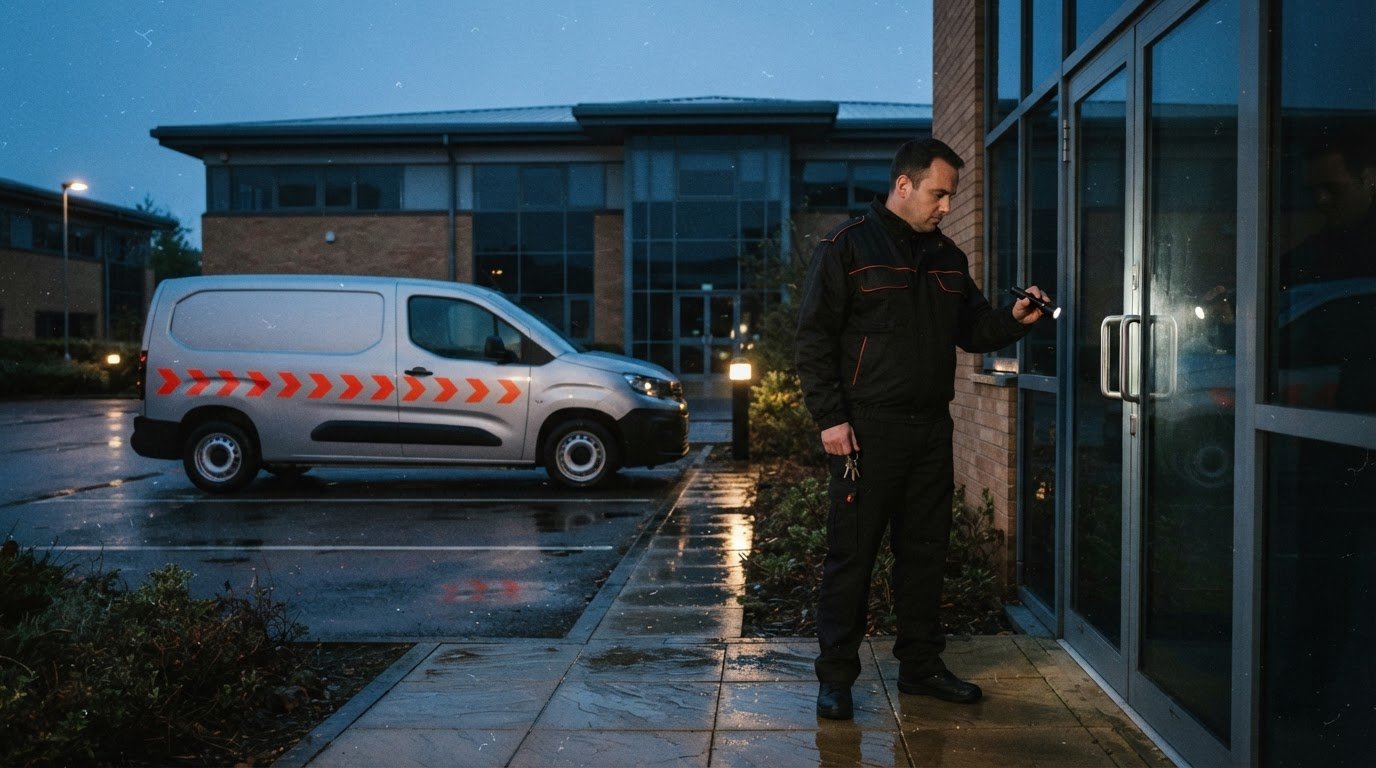
A dedicated mobile security vehicle is a marked vehicle used by officers carrying out patrol duties. It lets patrol teams travel between sites or check different areas of one property. For example, officers can follow scheduled or random routes around commercial premises, making their presence identifiable to staff and people approaching the site.
What security services do mobile security vehicles provide in the UK?
A vehicle supports officer-led security services; it does not provide security on its own. In Bracknell, relevant options include Mobile Patrol, Key Holding & Alarm Response, and Lock-Up & Unlock Services. Patrols can check premises, while key holding supports attendance following an alarm. Static / Manned Guarding is a separate option for sites needing an officer at a particular location.
How to choose a mobile security vehicle provider in the UK?
Choose a provider whose alarm response is integrated with an alarm receiving centre, uses officers with valid SIA licences, and has clear site-access and escalation procedures. Confirm whether the service includes routine checks, alarm attendance, or both.
Which UK areas offer dedicated mobile security vehicle services?
Q-Winn Security offers key holding, alarm response and mobile patrol services for Bracknell premises.
Frequently Asked Questions
Yes. Q-Winn Security provides 24/7 rapid response to alarm activations, supported by secure key storage and trained officers. With key holding arranged, an officer can use the stored keys to attend and access the premises as required. For a Bracknell business, this can help avoid relying on an employee to travel to an empty site after an alert.
A dedicated mobile security vehicle is a marked vehicle used by officers carrying out patrol duties. It lets patrol teams travel between sites or check different areas of one property. For example, officers can follow scheduled or random routes around commercial premises, making their presence identifiable to staff and people approaching the site.
A vehicle supports officer-led security services; it does not provide security on its own. In Bracknell, relevant options include Mobile Patrol, Key Holding & Alarm Response, and Lock-Up & Unlock Services. Patrols can check premises, while key holding supports attendance following an alarm. Static / Manned Guarding is a separate option for sites needing an officer at a particular location.
Choose a provider whose alarm response is integrated with an alarm receiving centre, uses officers with valid SIA licences, and has clear site-access and escalation procedures. Confirm whether the service includes routine checks, alarm attendance, or both.
Q-Winn Security offers key holding, alarm response and mobile patrol services for Bracknell premises.