Key holding for block management in Bracknell
Reliable access control starts with a clear plan. Professional key holding for block management in Bracknell can support alarm response, authorised access, property checks, and the locking and unlocking of managed premises. According to the UK Government, security work involving keeping or controlling access to keys or lock-operating devices requires a front-line SIA key holding licence.
Managing residential blocks means coordinating access carefully and making sure the right response follows an alarm or scheduled visit. This guide explains how keyholding works across Bracknell and Berkshire, what arrangements can cover, and what to consider when choosing a professional service. You’ll also learn how clear instructions, access details and agreed responsibilities help keep checks and lock-up routines consistent.
Key Takeaways
- Understand how keyholding can coordinate alarm response for managed blocks across Bracknell and Berkshire.
- See how clear access instructions help make property visits and checks more controlled.
- Learn what a professional lock-up and unlock routine can cover at shared premises.
- Identify the details that shape a keyholding arrangement around your building’s access needs.
Keyholding and alarm response across Bracknell and Berkshire
For managed blocks in Bracknell, keyholding links controlled key access with attendance when an alarm activates. The agreed instructions should explain which alerts require a visit and what happens next.
Managing Keys and Alarm Codes
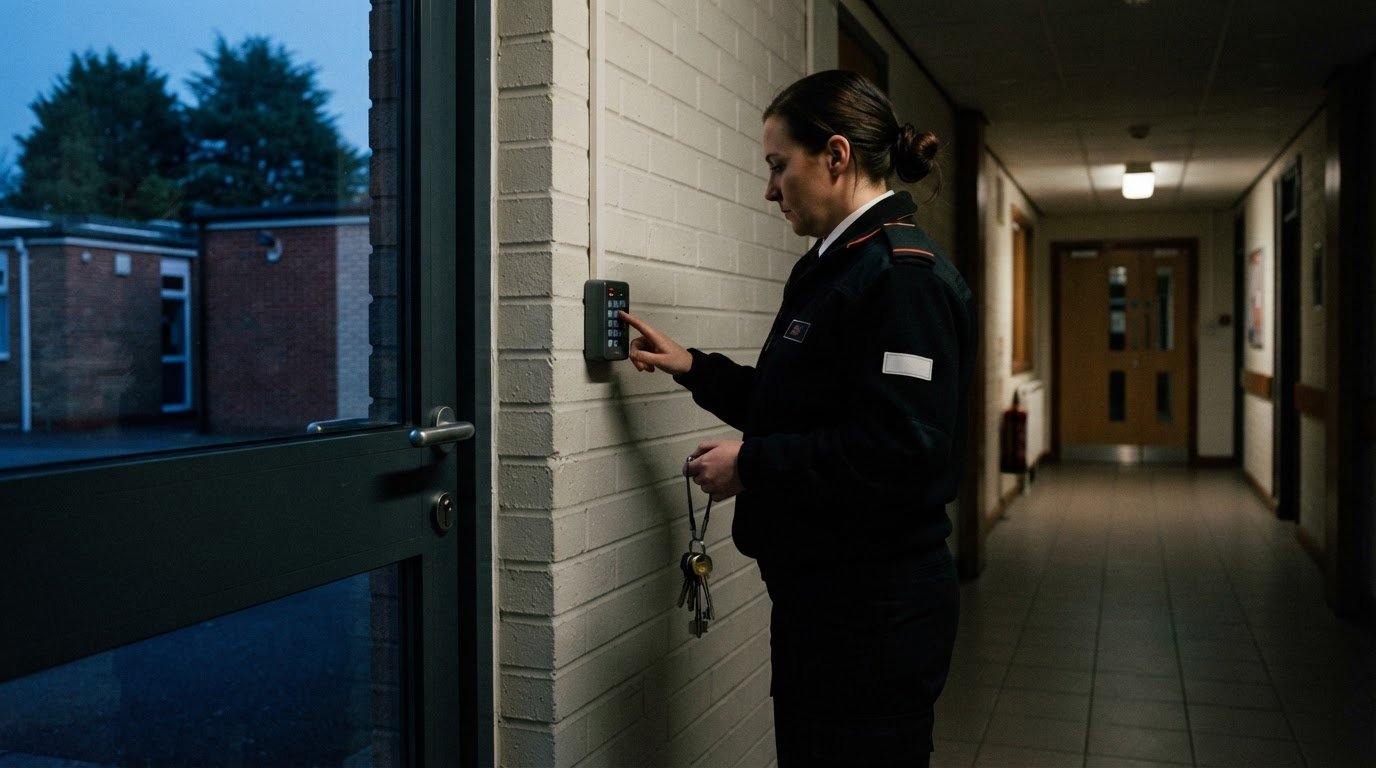
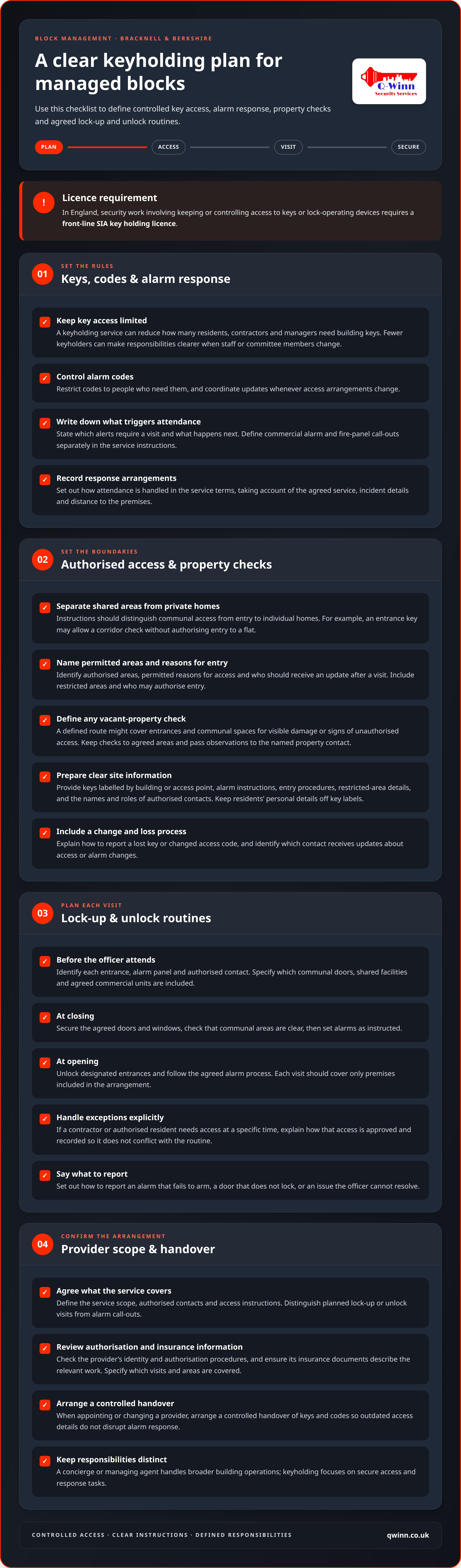
Using a key holding service can reduce the number of residents, contractors and managers who need access to building keys. Fewer keyholders can make responsibilities clearer when staff or committee members change. Restrict alarm codes to people who need them, and coordinate updates when access arrangements change.
For a Bracknell block, the management company can provide authorised entry details, contact instructions and information about shared areas. A key holder follows those arrangements to attend, rather than relying on a resident to travel to the property. This supports a controlled response while limiting routine access to building keys and codes.
Service and Provider Considerations
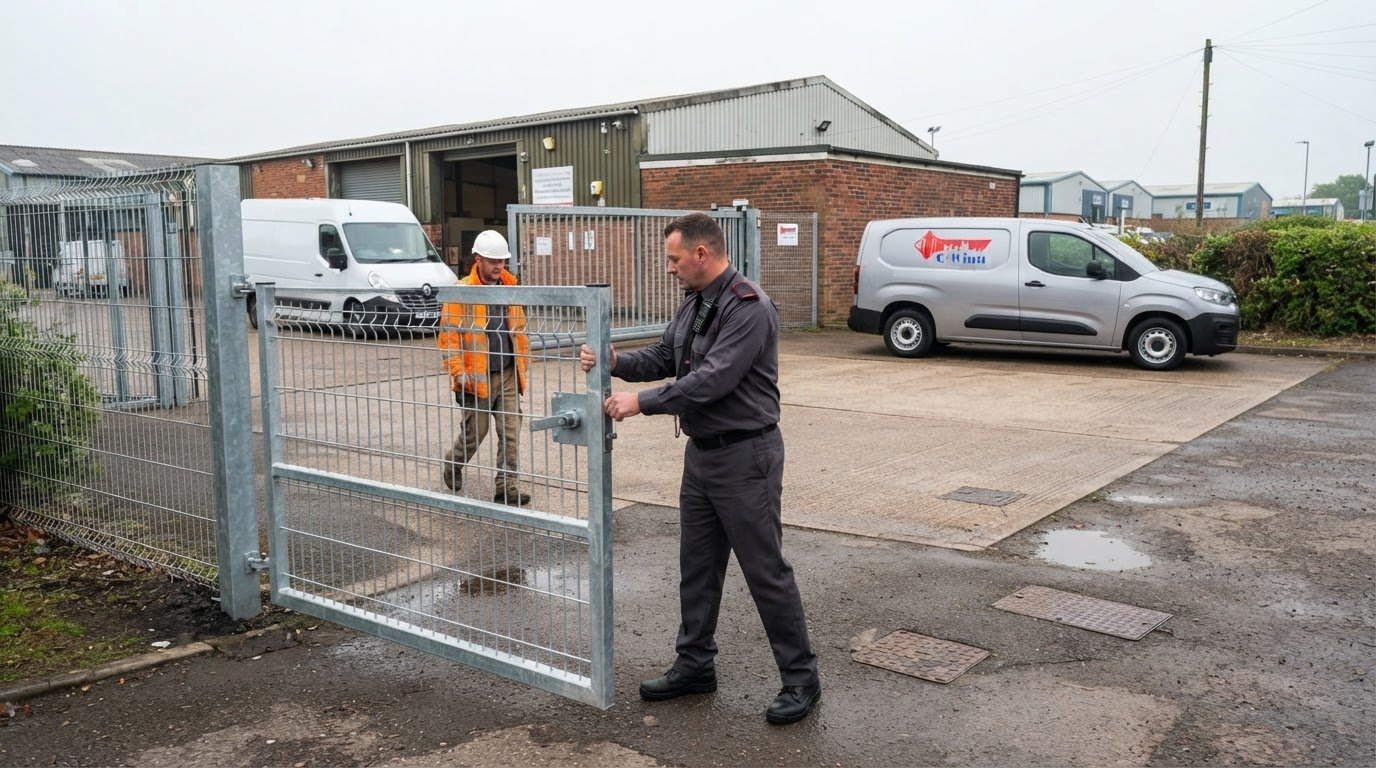
Key holding can cover alarm response, attendance at commercial premises and agreed call-outs. Define commercial alarm and fire-panel call-outs separately in the service instructions, including which alerts require attendance. A concierge or managing agent handles broader building operations; key holding focuses on secure access and response tasks.
In England, keeping or controlling access to keys or lock-operating devices as part of security work requires a front-line SIA key holding licence. Bracknell block managers can use a specialist security provider like Q-Winn Security for key holding and alarm response. Set out how attendance is handled in the service terms, taking account of the agreed service, incident details and distance to the premises.
To appoint or change a provider, a residents’ management company can agree the service scope, authorised contacts and access instructions, then arrange a controlled handover of keys and codes. These steps help prevent outdated access details from disrupting alarm response for your Bracknell property.
Access arrangements and property checks
For Bracknell managers, key holding for block management should define authorised access and the scope of property checks. Clear instructions help a key holder distinguish permitted entry from an unexpected request, including at vacant premises.
Multi-Tenanted Property Access
In a multi-tenanted building, instructions should distinguish communal access from entry to individual homes. For example, a key holder may need the entrance key to check a shared corridor, but have no authority to enter a flat. The service agreement should identify authorised areas, permitted reasons for entry and who receives updates after a visit.
Vacant-property checks can follow a defined route, such as inspecting entrances and communal spaces for visible damage or signs of unauthorised access. Keep checks to the agreed areas and pass observations to the named property contact. This gives a block manager a practical record without implying that every flat is accessible.
Keys and Access Information
For each site, provide keys labelled by building or access point, alarm instructions, entry procedures and details of restricted areas. Include the names and roles of authorised contacts, plus a process for reporting a lost key or changed access code. Keep residents’ personal details off key labels.
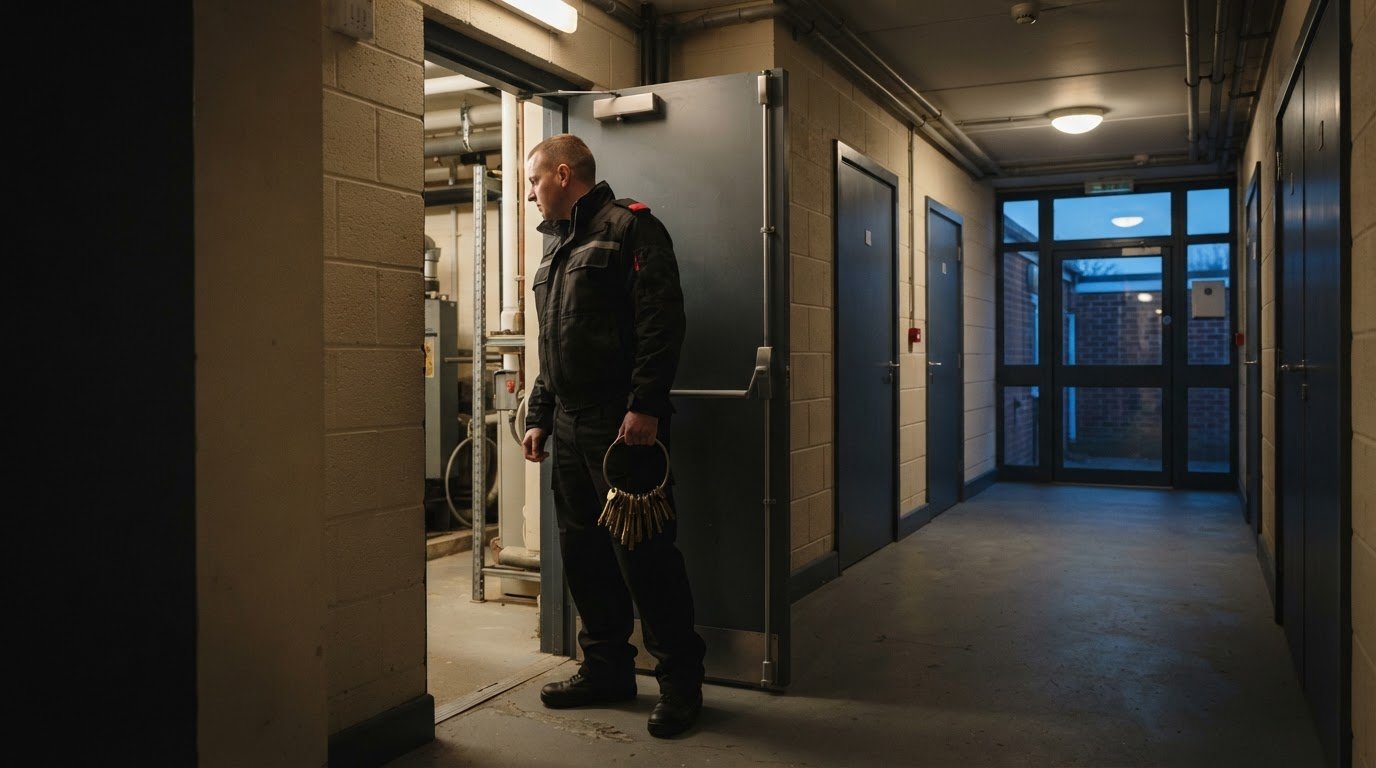
A key holding for block management plan in Bracknell should distinguish the front entrance, plant rooms and other shared spaces. It should explain when a security officer may unlock an area and which contact receives an update. These details help ensure security services follow consistent instructions across properties.
For security checks and insurance, review the provider’s identity and authorisation procedures, and ensure its insurance documents describe the relevant work. A block management arrangement may include agreed access, alarm attendance and property checks. Specify which visits and areas are covered.
Block managers looking for services in Bracknell can discuss access arrangements around their premises and inspection needs.
Locking and unlocking premises
A defined lock-up and unlock routine gives managed premises a consistent opening and closing process. Before an officer attends, instructions should identify each entrance, alarm panel and authorised contact. For a Bracknell block, this may include communal doors, shared facilities and agreed commercial units. Clear boundaries matter: officers follow approved access instructions, not assumptions about which areas to enter.
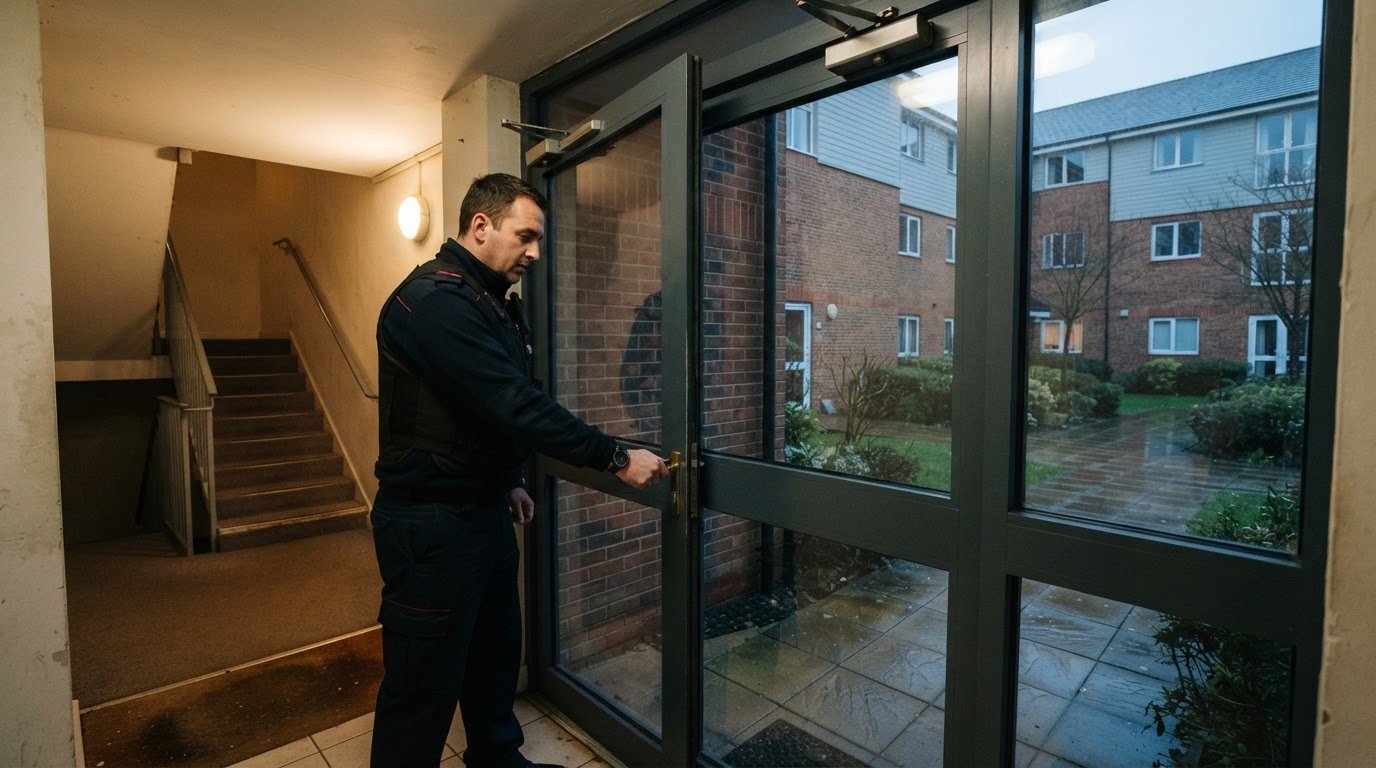
At closing, an officer can secure the agreed doors and windows, check that communal areas are clear, then set alarms as instructed. The service procedure should explain how to report an alarm that fails to arm or a door that does not lock. At opening, the officer can unlock designated entrances and follow the agreed alarm process. Each visit should cover only the premises included in the arrangement.
Before service begins, the block manager provides the current closing sequence, alarm instructions and contact details for relevant exceptions. For example, a scheduled contractor or authorised resident may need access at a specific time. Instructions should explain how to approve and record that access, so routine locking does not conflict with an agreed visit. Pass on changes to access or alarm procedures promptly.
Keyholding and alarm response can complement scheduled lock-up and unlock visits when an alarm activates outside those routines. The service scope should distinguish a planned visit from an alarm call-out, and state how officers report an issue they cannot resolve. For a practical discussion of lock-up and unlock arrangements for managed premises, take the next step and outline your building’s access routine.
Q-Winn Security: Key Holding & Alarm Response
Q-Winn Security provides Key Holding & Alarm Response for managed premises that need controlled access and a defined alarm procedure. The service can support a block manager who needs an authorised key holder to attend an alarm call-out and follow agreed property access arrangements.
For buildings with regular opening and closing requirements, Lock-Up & Unlock Services can support scheduled routines. Mobile Patrol or Static / Manned Guarding may also suit premises that need additional security presence. The right arrangement depends on the building’s access points, shared areas and incident response instructions.
Contact Q-Winn Security to discuss Key Holding & Alarm Response for your managed premises in Bracknell.
Plan your next step with confidence
Before agreeing an arrangement, turn your building’s security priorities into a concise brief. Define what the service needs to achieve, where its responsibilities begin and end, and how updates should reach the managing agent. A clear brief gives everyone a shared starting point.
Keep the plan current as block management arrangements change. Assign responsibility for updating instructions when committee members, managing agents or access arrangements change. This helps prevent handovers from leaving responsibilities unclear.
For key holding for block management in Bracknell, a focused discussion can help connect your building’s priorities with a suitable approach. Contact Q-Winn Security to discuss your requirements and take a clear next step.
Frequently Asked Questions
Need Keyholding In Bracknell?
Yes. Q-Winn Security provides Key Holding & Alarm Response for residential and managed premises in Bracknell. Its family-run service includes secure key storage and rapid trained response to alarm activations, with 24/7 rapid response and fast on-site attendance. For a block, the managing agent can outline the property’s requirements and agree the relevant access arrangements.
How quickly can a key holder respond to emergencies in Bracknell?
Response time depends on the agreed service, incident details and distance to the premises. Q-Winn Security describes its alarm response as 24/7, with fast on-site attendance.
Frequently Asked Questions
Yes. Q-Winn Security provides Key Holding & Alarm Response for residential and managed premises in Bracknell. Its family-run service includes secure key storage and rapid trained response to alarm activations, with 24/7 rapid response and fast on-site attendance. For a block, the managing agent can outline the property’s requirements and agree the relevant access arrangements.
Response time depends on the agreed service, incident details and distance to the premises. Q-Winn Security describes its alarm response as 24/7, with fast on-site attendance.